-
by sayum
27 July 2026 9:06 AM







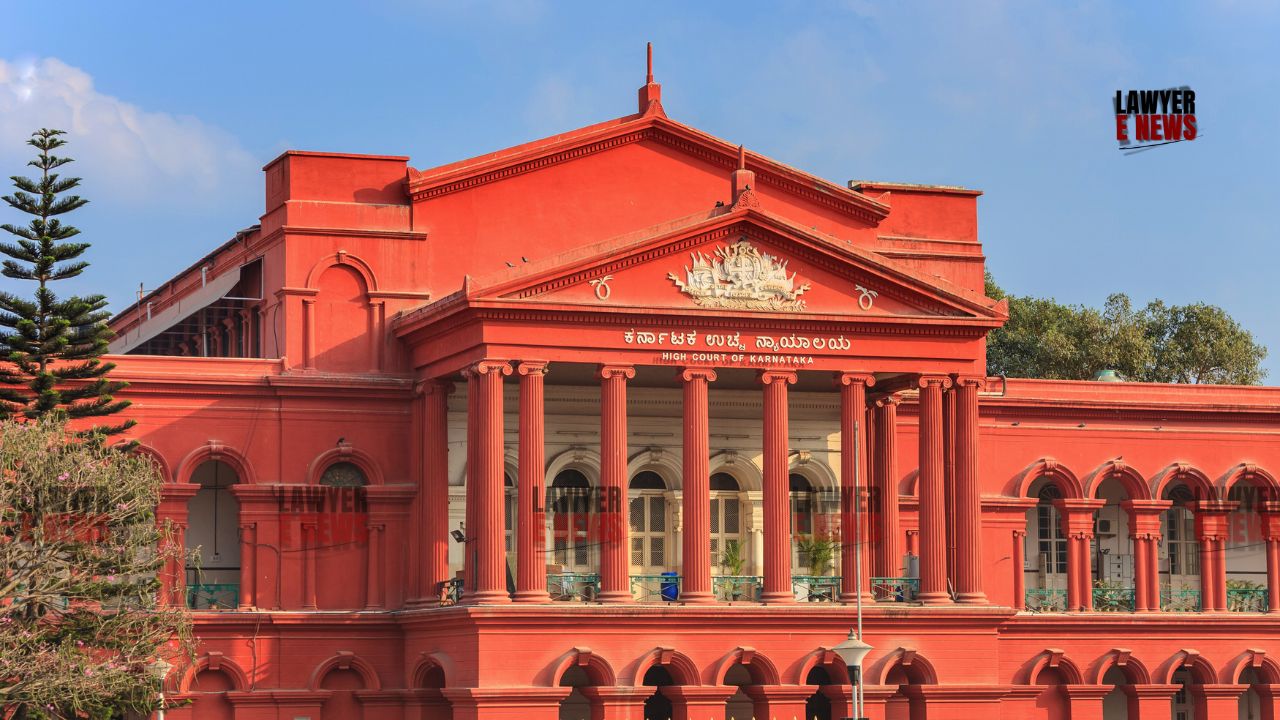
"Nothing obtained by fraud can be sustained, as fraud unravels everything." Karnataka High Court, in a significant ruling dated July 14, 2026, held that the principle of "finality of litigation" cannot be pressed to the extent of protecting transactions rooted in fraud or the suppression of material facts.
A bench of Justice D. K. Singh and Justice T. M. Nadaf observed that even where an acquisition has been upheld in earlier rounds of litigation, the discovery of subsequent evidence showing the manipulation of official records or non-payment of compensation allows the court to exercise its power to quash the proceedings. The bench emphasized that "fraud and justice never dwell together" and cannot be saved by any equitable doctrine, including res judicata.
The dispute centered on the acquisition of over 10 acres of land in Hosahalli Village, initiated in 1988 for the Ex-servicemen House Building Co-operative Society. The appellant’s father had originally owned the land, and the appellant had unsuccessfully challenged the acquisition in multiple rounds of litigation before the High Court and the Supreme Court since 1995. However, a new challenge was mounted after an endorsement from the Special Land Acquisition Officer (SLAO) in 2023 revealed that records of the "consent award" and evidence of compensation payment were non-existent, and the society’s promoter was found to have withdrawn compensation funds using non-existent powers of attorney.
The primary question before the court was whether the discovery of fraud and missing official records could warrant the reopening of acquisition proceedings that had already attained finality through previous judicial orders. The court was also called upon to determine if the "fraud exception" overrides the principles of res judicata and whether the bar on reopening concluded proceedings under Section 24(2) of the Right to Fair Compensation Act applies in cases of systemic deception.
Missing Records Strike At Foundation Of Acquisition
The Court expressed deep concern over the Special Land Acquisition Officer’s (SLAO) inability to produce records relating to the consent award or payment of compensation. The bench noted that these are not peripheral documents but constitute the very foundation of the state's claim that the acquisition was completed in accordance with law. The judges observed that where the existence of statutory proceedings is asserted based on official records, the subsequent disclosure that such records are unavailable is a circumstance that cannot be ignored.
"The inability of the acquiring authority to trace or produce such records warranted a careful examination of its implications rather than summary rejection."
Compensation Must Be Real, Not Illusory
While analyzing the payment mechanism, the Court found that the compensation was purportedly paid by the Society and withdrawn by its own promoter, who is currently absconding. The bench noted that the State Exchequer never actually paid the landowners, nor was the amount deposited in court as required by Section 31 of the Land Acquisition Act, 1894. The Court reiterated that for an acquisition to be valid, the payment of compensation must be real and not a mere paper transaction involving a middleman.
"The Society paid compensation to itself, if any, and not to the owner of the land... the compensation has to be paid by the State, otherwise the acquisition would be illegal and unconstitutional."
GVK Rao Committee Report Exposed Systemic Fraud
The Court placed heavy reliance on the GVK Rao Committee report, which had earlier investigated housing societies. The report found that the beneficiary society in this case had admitted ineligible members, collected exorbitant fees before acquisition, and sought land outside its territorial jurisdiction. The bench observed that while the report itself does not invalidate an acquisition, it serves as crucial contemporaneous material showing a "consistent pattern of suppression, concealment, and manipulation of official records."
Fraud As A Permanent Exception To Res Judicata
Addressing the respondents' argument that the case was barred by res judicata, the Court held that fraud vitiates every solemn act. The bench clarified that the doctrine of finality assumes an earlier adjudication was rendered on a truthful and complete factual foundation. Referring to the Supreme Court’s ruling in S.P. Chengalvaraya Naidu v. Jagannath, the Court held that the principle of finality cannot be used as an "engine of fraud" in the hands of dishonest litigants.
"Fraud and justice never dwell together and it cannot be perpetuated or saved by the application of any equitable doctrine including res judicata."
Scope Of Section 24(2) And The Indore Development Authority Ruling
The Court distinguished the present case from the Constitution Bench judgment in Indore Development Authority v. Manoharlal. While the Single Judge had dismissed the writ petition by citing the bar on reopening stale claims under Section 24(2) of the 2013 Act, the Division Bench held that this bar does not confer immunity upon proceedings procured by fraud. The Court ruled that the foundational issue of fraud must be adjudicated before applying the limitations set by the Indore Development Authority case.
"The Constitution Bench was not concerned with a situation where the validity of the underlying acquisition records themselves was questioned on allegations of fraud."
The Court concluded that the cumulative effect of the missing records, the absconding promoter, and the GVK Rao Committee’s findings affirmatively established that the acquisition was vitiated. The bench set aside the Single Judge’s order, which had previously imposed a cost of Rs. 1,50,000 on the appellant, and allowed the writ appeal, effectively quashing the acquisition of the appellant's lands.
The Karnataka High Court’s ruling reaffirms that no judicial order, regardless of its finality, can survive if it is proven to have been procured through the manipulation of state machinery. By prioritizing the "fraud unravels everything" doctrine over procedural finality, the court has ensured that the power of eminent domain is not abused for collateral private gains through fabricated records.
Date of Decision: 14 July 2026