-
by sayum
27 July 2026 7:45 AM







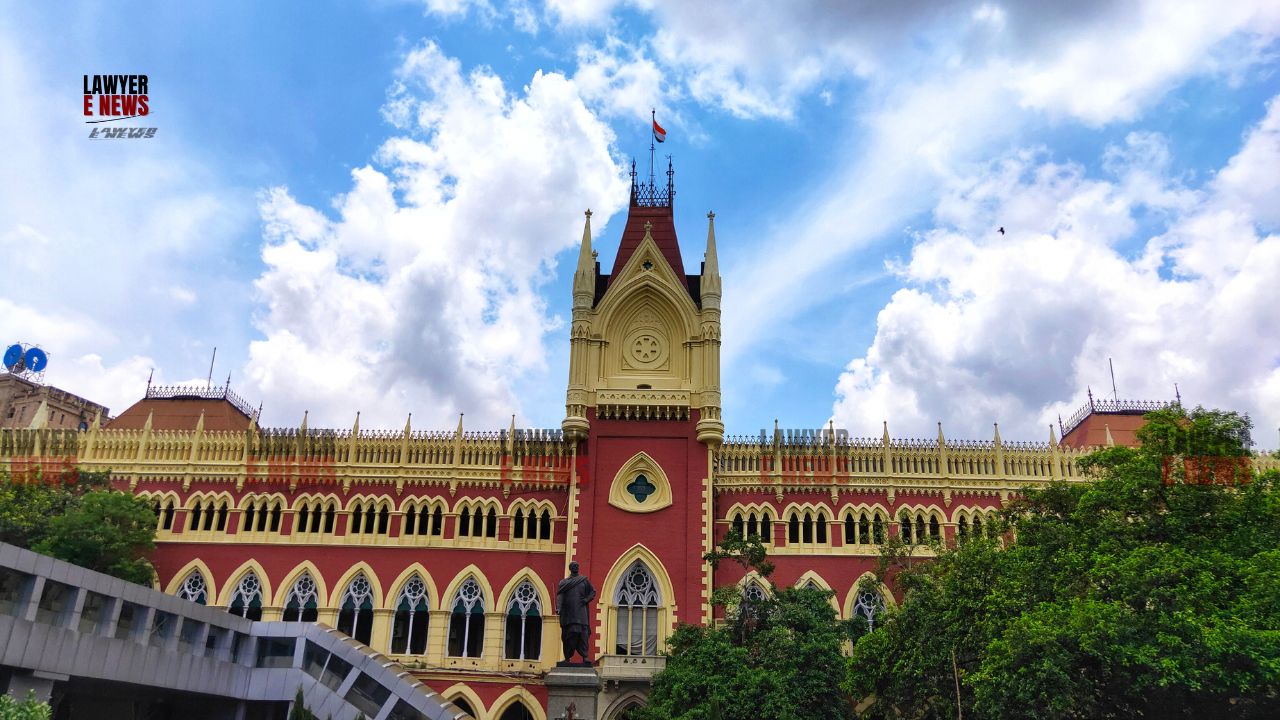
"Bare perusal would make it clear that Order XI Rule 21 can be passed only for the non-compliance of Order of interrogatories, discovery, or inspection as envisaged under Order XI Rule 1, 12, and 18 of CPC." Calcutta High Court, in a significant ruling, held that a party's failure to produce documents under Order XI Rule 14 of the Code of Civil Procedure (CPC) cannot lead to the extreme penalty of striking off their defence under Order XI Rule 21 CPC.
A bench of Justice Dinesh Kumar Sharma observed that the power to strike off a defence is punitive and drastic, and cannot be invoked merely for non-production of documents without a formal application and hearing.
The original title suit was filed in 2002 by the plaintiffs against the Resident Welfare Association, seeking declaration and injunctions regarding the society's functioning. During the pendency of the suit, the trial court directed the defendants to produce certain documents for inspection under Order XI Rule 14 CPC. When the defendants failed to produce all the required documents, the trial court passed an order on December 3, 2009, summarily striking off their defence under Order XI Rule 21 CPC, triggering the present revisional proceedings before the High Court.
The primary question before the court was whether the order striking off the defence under Order XI Rule 21 CPC for non-production of documents under Order XI Rule 14 is legally sustainable. The court was also called upon to determine whether the High Court could invoke its inherent and revisional powers to correct a patently illegal order, despite procedural delays and the absence of a statutory appeal challenging the specific order.
Scope Of Order XI Rule 21 CPC Restricted
The Court analyzed the provisions of Order XI of the CPC, which deals with "Discovery and Inspection". Justice Sharma clarified that Rule 21, which provides the drastic penalty of dismissing a suit or striking off a defence, is only triggered in three specific scenarios. These include the refusal to answer interrogatories, the refusal to make discovery of documents, and the refusal to permit inspection of documents.
Rule 14 Non-Compliance Draws Adverse Inference, Not Dismissal
The bench noted that Rule 14 merely relates to the production of documents and does not fall within the strict penal ambit of Rule 21. Adopting the consistent view taken by various High Courts, the court emphasized that at best, non-production under Rule 14 allows the trial court to draw an adverse presumption against the defaulting party. Such an order to produce documents does not decide or affect any vital and valuable rights of the parties.
Due Process Required Before Striking Defence
Relying on the Supreme Court’s judgment in M/s Babbar Sewing Machine Co. vs. Trilok Nath Mahajan, the High Court reiterated that the extreme power of striking off a defence should be exercised rarely. It must only be applied in extreme cases where there is contumacy on the part of the defendant, or where a willful attempt to disregard the court's orders is clearly established on record.
Formal Application And Hearing Are Mandatory
Furthermore, the court observed that such a penalty requires a formal application to be moved under Order XI Rule 21 CPC. A trial court cannot pass an order striking off a defence without giving the defaulting party a prior notice and a reasonable opportunity of being heard. The bench noted that in the present dispute, no such application was moved by the plaintiff, nor was a show-cause notice issued to the defendants.
Inherent Powers To Cure Patent Illegality
Addressing the defendant's delayed challenge to the trial court's order, the High Court held that procedural lapses cannot prevent constitutional courts from rectifying a patently illegal order. The bench stressed that procedure is a handmaid of justice, and the court is duty-bound to correct illegalities that shock its conscience and violate basic principles of natural justice.
"The order being patently illegal, the Court is well within its power to exercise its inherent powers and can set aside the same so as to ensure that illegality is not further perpetuated."
Setting aside the impugned order dated December 3, 2009, and all subsequent consequential orders, the High Court remanded the matter back to the trial court to proceed de novo from the stage prior to the striking of the defence. The court directed the trial court to conduct the proceedings expeditiously, fixing the matter for at least two days a week to ensure the suit is decided within a period of six months.
Date of Decision: 23 July 2026