-
by sayum
27 July 2026 7:45 AM







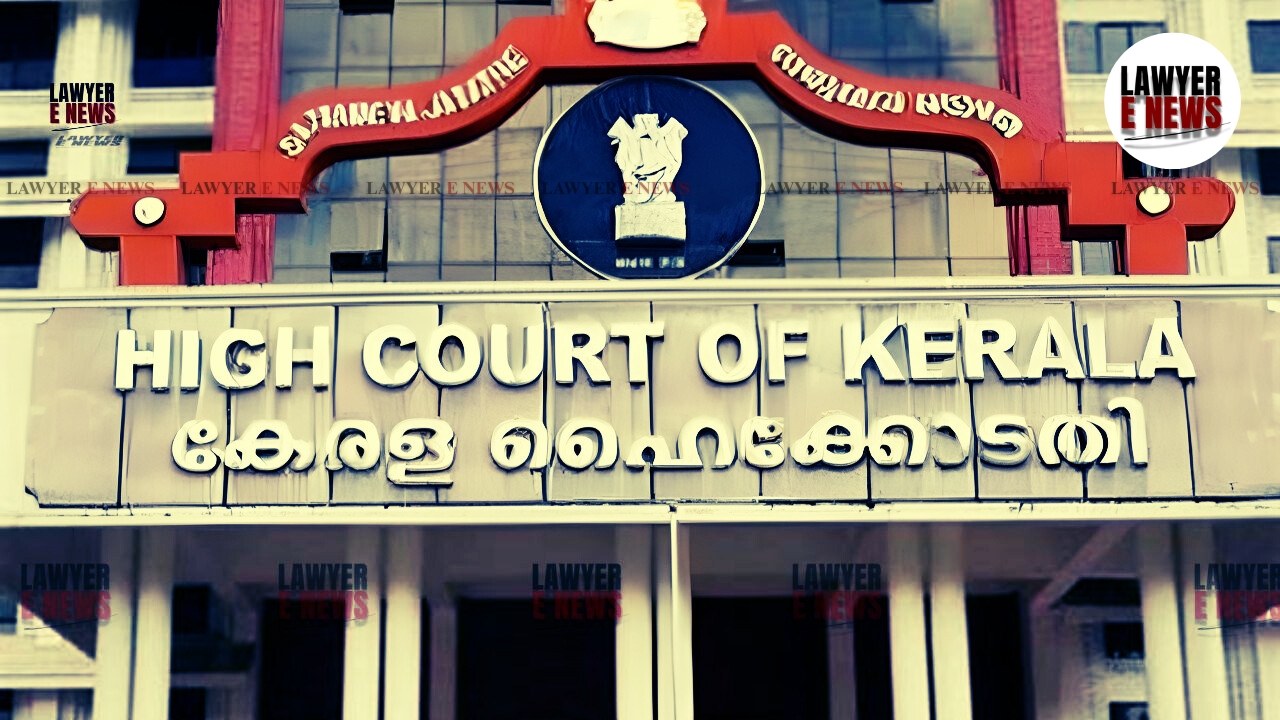
"Maintenance of proper asset registers is not merely an administrative convenience but an essential component of good governance, financial discipline, transparency, and accountability." High Court of Kerala, in a significant ruling, held that public procurement involving Devaswom funds cannot be undertaken without a transparent and verifiable inventory management system.
A division bench of Justice Raja Vijayaraghavan V and Justice K. V. Jayakumar observed that authorities must be in a position to demonstrate the existing stock, condition, and utilization of available assets before fresh procurement can be genuinely warranted.
The matter arose from a petition by the Travancore Devaswom Board (TDB) seeking approval for a contract to supply 1,000 double-decker mild steel cots for daily wage staff at Sannidhanam, Sabarimala. The Audit Department had raised several objections, noting that the tender process was initiated at the "eleventh hour" and lacked detailed technical specifications or photographs of the proposed items.
Transparency In Public Procurement Essential
The Court emphasized that public procurement involves the expenditure of Devaswom funds and requires strict adherence to fiscal discipline. It noted that the Audit Department had rightly referred to the Store Purchase Manual No. 3/2013/SPD, which mandates that officers must estimate annual requirements based on consumption patterns over the previous three to five years.
The bench remarked that such provisions are intended to prevent ad hoc procurement and ensure transparency. The Court held that unless there is a verifiable system to track the maintenance and disposal of existing assets, it is impossible to ascertain whether any fresh purchase is truly necessary or just a duplication of expenditure.
Sabarimala's Asset Management Records Found Unsatisfactory
During the proceedings, the Court examined the "Stock Book" maintained by the Sabarimala Development Project. The bench expressed its dismay at the haphazard manner in which the records were maintained, noting that entries were made without any diligence or meaningful segregation.
The Court observed that the register was "nothing more than a general stock book containing broad entries relating to different classes of articles, which a betel shop owner may maintain." It lacked essential details such as the quantity purchased, location of deployment, maintenance history, or physical verification reports.
Proper Inventory Control Foundation Of Financial Administration
The bench clarified that the maintenance of statutory and administrative records is not a mere procedural formality. Such records constitute the very foundation of sound financial administration and responsible public asset management. Proper inventory records enable verification of expenditure and safeguard public funds from avoidable or unnecessary spending.
The Court noted that while even small commercial establishments and retail shops maintain detailed inventories with precision, an institution of the magnitude of the Travancore Devaswom Board, which administers public assets of enormous value, must maintain records of the highest standard.
Digitised Inventory Management System For Sabarimala
Taking a proactive stance, the Court directed the TDB to establish a comprehensive, systematic, and preferably digitised inventory management system. This system must include a Fixed Asset Register (FAR), Stock Register for Consumables and Non-Consumables, Dead Stock Register, and Physical Verification Reports.
The bench further directed that periodical physical verification must be undertaken, and records should be updated so that the exact position of every asset is readily ascertainable. The Court noted the submission of the Standing Counsel that steps have already been initiated for digitisation under the Enterprise Digital Transformation Programme.
Final Directions On Procurement Of Steel Cots
Regarding the specific tender for 1,000 double-decker cots, the Court noted that the total requirement for Sabarimala, Pamba, and Nilakkal had been assessed at 1,752 cots. It directed the Chief Engineer and the Executive Engineer to ensure that the procurement is effected strictly in conformity with the approved technical specifications and the Store Purchase Manual.
The Court concluded by ordering the TDB to complete the digitisation process before the commencement of the ensuing pilgrimage season. The bench emphasized that the procurement shall form an integral part of the agreement with the successful bidder and must comply with every statutory requirement and financial rule governing public procurement.
Date of Decision: 13 July 2026