-
by sayum
27 July 2026 3:39 PM







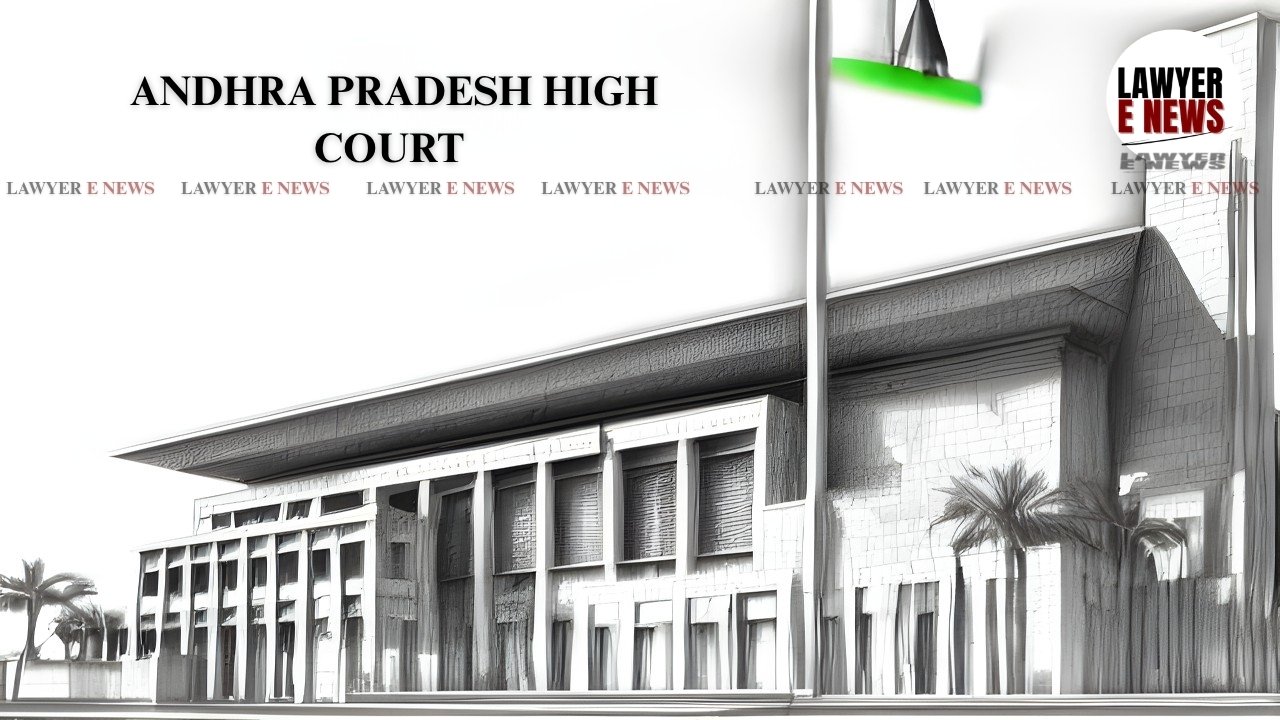
"Mere triple riding by itself is not sufficient to attribute contributory negligence in the absence of cogent evidence... the Court should not take hyper technical approach and ensure that just compensation is awarded to the affected person or the claimants," Andhra Pradesh High Court, in a significant judgment, has held that the mere act of three persons travelling on a motorcycle does not automatically invite a finding of contributory negligence against them in a motor accident claim.
A bench of Justice A. Hari Haranadha Sarma observed that in the absence of specific evidence showing that the triple riding contributed to the accident, the owner of the offending vehicle cannot escape liability. The Court further clarified that appellate courts possess the power to enhance compensation to ensure "just compensation," even if the claimants have not filed a cross-appeal or a separate appeal for enhancement.
The matter arose from a motor vehicle accident on April 23, 2010, where the deceased, Konkala Peda Konda Reddy, was travelling on a motorcycle with two others. An APSRTC bus, driven in a rash and negligent manner, collided with the motorcycle, resulting in the death of the deceased and two others. The Motor Accidents Claims Tribunal (MACT), Ongole, awarded a compensation of Rs. 4,80,800. Aggrieved by the finding of liability and the quantum of compensation, the APSRTC preferred an appeal before the High Court, contending that triple riding constituted a violation of the Motor Vehicles Act and implied contributory negligence.
The primary question before the Court was whether triple riding on a motorcycle per se amounts to contributory negligence. The Court was also called upon to determine whether it could enhance the compensation amount in an appeal filed by the Corporation, despite the absence of a cross-appeal by the claimants, to meet the standard of "just compensation."
Standard of Proof in Accident Claims
The Court emphasized that in motor accident claim cases, the standard of proof required is the preponderance of possibilities rather than proof beyond reasonable doubt as required in criminal trials. Referring to the Supreme Court's decision in Anitha Sarma vs. New Indian Assurance Company Ltd., the Court noted that the judicial approach should be to analyze whether the claimant’s version is "more likely than not true" rather than finding fault with the non-examination of specific witnesses.
Negligence and Triple Riding
The Court rejected the Corporation's plea to fix contributory negligence on the deceased due to triple riding. It observed that the driver of the offending bus was already charge-sheeted under Section 304-A of the IPC. The bench noted that the Corporation failed to produce cogent evidence to show that the presence of three people on the motorcycle actually caused the rider to lose control or contributed to the collision.
Court Explains Scope Of Section 163-A Of Motor Vehicles Act
The bench highlighted that since the claim was laid under Section 163-A of the Motor Vehicles Act, the claimants were only required to prove the involvement of the vehicle. Under this social welfare provision, the requirement to prove negligence is dispensed with. The Court held that since the involvement of the APSRTC bus was established, the Corporation’s arguments regarding the rider's negligence were secondary to the statutory mandate of the provision.
Power To Award More Than Claimed
The High Court reiterated the settled legal position that there is no embargo on a court awarding compensation higher than what was originally claimed by the petitioners. Citing Nagappa Vs. Gurudayal Singh, the Court stated that if the evidence on record justifies a higher amount to ensure "just compensation," the technicality of the initial claim amount should not restrict the court's power to do justice to the victims.
Enhancement In The Absence Of Cross-Appeal
A crucial aspect of the ruling dealt with the enhancement of the award in an appeal filed by the insurer or the owner. The Court relied on the Supreme Court’s observations in Surekha vs. Santosh, noting that courts should not take a "hyper-technical approach." The bench held that even when claimants fail to file a cross-appeal, the Appellate Court is duty-bound to ensure that the compensation awarded is "just" and aligns with established legal precedents regarding future prospects and conventional heads.
Court Revises Quantum And Conventional Heads
The Court found the MACT's assessment of the deceased's income at Rs. 120 per day to be low for a person engaged in agriculture. It revised the notional income to Rs. 150 per day and added 20% for future prospects, considering the deceased was 35 years old. Furthermore, following the mandates in Pranay Sethi and Magma General Insurance, the Court significantly increased the amounts for loss of consortium, funeral expenses, and loss of estate.
The High Court dismissed the appeal filed by the APSRTC while simultaneously modifying the MACT's decree to enhance the total compensation from Rs. 4,80,800 to Rs. 8,06,000. The Court reduced the interest rate from 9% to 6% per annum, considering the length of time and the enhanced principal amount. The judgment reaffirms that "just compensation" is a statutory right that transcends procedural lapses such as the failure to file a cross-appeal.
Date of Decision: June 19, 2026