-
by sayum
27 August 2026 3:32 PM







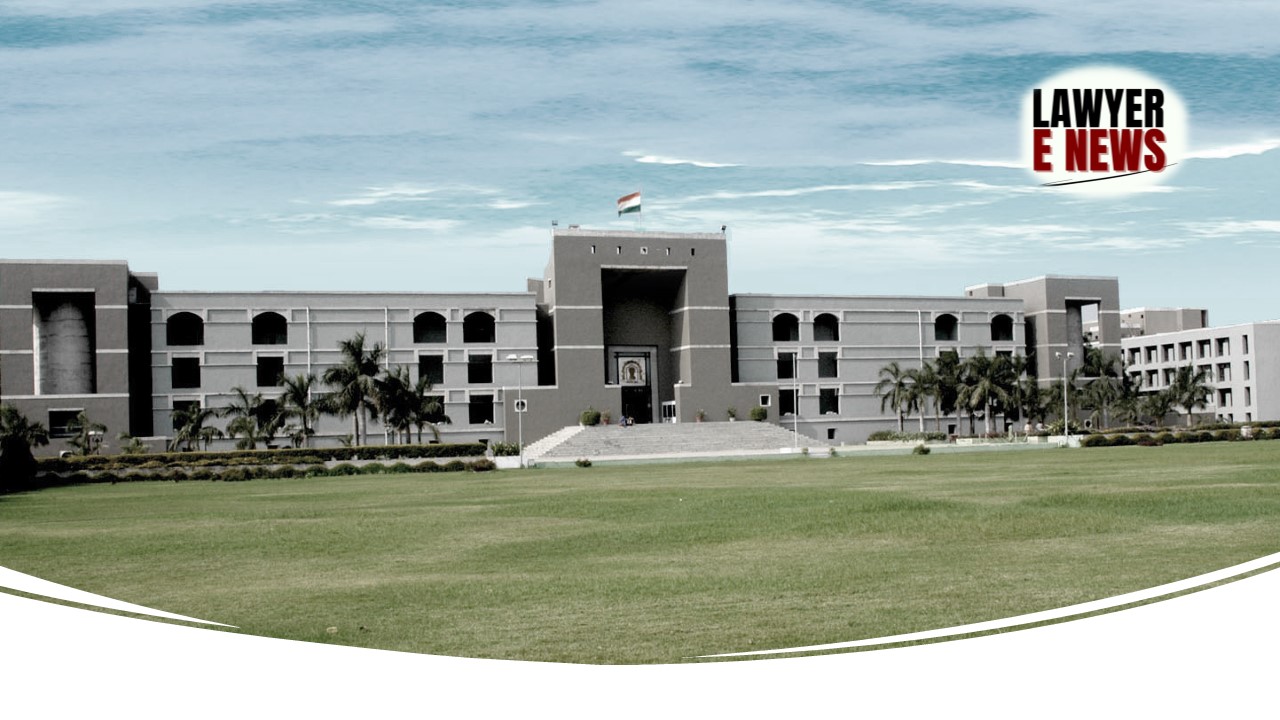
"If a criminal court is to be an effective instrument in dispensing justice, the presiding judge must cease to be a spectator and a mere recording machine. He must become a participant in the trial by evincing intelligent active interest by putting questions to witnesses in order to ascertain the truth," Gujarat High Court, in a recent judgment, has emphasized that the primary goal of a criminal trial is the discovery of truth, asserting that neither the prosecutor nor the trial judge can remain indifferent to material evidence.
A division bench of Justice Ilesh J. Vora and Justice R. T. Vachhani observed that a fair trial, as guaranteed under Article 21 of the Constitution of India, is a "triangulation of interests" involving the accused, the victim, and society. The Court made these observations while acquitting a murder convict whose plea of alibi was supported by evidence collected by the police but deliberately suppressed during the trial.
The case originated from the 2013 murder of Kamleshbhai Bodiya at a hair salon in Botad, allegedly over a land dispute. The trial court had convicted two persons, Asim @ Munmun (Accused No. 1) and Jasminbhai Kothari (Accused No. 2), sentencing them to life imprisonment under Section 302 read with Section 34 of the IPC. While Accused No. 2 was identified as the shooter, Accused No. 1 was alleged to have used an axe-like weapon (farsi), despite his consistent claim that he was 200 kilometers away in Anand at the time of the incident.
The primary question before the court was whether the prosecution and the trial court had fulfilled their duty to ensure a fair trial in light of the suppressed exculpatory evidence. The court was also called upon to determine if a plea of alibi could be accepted when the Investigating Officer admitted to possessing evidence of the accused's absence but failed to produce it in the charge-sheet.
Court Explains The 'Triangulation Of Interests' In Fair Trials
The High Court noted that the concept of a fair trial entails a familiar triangulation of interests between the accused, the victim, and society. It held that the State and prosecuting agencies act on behalf of the community, and their goal must be the "majestic upholding of the law" rather than merely securing a conviction at any cost.
"Interests of society are not to be treated completely with disdain... Courts have always been considered to have an overriding duty to maintain public confidence in the administration of justice."
Judges Must Actively Participate In Seeking The Truth
Critiquing the passive role often adopted by trial courts, the bench held that a judge is not a mere referee in a contest between two parties. The Court emphasized that the presiding officer must be an active participant who elicits all relevant materials necessary for reaching a correct conclusion. It noted that the failure to hear material witnesses or consider exculpatory evidence is a direct denial of a fair trial.
"The Presiding Judge must cease to be a spectator and a mere recording machine by becoming a participant in the trial evincing intelligence, active interest and elicit all relevant materials necessary for reaching the correct conclusion."
Prosecutor’s Duty Is To Assist The Court, Not Just The State
The Court expressed grave concern over the conduct of the Public Prosecutor and the Investigating Officer (IO). It was revealed during cross-examination that the IO had recorded statements from 13 witnesses in Anand and collected mobile location data confirming Accused No. 1's alibi, yet these were withheld from the court. The bench ruled that a prosecutor is an officer of the court first and must place all relevant material, including that which favors the accused, before the judge.
"The Public Prosecutor who conducts the trial has a statutory duty to perform... He has a responsibility to examine all possible angles, collect all relevant evidence and then produce the same before the Court for determination of guilt or lack thereof."
Suppression Of Alibi Evidence Vitiates Prosecution Fairness
The Court found that the deliberate suppression of material evidence collected during investigation creates serious doubt about the fairness of the prosecution. In this case, even when the IO admitted to having exculpatory statements, the trial court remained a "mute spectator" instead of directing the production of that material. The High Court held that such a "lackadaisical approach" by the stakeholders of the criminal justice system could lead to grave injustice.
"The failure of the Investigating Officer to place the material evidence collected during the course of investigation on record amounts to a serious dereliction of duty and raises grave doubt about the fairness of the prosecution."
Active Judicial Intervention Is Required To Prevent Miscarriage Of Justice
Citing the 'Best Bakery Case' (Zahira Habibulla Sheikh v. State of Gujarat), the bench reiterated that the trial should be a search for truth and not a bout over technicalities. It held that trial judges possess uninhibited powers under the law to put questions to witnesses and call for documents to ensure that no innocent person is punished due to the lethargy or mischief of the prosecuting agency.
"The judge is expected to actively participate in the trial, elicit necessary materials from the witnesses in the appropriate context which he feels necessary for reaching the correct conclusion."
The High Court allowed the appeal of Accused No. 1, holding that his plea of alibi was sufficiently established on the touchstone of preponderance of probabilities, especially given the prosecution's suppression of supporting evidence. However, the Court confirmed the conviction of Accused No. 2, finding that the ocular, medical, and forensic evidence conclusively proved his role in the murder. The judgment serves as a stern reminder to the trial judiciary and the prosecution regarding their constitutional obligation to prioritize truth over procedural victories.
Date of Decision: 22 April 2024