Renewal Is Not Extension Unless Terms Are Fixed in Same Deed: Bombay High Court Strikes Down ₹64.75 Lakh Stamp Duty Demand on Nine-Year Lease Fraud Vitiates All Solemn Acts—Appointment Void Ab Initio Even After 27 Years: Allahabad High Court Litigants Cannot Be Penalised For Attending Criminal Proceedings Listed On Same Day: Delhi High Court Restores Civil Suit Dismissed For Default Limited Permissive Use Confers No Right to Expand Trademark Beyond Agreed Territories: Bombay High Court Enforces Consent Decree in ‘New Indian Express’ Trademark Dispute Assam Rifles Not Entitled to Parity with Indian Army Merely Due to Similar Duties: Delhi High Court Dismisses Equal Pay Petition Article 21 Rights Not Absolute In Cases Threatening National Security: Supreme Court Sets Aside Bail Granted In Jnaneshwari Express Derailment Case A Computer Programme That Solves a Technical Problem Is Not Barred Under Section 3(k): Madras High Court Allows Patent for Software-Based Data Lineage System Premature Auction Without 30-Day Redemption Violates Section 176 and Bank’s Own Terms: Orissa High Court Quashes Canara Bank’s Gold Loan Sale Courts Can’t Stall Climate-Resilient Public Projects: Madras High Court Lifts Status Quo on Eco Park, Pond Works at Race Club Land No Cross-Examination, No Conviction: Gujarat High Court Quashes Customs Penalty for Violating Principles of Natural Justice ITAT Was Wrong in Disregarding Statements Under Oath, But Additions Unsustainable Without Corroborative Evidence: Madras High Court Deduction Theory Under Old Land Acquisition Law Has No Place Under 2013 Act: Punjab & Haryana High Court Enhances Compensation for Metro Land Acquisition UIT Cannot Turn Around After Issuing Pattas, It's Estopped Now: Rajasthan High Court Private Doctor’s Widow Eligible for COVID Insurance if Duty Proven: Supreme Court Rebukes Narrow Interpretation of COVID-Era Orders Smaller Benches Cannot Override Constitution Bench Authority Under The Guise Of Clarification: Supreme Court Criticises Judicial Indiscipline Public Premises Act, 1971 | PP Act Overrides State Rent Control Laws for All Tenancies; Suhas Pophale Overruled: Supreme Court Court Has No Power To Reduce Sentence Below Statutory Minimum Under NDPS Act: Supreme Court Denies Relief To Young Mother Convicted With 23.5 kg Ganja Non-Compliance With Section 52-A Is Not Per Se Fatal: Supreme Court Clarifies Law On Sampling Procedure Under NDPS Act MBA Degree Doesn’t Feed the Stomach: Delhi High Court Says Wife’s Qualification No Ground to Deny Maintenance

Trial court must record reasons for denying probation under 361 CrPC- Madhya Pradesh HC

07 May 2024 8:19 AM

By: Admin


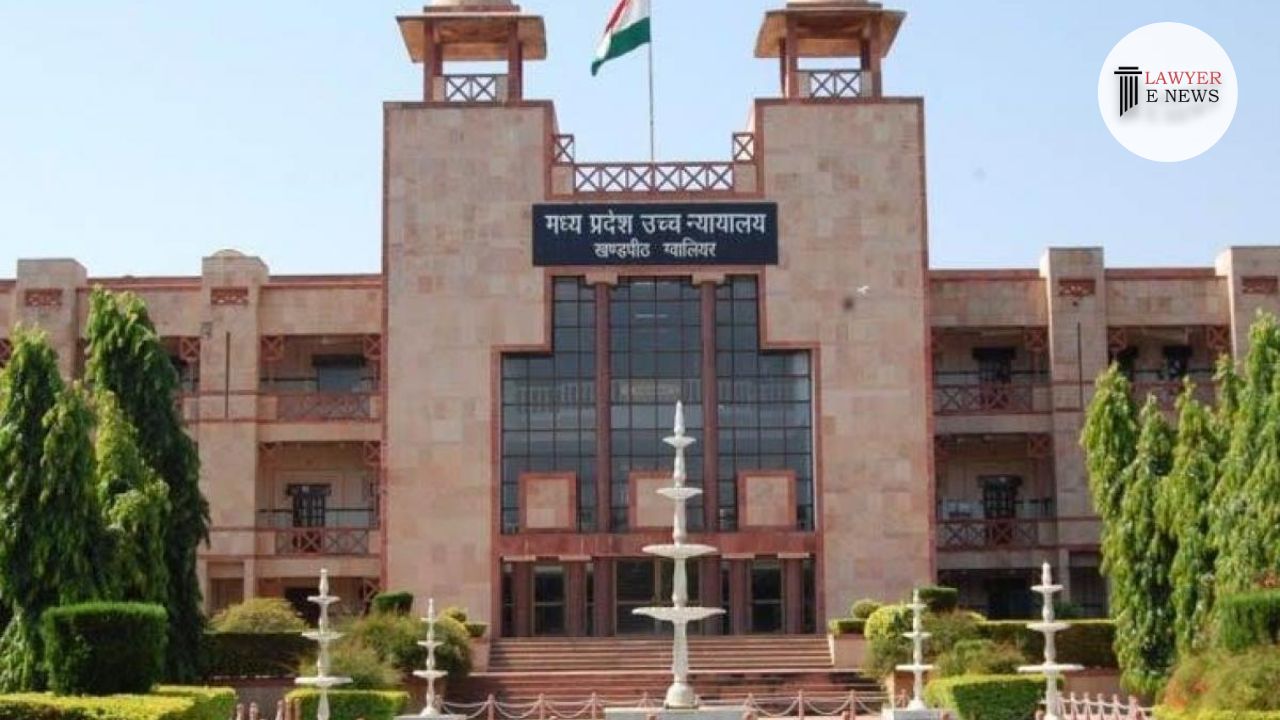
The Madhya Pradesh High Court, Gwalior Bench, has emphasised that the requirement under Section 361 CrPC is mandatory and that the trial court should record its justifications in writing as to why it would not be prudent to grant the benefit of probation to a convict who is otherwise eligible for it.

Justice Deepak Kumar Agarwal was a member of the court's panel that made the following observation: Section 361 of the Criminal Procedure Code's requirements must be followed, and if the trial court determines that a release on probation order is not prudent, it must state its reasoning. Additionally, this benefit may be granted by the appellate court or the High Court when exercising its revisionary authority in accordance with Section 360(4) of the Cr.P.C.

According to the case's facts, the petitioner was found guilty of the offence covered by section 498-A of the IPC. The trial court declined to give him the benefit even though he was qualified for release on probation. The petitioner sought the High Court out of resentment.

According to the petitioner, the lower court was required by the Probation of Offenders Act and Section 360 of the Criminal Procedure Code to grant him the benefit. Further, it was argued that the court below was required under Section 361 CrPC to record the reasons it did not extend the benefit of probation, but this was not done.

The Court agreed with the petitioner's claims after considering the parties' submissions and the materials submitted for review. It was stated that the petitioner should have been granted probation by the trial court because the offence in this case arose out of a domestic disagreement and the petitioner is accused of harassing his wife for not paying the dowry demanded of him. The petitioner, who was 23 years old when the offence was committed, has had this case on hold since 2007. In addition to the charge sheet, the prosecution has not provided any evidence that the petitioner has a criminal history or has a bad character. There is no proof that the petitioner committed any crimes during this time. Given the foregoing, this Court believes that the petitioner should have been granted the benefit of probation, which neither the trial Court nor the appellate Court have done.

In light of the aforementioned considerations, the Court decided that the petitioner should be released on one-year of good character probation upon submission of a personal bond to the trial court. The petition was therefore approved.

MAHESH VS STATE OF MADHYA PRADESH

Latest Legal News