-
by sayum
27 July 2026 3:39 PM







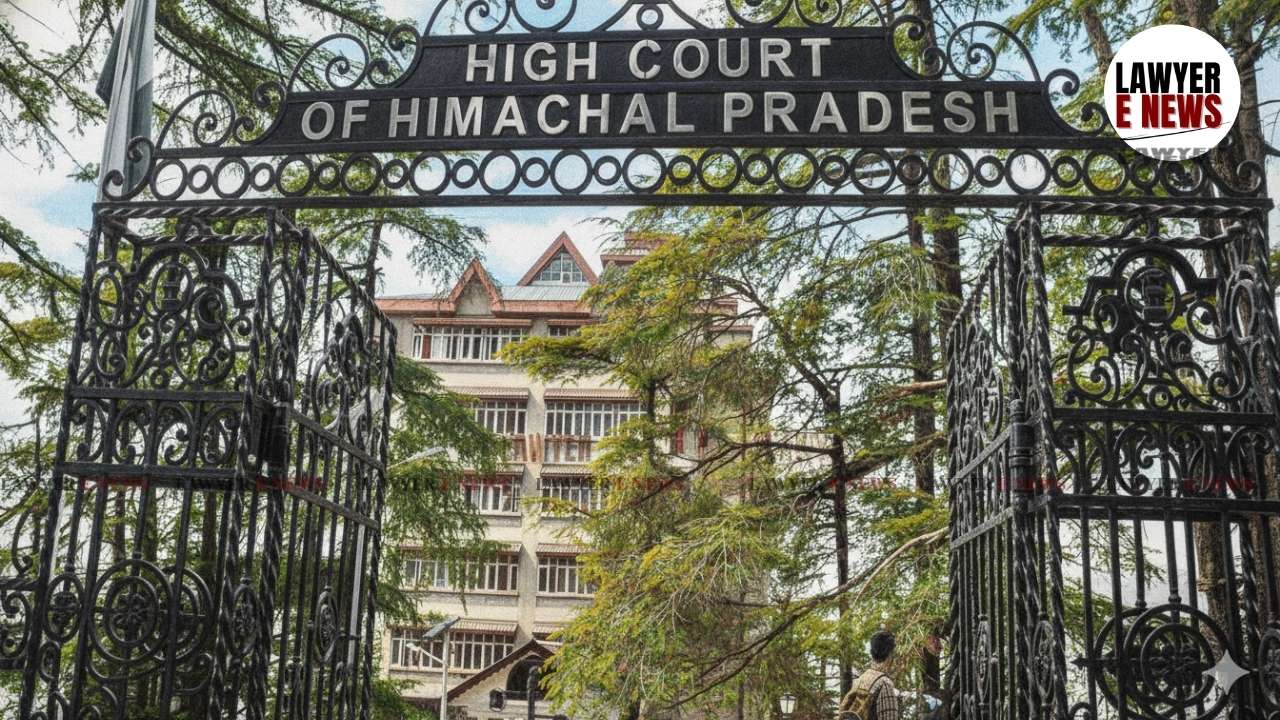
"Presence of an injured eyewitness at the time and place of the occurrence cannot be doubted unless there are material contradictions in his deposition," High Court of Himachal Pradesh, in a significant judgment, held that the testimony of an injured witness carries a high degree of credibility and cannot be discarded due to minor variations or contradictions that naturally arise with the passage of time.
Justice Rakesh Kainthla, while dismissing both a criminal revision by the accused and an appeal by the victims, observed that unless the contradictions shake the very core of the prosecution's case, they do not warrant an acquittal.
The court noted that witnesses are not expected to possess photographic memories or act as human tape recorders. The bench emphasized that revisional jurisdiction under Section 397 of the CrPC is extremely narrow and cannot be exercised like an appellate power to re-appreciate evidence unless there is a patent defect or perversity in the findings of the lower courts.
The case originated from a 2001 incident where the informant, Urmila Devi, and her brother were assaulted by the accused, Rajesh Kumar and Harish Kumar, following a scuffle near a field. The victims sustained several injuries, including broken teeth and lacerations, which were corroborated by medical evidence. The Trial Court convicted the accused under Sections 323 and 325 of the IPC, and the Appellate Court later modified the sentence by granting the accused the benefit of probation while awarding compensation to the victims.
The primary question before the court was whether the concurrent findings of conviction were sustainable despite contradictions in the testimonies of the eyewitnesses. The court was also called upon to determine whether the Appellate Court was justified in granting the benefit of the Probation of Offenders Act to the accused and whether the compensation awarded to the victims was adequate.
Limited Scope Of Revisional Jurisdiction Under Section 397 CrPC
The Court began by outlining the restrictive nature of its revisional powers, citing the Supreme Court’s ruling in Malkeet Singh Gill v. State of Chhattisgarh. It noted that a revisional court is not an appellate court and should only interfere to rectify patent defects or jurisdictional errors.
"The High Court in criminal revision against conviction is not supposed to exercise the jurisdiction like the appellate court, and the scope of interference in revision is extremely narrow," the bench observed. It further clarified that the court should not dwell at length upon facts and evidence to reverse findings unless they are found to be perverse or based on no evidence at all.
High Evidentiary Value Of Injured Witnesses
Relying on the principles laid down in Balu Sudam Khalde v. State of Maharashtra, the Court emphasized that the testimony of an injured witness is "stamped" with their presence at the spot. Such witnesses are unlikely to spare the actual assailants and falsely implicate innocent persons.
"The presence of an injured eyewitness at the time and place of the occurrence cannot be doubted... the evidence of the injured witness has greater evidentiary value, and unless compelling reasons exist, their statements are not to be discarded lightly," the judgment reads. The court found that the injuries sustained by Urmila Devi and Ram Piari were sufficiently explained and corroborated by the medical officers.
Minor Contradictions Due To Lapse Of Time Are Natural
Addressing the defense's argument regarding inconsistencies in the witnesses' statements, the Court noted that the testimonies were recorded nearly 4-5 years after the incident. It held that human memory fails over time, and minor variations regarding distances or the exact location of the parties do not affect the substratum of the prosecution's case.
"The memories fail with time, and no person can be expected to remember an incident in a photographic manner," Justice Kainthla remarked. The bench held that the contradictions highlighted by the accused were minor and did not touch the core of the case, which remained consistent regarding the assault and the identity of the assailants.
Strict Procedure For Proving Contradictions Under Section 145 Evidence Act
The Court highlighted a significant procedural lapse by the defense in attempting to impeach the credibility of the witnesses. It observed that under Section 145 of the Indian Evidence Act, a witness must be specifically confronted with the relevant parts of their previous police statement to establish a contradiction.
"If a contradiction is put to the witness and it is denied by him, then his attention has to be drawn to the statement made before the Police... and thereafter the said contradiction must be proved through the Investigation Officer," the Court noted. Since the defense failed to ask the Investigating Officer about these specific confrontations, the alleged contradictions were not legally proved.
Reformative Nature Of The Probation Of Offenders Act
Regarding the victims' challenge to the grant of probation, the Court upheld the Appellate Court’s decision. It observed that the object of the Act is to reform amateur offenders rather than subjecting them to the ignominy of jail, which might turn them into hardened criminals.
"The Probation of Offenders Act is a reformative measure, and its object is to reclaim amateur offenders who, if spared the indignity of incarceration, can be usefully rehabilitated in society," the Court stated. Given that 25 years had passed since the incident without any report of further criminal activity by the accused, the court found them fit for probation.
The High Court concluded that the prosecution had successfully established the guilt of the accused beyond a reasonable doubt through credible injured witness testimony. It found no merit in the victims' plea for enhancement of sentence or compensation, noting that the disfigurement of the informant was appropriately compensated by the lower court. Consequently, both the revision petition and the appeal were dismissed.
Date of Decision: 30 June 2026