
-
by sayum
26 August 2026 1:49 PM







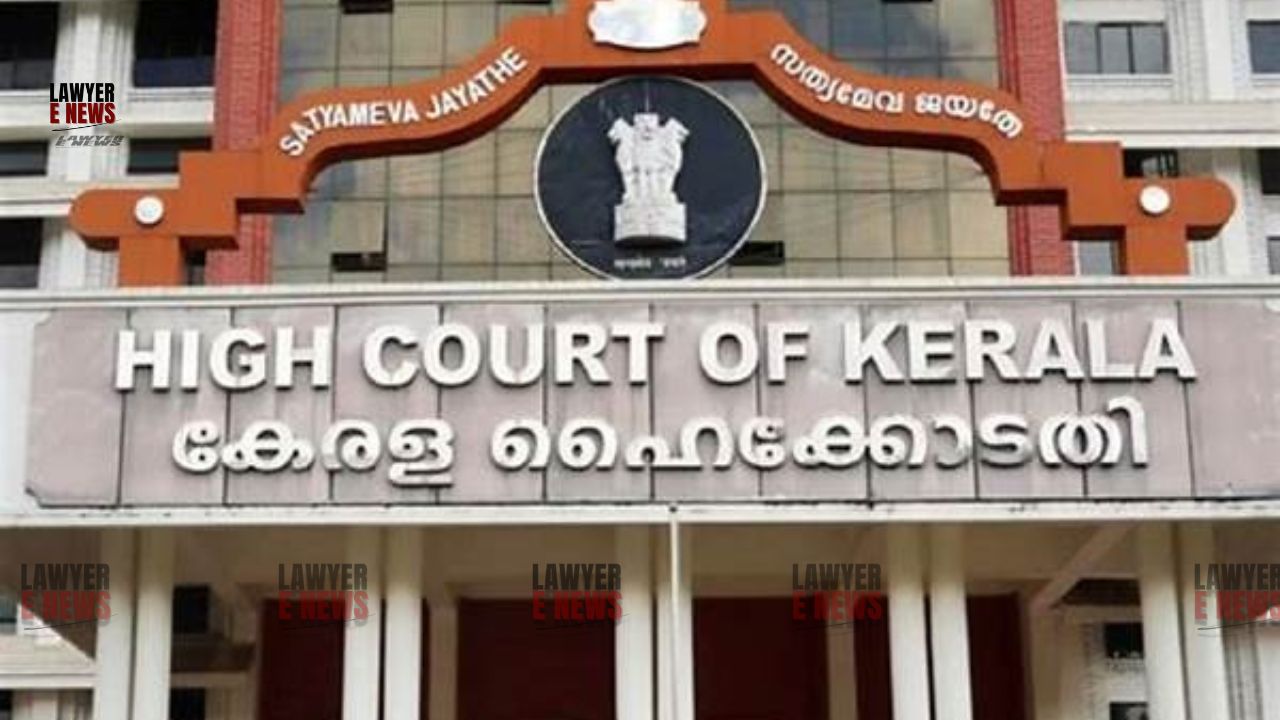
“A Party Seeking Maintenance Must Come With Clean Hands — Concealment of Employment Is Fatal to the Claim”: In a significant judgment Kerala High Court held that a wife who seeks maintenance under Section 125 of the Criminal Procedure Code must fully disclose her financial status and employment particulars. The Division Bench comprising Justice Sathish Ninan and Justice P. Krishna Kumar ruled that a party claiming maintenance must not withhold material facts from the court and that “the petitioner did not state these facts before the trial court, [so] the court was not in a position to assess all the relevant factors while passing the maintenance orders.”
The Court set aside the Family Court’s order awarding maintenance to the wife and remanded the matter for fresh adjudication, while permitting the wife to retain interim maintenance until final disposal. At the same time, the Court affirmed the decree of divorce granted on grounds of cruelty and allowed the wife’s appeal to recover 60 sovereigns of gold ornaments.
“Photographs Don’t Lie – Gold Estimate Corroborated by Wedding Photos Is Admissible”: High Court Allows Recovery of 60 Sovereigns
The High Court also made an important observation on dowry-related recovery claims, stating that while the wife failed to prove her claim of 200 sovereigns, she was entitled to recover 60 sovereigns based on credible documentary and photographic evidence. The Court observed that “when Ext.A1 photograph is compared with the descriptions of the ornaments mentioned in Ext.A2, we find that it substantially tallies”, thereby upholding the evidentiary value of a gold shop estimate that was not a bill but nonetheless backed by visual proof.
On 22 October 2025, the Kerala High Court delivered its ruling in a batch of matrimonial disputes involving maintenance, dowry recovery, and divorce between a Muslim couple married in 2008. The petitions were filed before the Family Court, Thiruvalla, seeking past and future maintenance, return of money and ornaments, and relief under the Muslim Women (Protection of Rights on Divorce) Act, 1986.
While the Family Court granted a decree of divorce in favour of the wife and allowed partial maintenance, it dismissed the claim for recovery of gold and money. The High Court found material suppression of income by the wife and set aside the orders related to her maintenance, but partly allowed her claim for return of ornaments.
The marriage was solemnised in July 2008 and a son was born thereafter. The wife alleged cruelty and desertion and claimed maintenance for herself and her child, stating that she was unemployed and that the husband, working abroad, earned Rs. 4,00,000 per month. She claimed that she was given 200 sovereigns of gold and Rs. 2 lakh at the time of marriage, and that the respondent later misappropriated these assets.
The husband denied all allegations and contended that the wife had left the matrimonial home without justification and was employed at a college drawing a monthly salary of ₹30,000. He claimed he had no regular income and denied owning any business.
The Family Court awarded ₹2,88,000 as past maintenance to the wife and ₹1,44,000 to the child, along with monthly maintenance of ₹8,000 and ₹4,000 respectively. It also granted a divorce on the ground of cruelty. The wife's claim for gold and cash was dismissed.
On the issue of maintenance, the High Court made scathing remarks about the wife's failure to be candid about her income. Referring to her own admission in a counter-affidavit that she was working at AWH College of Education and earning ₹13,500 per month, the Court observed:
“We find it difficult to uphold the impugned orders in respect of past and future maintenance for the wife as she had not properly disclosed the nature and income of her employment during the trial.”
The Court emphasised the duty of candour in maintenance proceedings under Section 125 CrPC and cited the landmark Supreme Court judgment in Rajnesh v. Neha, AIR 2021 SC 569, where it was held that a maintenance claim must be assessed in light of the actual needs of the claimant and the lifestyle enjoyed in the matrimonial home, but also that all material facts, including income and employment, must be fairly disclosed.
It further noted: “Even if the petitioner has some income, what is relevant for the inquiry under Section 125 CrPC is whether the income derived by the wife was sufficient to meet all her needs... However, since she did not disclose the employment, the court could not assess her real needs and capacity.”
Accordingly, the maintenance orders were set aside and the matter was remanded for fresh adjudication by the Family Court, permitting both parties to adduce fresh evidence.
On Dowry and Gold Ornaments
The wife’s claim of 200 sovereigns of gold was rejected in part, but the Court accepted that she was entitled to 60 sovereigns, drawing an inference from marriage photographs and a jewellery estimate from “Rajadhani Gold”, issued in her father’s name shortly before the wedding.
The Court observed: “It is true that it was not produced along with the petitions and that it is titled as an ‘estimate’. However, the evidentiary value of that document, particularly in a proceeding of this nature, cannot be questioned on such technical grounds.”
Rejecting the husband’s contradictory versions about the gold — initially stating that the ornaments were pledged by the father and later by the brother — the Court found his defence inconsistent and lacking evidentiary support.
It held that the wife had entrusted a substantial portion of the gold to the husband during her stay in the matrimonial home and was now entitled to recover 60 sovereigns or the market value.
On Divorce and Finality of Decree
The Family Court had granted the wife a divorce on the ground of cruelty and dismissed the husband’s petition for restitution of conjugal rights. This part of the judgment was not appealed by either side. The High Court categorically declared:
“There is no challenge against the order granting the decree of divorce and rejecting the petition for restitution of conjugal rights.”
Thus, the divorce attained finality.
On Interim Maintenance
Pending fresh adjudication, the Court held that the interim maintenance of ₹8,000 per month shall continue in favour of the wife, considering her modest income and the time elapsed. It also permitted her to retain the portion of maintenance already withdrawn, subject to the final outcome.
“Having regard to the fact that the petitioner’s admitted income during the relevant period was only Rs.13,500, the wife is permitted to retain the amount received... subject to the final decision.”
The Court passed the following dispositive directions:
Mat. Appeal No.1174/2017 was partly allowed. The wife was held entitled to 60 sovereigns of gold or their market value as on the date of realisation.
Mat. Appeal No.1215/2017 and R.P.(FC) No.518/2017 filed by the husband were allowed. Orders granting past and future maintenance to the wife were set aside and remanded for fresh trial.
Mat. Appeal No.1173/2017 and R.P.(FC) No.608/2017 were disposed of in light of the above directions.
Parties were directed to appear before the Family Court on 10 November 2025, and the Court was requested to expedite the disposal of the matter considering the long pendency.
This judgment reiterates two important legal principles: first, that parties seeking equitable relief must not conceal material facts, and second, that documentary evidence supported by circumstantial and photographic proof can form a valid basis for dowry recovery claims. While the wife’s right to recover gold ornaments was upheld, her conduct in concealing employment cost her the benefit of a maintenance order.
In the words of the Court: “A claim for maintenance cannot be sustained when the petitioner has failed to disclose vital facts relating to her income. Maintenance orders passed in the absence of such disclosure are liable to be set aside.”
Date of Decision: 22 October 2025





