
-
by sayum
26 August 2026 1:49 PM







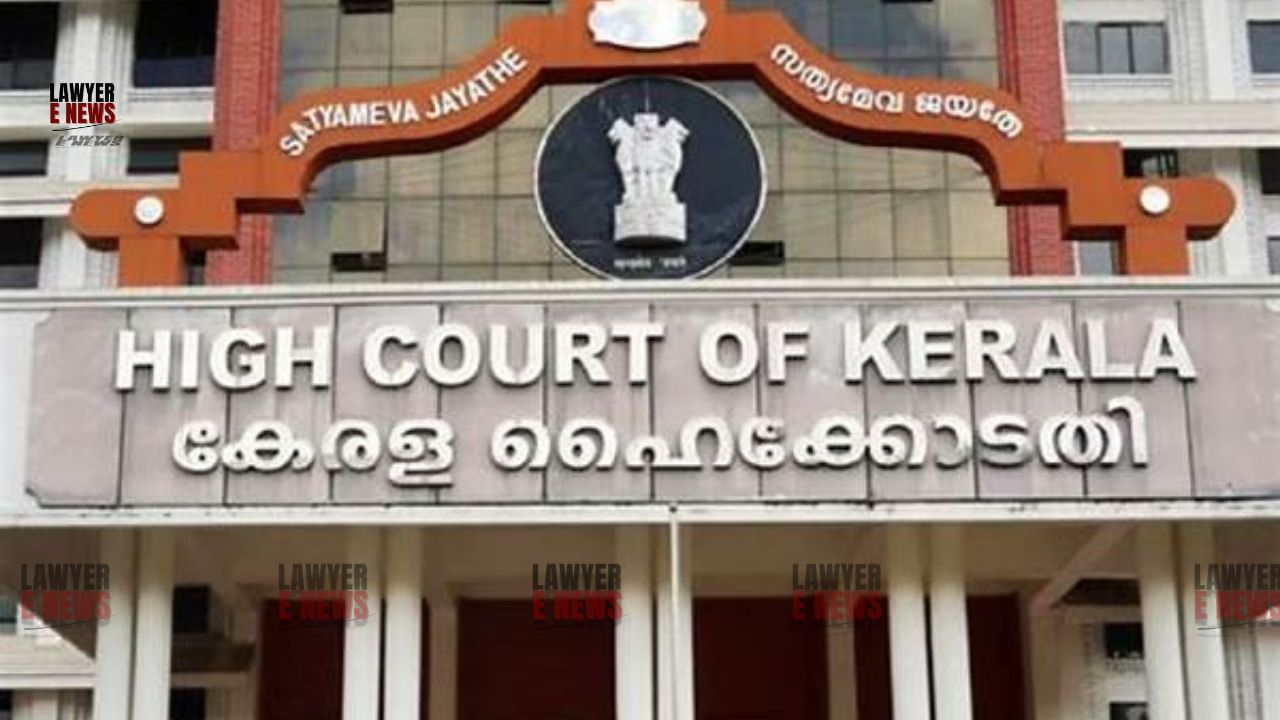
"Caveat Emptor — It Was the Duty of the Plaintiff to Purchase the Property After Gathering Information About Prior Encumbrances", Kerala High Court on March 17, 2026 allowed a first appeal and set aside a trial court decree that had cancelled a prior valid sale deed at the instance of a subsequent purchaser.
A Division Bench of Justice Anil K. Narendran and Justice Muralee Krishna S. held that a subsequent buyer who failed to inquire about prior encumbrances before purchase cannot seek cancellation of a valid prior title deed, and that the principle of caveat emptor squarely applies to such a buyer. The Court also dismissed an application to produce an FIR as additional evidence at the appellate stage to raise a limitation plea that was never taken before the trial court.
Defendants 1 and 2 had purchased a fractional right over the suit property and the right to construct a flat by virtue of Ext.A2 sale deed dated May 25, 2004 executed by defendants 3 and 4 — a construction company and its Managing Director. Defendants 3 and 4 failed to construct the flat within the agreed time. Defendants 1 and 2 filed money suits against them, which were settled in a Lok Adalath in 2007 by Ext.A3 award, under which defendants 3 and 4 agreed to pay Rs. 26,00,000/- to defendants 1 and 2, and on payment of Rs. 13,00,000/-, the right under Ext.A2 was to be reconveyed. No amount was paid. Despite this, defendants 3 and 4 sold the very same property to the plaintiff by Ext.A1 sale deed dated March 19, 2008, making no mention of Ext.A2. The plaintiff, after learning of Ext.A2 through a subsequent civil proceeding, filed a suit seeking cancellation of Ext.A2 and permanent injunction against defendants 1 and 2. The trial court decreed the suit. Defendants 1 and 2 appealed to the High Court.
Additional Evidence Application Dismissed
At the appellate stage, the defendants-appellants sought to produce an FIR registered on the complaint of the plaintiff herself in 2011 as additional evidence, arguing that it showed the plaintiff was aware of Ext.A2 as early as August 2011, making the suit barred by limitation.
The Court dismissed the application. The defendants had never raised the plea of limitation in their written statement before the trial court, and no issue of limitation had been framed. The FIR was not a document that came into existence after the trial — it was well within the appellants' knowledge and possession throughout. No ground was made out that it could not be produced despite due diligence.
The Court relied on a line of Supreme Court authorities — including Haji Mohammed Ishaq v. Mohammed Iqbal (1978) 2 SCC 493, State of Gujarat v. Mahendrakumar (2006) 9 SCC 772, and Union of India v. Ibrahim Uddin (2012) 8 SCC 148 — all of which hold that additional evidence cannot be permitted to raise a new point in appeal or to fill up lacunae in a party's case.
"Order XLI Rule 27 cannot be invoked by a party to fill up the lacunae in his case. A party on whom the onus of proving a certain point lies and who fails to discharge that onus is not entitled to a fresh opportunity to produce evidence."
Since limitation is a mixed question of law and fact that requires supporting pleadings in the written statement, and no such pleading existed, the Court refused to receive the document and declined to consider the limitation argument.
Prior Deed Cannot Be Cancelled by Subsequent Buyer
On the merits, the Court held that Ext.A2 was a valid prior title deed executed by defendants 3 and 4 in favour of defendants 1 and 2 for full consideration. The plaintiff's entire case for cancellation rested solely on Ext.A3 — the Lok Adalath award — contending that it amounted to a relinquishment of rights by defendants 1 and 2. The Court rejected this completely.
The Ext.A3 award merely recorded an agreement by defendants 1 and 2 to reconvey the property upon receipt of the agreed money. That money was never paid by defendants 3 and 4. The conditions of the award having not been performed, no reconveyance was due. Defendants 3 and 4 therefore had no valid title over the property when they executed Ext.A1 in favour of the plaintiff.
"Without performing the conditions in Ext.A3 award by paying the money and getting the properties reconveyed, defendants 3 and 4 cannot claim any right over the properties after the execution of Ext.A2 sale deed. Therefore, defendants 3 and 4 had no valid title over the plaint schedule property at the time of execution of Ext.A1 sale deed in favour of the plaintiff."
The Court invoked the principle of caveat emptor — let the buyer beware — holding that it was the plaintiff's duty to inquire about prior encumbrances before purchasing the property. The plaintiff had purchased the property without any mention of Ext.A2, which was a valid subsisting deed on the date of her purchase. Having failed in that basic due diligence, she could not subsequently seek to cancel the prior title deed through litigation.
"The basic principle that 'Caveat Emptor' is applicable as far as the case of the plaintiff is concerned, since it was the duty of the plaintiff to purchase the property after gathering information about the prior encumbrance, if any, on the property. When a valid sale deed like Ext.A2 was in existence, no sanctity can be given to Ext.A1 sale deed."
The Kerala High Court allowed the first appeal, set aside the trial court's decree cancelling Ext.A2, and dismissed the suit. The appellants-defendants 1 and 2 were held entitled to costs throughout from the plaintiff. The ruling reaffirms that a subsequent purchaser who fails to inquire about prior encumbrances has no standing to seek cancellation of a validly executed prior title deed, and that a Lok Adalath award containing a conditional obligation to reconvey does not extinguish the original title if the conditions remain unfulfilled.
Date of Decision: March 17, 2026





