-
by sayum
27 August 2026 3:32 PM







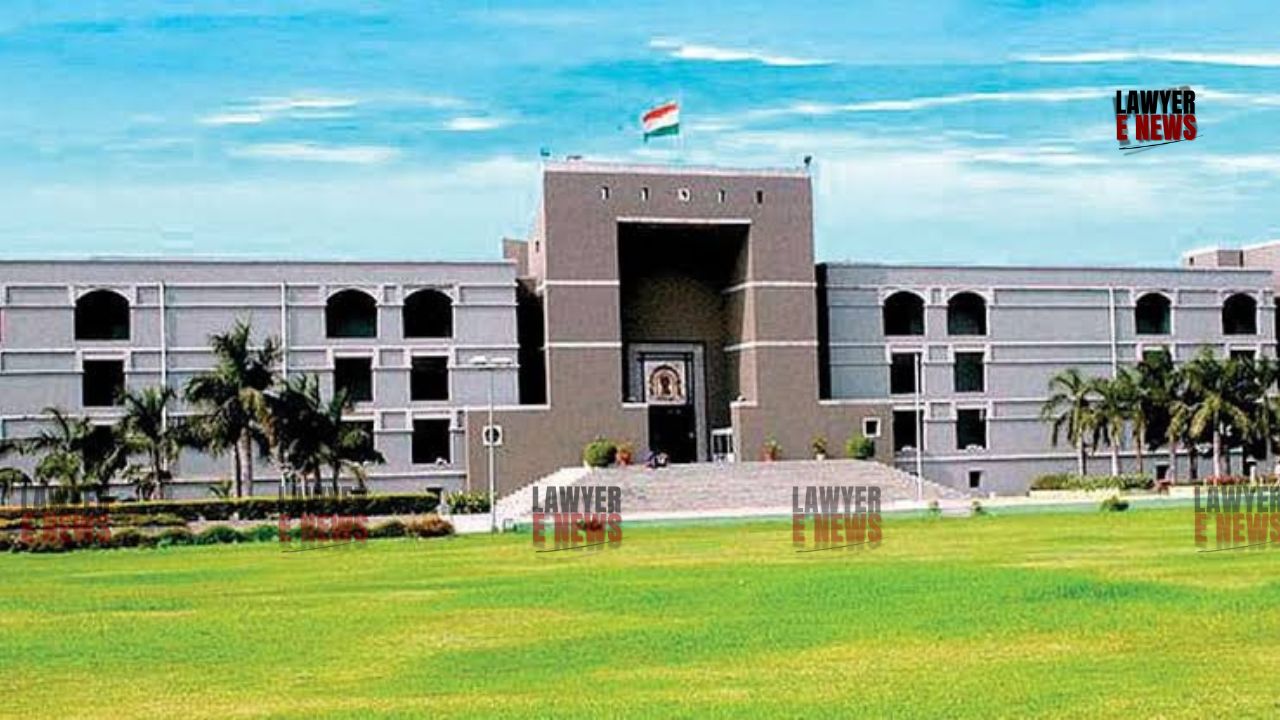
“Such application cannot be kept pending indefinitely, and therefore we would expect the Collector to decide such applications as far as possible within 90 days from the receipt of the application... In the event the application is not being decided within 90 days, we expect the Collector to record the reasons why the decision is getting belated” Gujarat High Court, in a significant ruling, has held that the State government cannot penalize citizens by charging higher land premium rates when the delay in deciding conversion applications is solely attributable to administrative inaction.
A bench of Justice Divyesh A. Joshi observed that while the premium is generally determined based on the date of the Collector's sanction, the authorities are legally obligated to decide such applications within a 90-day window as per the guidelines established by the Supreme Court.
The petitioners, joint owners of ancestral land in Althan, Surat, had approached the court challenging the State’s demand for a higher premium for converting their land from 'new tenure' to 'old tenure.' They originally applied for conversion in 2002, but despite multiple proposals by the Collector in 2003 and 2007, the Revenue Department failed to grant final approval for nearly two decades, eventually seeking a premium based on much higher 2020 Jantri rates.
The primary question before the court was whether the respondent authorities could compel the petitioners to pay land premium at the current, significantly higher Jantri rates when the application for conversion had been pending since 2002. The court was also called upon to determine if the administrative delay of over thirteen years in finalizing a valuation proposal, despite specific judicial directions, entitled the State to profit from the resulting appreciation in land value.
State’s Obligation To Decide Within Stipulated Timeframe
90-Day Rule For Land Conversion Applications
The Court relied heavily on the ratio decidendi laid down by the Supreme Court in the case of Gohil Jesangbhai Raysangbhai & Ors. v. State of Gujarat & Anr. (2014). Justice Joshi noted that while the Supreme Court upheld the validity of the premium system, it explicitly held that applications for deciding premium cannot be kept pending indefinitely. The apex court had directed that Collectors must decide such applications within 90 days, failing which they must record specific reasons for the delay.
The High Court observed that in the present case, the office of the Collector had sent valuation proposals to the Revenue Department twice—first in 2004 at the rate of Rs. 2,000 per square meter, and again in 2007 at Rs. 14,500 per square meter. However, the Revenue Department "sat tight over the issue" and failed to take any decision for years. This inaction persisted even after a coordinate bench of the High Court had specifically directed the State in 2006 to determine the premium within three months.
“The respondent authorities cannot escape from their liability to decide the amount of premium under the lame excuse of pendency of matters before the Court.”
Administrative Inaction And Procedural Impropriety
State Cannot Benefit From Unreasonable Administrative Delay
The Court found the State's conduct to be "adamant" and characterized the delay as a procedural impropriety. Justice Joshi remarked that the Revenue Department's failure to act on the Collector’s proposals for almost 13 years was without any valid justification. The Court rejected the State's argument that the premium must be charged at the rate prevalent on the date of final sanction, especially when that sanction was delayed by the State’s own negligence.
The bench highlighted that the petitioners were always ready and willing to deposit the premium at the rates determined in 2003 and 2007. The Court noted that forcing the petitioners to pay according to 2020 valuations—amounting to over Rs. 6.91 Crores—due to the State's own lethargy would be inherently unjust and violative of the principles of equity and fairness.
“The aforesaid undisputed facts show the adamancy on the part of the respondent authorities... for the delay caused by the respondents, petitioners cannot be penalized.”
Quashing Of The Impugned Demand
Court Orders Refund Of Differential Premium Amount
Consequently, the High Court quashed the order dated January 22, 2020, which had sought to accept a premium based on a valuation of Rs. 40,262 per square meter. The Court directed the respondents to accept the premium by considering the land value at Rs. 14,500 per square meter, as unanimously decided by the authorities in March 2007.
The Court further ordered that since the petitioners had already deposited the higher amount of Rs. 6,91,20,960 under an interim arrangement, the State must refund the differential amount to them within eight weeks. The respondents were directed to conclude the formal exercise of converting the subject land from new tenure to old tenure within the same timeframe.
Decision Date: 06 May 2026