-
by sayum
27 August 2026 3:32 PM







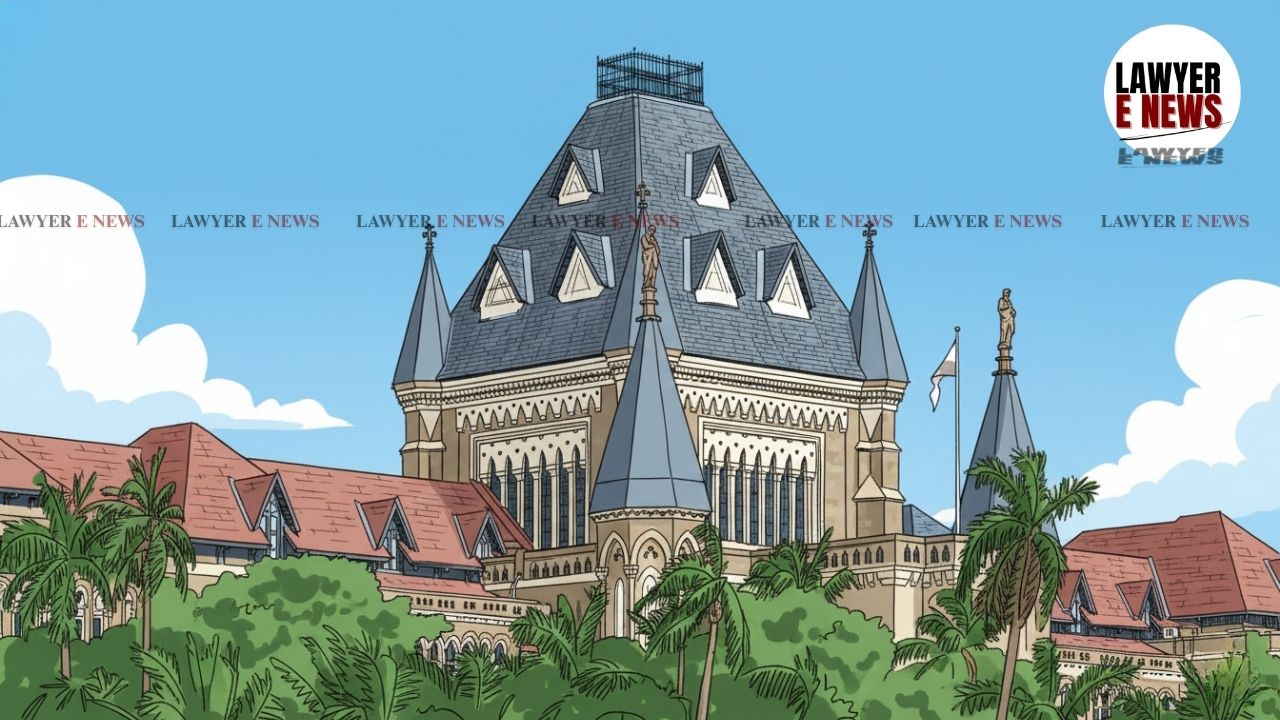
"Term 'employer' has a wide meaning under the Act and includes not only the immediate employer but also the principal employer who has ultimate control and supervision over the establishment and the work being carried out" Bombay High Court (Nagpur Bench), in a significant ruling, held that the owner of an establishment cannot escape liability under the Employees’ Compensation Act by merely claiming that a worker was employed by a manager or supervisor.
A single-judge bench of Justice Y.G. Khobragade observed that since the Act is beneficial legislation, the term "employer" must receive a liberal interpretation that includes the principal employer who exercises ultimate control over the premises.
The appellants are the legal heirs of Maroti Misal, who died in a massive explosion on April 27, 2019, while working at an explosive godown. Although the godown was owned by Respondent No. 1, the Labour Court initially fastened liability only upon the manager (Respondent No. 2), exonerating the owner on the grounds that a direct employer-employee relationship with the deceased was not proven. The claimants challenged this exoneration, seeking joint and several liability.
The primary question before the court was whether the owner of an explosive godown can be held jointly and severally liable for a worker's death in the absence of a direct contractual agreement. The court was also called upon to determine whether the "control and supervision test" is sufficient to establish an employer-employee relationship under the Employees’ Compensation Act.
EC Act Is Beneficial Legislation Requiring Liberal Interpretation
The Court began by emphasizing that the Employees’ Compensation Act is a welfare statute enacted to protect workers and their families in cases of industrial accidents. Justice Khobragade noted that the law must always be interpreted in a manner that favors the claimants. Citing the Supreme Court's ruling in Golla Rajanna vs Divisional Manager, the Court held that technicalities should not be used to defeat the object of the Act.
"The Employees’ Compensation Act is a beneficial and welfare legislation... therefore it must always be interpreted in a liberal manner in favour of the Claimants."
Strict Proof Of Employment Relationship Not Required
The High Court observed that, unlike standard civil suits, the Employees’ Compensation Act does not require the strict production of appointment letters or salary slips to prove employment. Referring to the precedent in Mackinnon Mackenzie & Co. Pvt. Ltd. vs Ibrahim Mahmmed Issak, the Court stated that such a relationship can be established based on the nature of the work, surrounding circumstances, and the probability that the worker was present at the site for duty.
"The law does not require strict proof of employer–employee relationship like in civil suits, and such relationship can be established on the basis of surrounding circumstances, nature of work, and probabilities."
Principal Employer Liable Under Control And Supervision Test
The Bench addressed the definition of an "employer," noting that it is broad enough to cover those who have ultimate supervision over the establishment. Citing Dharangadhra Chemical Works Ltd. v. State of Saurashtra, the Court applied the "control and supervision test." It found that since Respondent No. 1 owned the godown and the blasting materials, he remained the principal employer even if the deceased was supervised by a manager.
"A person who owns the establishment and exercises control cannot escape liability by shifting responsibility onto another person."
Contradictory Defenses By Owners Warrant Adverse Inference
The Court took a dim view of the contradictory stands taken by the respondents. While the owner denied any relationship, the manager had previously admitted his role as a supervisor in police statements. The Court held that when an employer takes inconsistent defenses or fails to produce crucial documents like licenses or wage registers, the court is entitled to draw an adverse inference against them to protect the worker’s interests.
"Where the employer takes false, inconsistent, or contradictory defences, the Court is entitled to reject such defence and draw an adverse inference against him."
Commissioner Erred In Fastening Liability Only On Manager
Justice Khobragade found the Labour Court’s decision to exonerate the owner "perverse" and "illegal." The High Court noted that the lower court failed to frame a proper issue regarding the principal employer's liability. The Bench observed that the owner of a hazardous establishment, such as an explosive godown, is duty-bound to ensure safety and compensate for accidents occurring within his premises under his ultimate command.
"The findings recorded by the learned Commissioner, to the extent of exonerating Respondent No. 1 are clearly perverse and cannot be sustained in law... as it is based on no evidence, or when relevant and material evidence is ignored."
Final Order On Compensation And Interest
The High Court confirmed the compensation amount of Rs. 8,47,160/- but modified the award to make both the owner and the manager jointly and severally liable. The Court further upheld the grant of 12% interest per annum from the date of the incident and a 50% penalty amounting to Rs. 4,23,580/-. The respondents were directed to deposit the entire amount within eight weeks.
The High Court concluded that the principal employer’s liability is non-delegable when the work is carried out in their establishment and under their authority. By holding both the owner and the manager liable, the Court reinforced the protective shield of the Employees’ Compensation Act for dependents of deceased workmen. The appeal was allowed, and the exoneration of the godown owner was set aside.
Date of Decision: 06 May 2026