-
by sayum
28 July 2026 9:43 AM







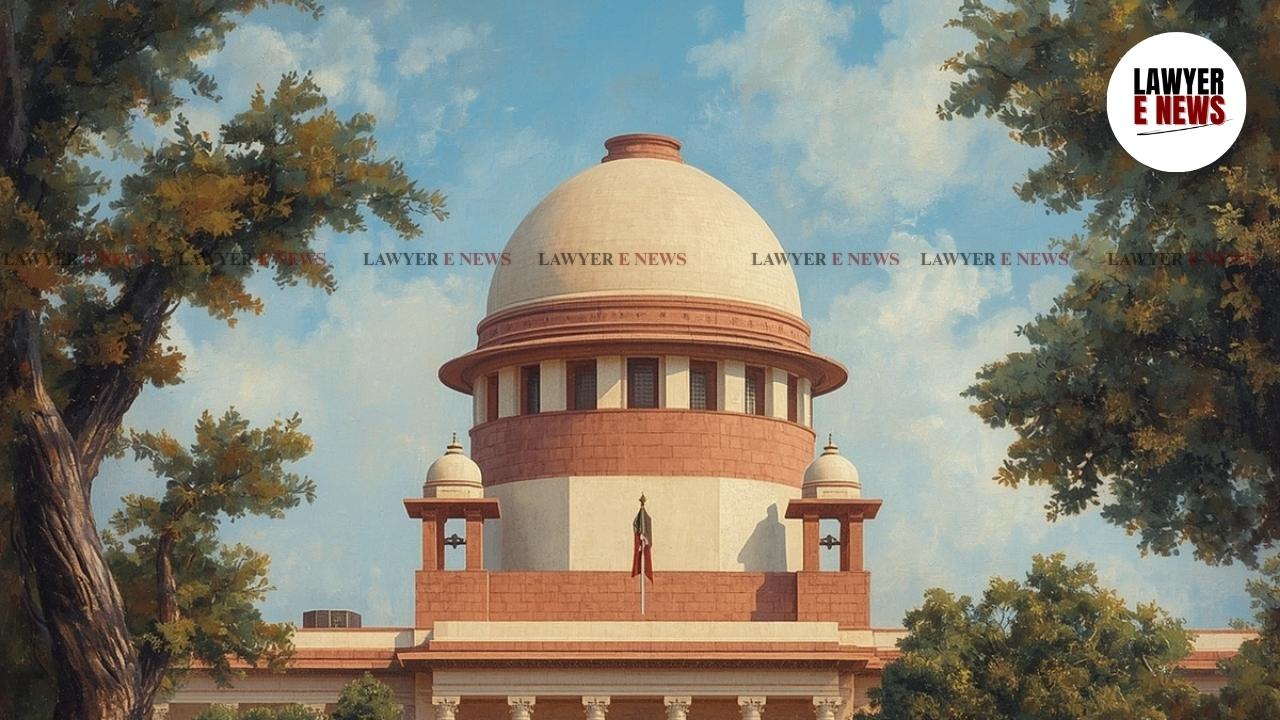
"Power to set aside election results vests exclusively with the Prescribed Authority, and once it has become functus officio, such power cannot be exercised thereafter," Supreme Court, in a significant judgment dated May 11, 2026, has held that an Election Tribunal or Prescribed Authority ceases to have jurisdiction over an election dispute once it passes an order that is final in nature.
A bench of Justice Aravind Kumar and Justice Prasanna B. Varale observed that if an authority effectively grants the final relief sought in an election petition while ordering a recount, it becomes ‘functus officio’ and loses the legal competence to pass any subsequent orders or declare a fresh result based on the recount.
The Court emphasized that while the power to set aside election results is exclusive to the Prescribed Authority, this power is exhausted the moment a final adjudication is made. The bench noted that election officials, having once discharged their duties, cannot reassume authority to declare results afresh if the adjudicating body itself has lost its jurisdiction through the passage of a final order.
The case originated from a 2021 Three-Tier Panchayat Election for the post of Gram Pradhan in Parauli Suhagpur, Uttar Pradesh. The Appellant, Urmila Devi, had lost the election to Respondent No. 3, Manoj Devi, by a slim margin of two votes. Alleging irregularities in the counting process and violations of the U.P. Panchayat Election Rules, 1994, the Appellant filed an election petition before the Sub-Divisional Officer (SDO) under Section 12C of the U.P. Panchayat Raj Act, 1947.
On November 5, 2022, the SDO passed an order allowing the election petition and directing a recount. Following the recount, the Appellant was found to have won by 13 votes, and the SDO subsequently declared her the successful candidate. However, the High Court of Allahabad set aside these proceedings, holding that the SDO’s initial order was a final one, which rendered the authority ‘functus officio’ and incapable of passing further orders.
The primary question before the Supreme Court was whether the order dated November 5, 2022, passed by the Prescribed Authority, was an interim direction or a final order. The Court was also called upon to determine if the Authority had the jurisdiction to pass a second order declaring the Appellant as the winner after the election petition had already been "allowed" in the first instance.
Scheme Of Section 12C Of U.P. Panchayat Raj Act
The Court began its analysis by examining the statutory framework governing election disputes under the U.P. Panchayat Raj Act. It noted that under Section 12C, the Prescribed Authority has the power to hear applications questioning an election on grounds of corrupt practices or material effects on results due to improper acceptance or rejection of votes.
Authority Ceases Jurisdiction Upon Granting Final Relief
The bench observed that once the Prescribed Authority passes an order granting final relief, it is well-settled in law that it ceases to have jurisdiction to pass any further order. Referring to the landmark precedent in Hari Vishnu Kamath v. Syed Ahmad Ishaque, the Court reiterated that after the final decision of an election petition, a tribunal has no authority to continue exercising jurisdiction.
Court Explains The Concept Of Functus Officio
Drawing from the logic applied by the Allahabad High Court in Parasuram vs. State of U.P., the Supreme Court noted that if an authority allows an election petition and then directs a recount, it has effectively "passed on the mantle." Once the petition is decided, the Authority becomes ‘functus officio,’ and any subsequent recount results become meaningless as the Authority is now powerless to set aside the previous election or declare a new winner.
Distinction Between Interim And Final Recount Orders
The Appellant had relied on a recent Supreme Court decision in Raj Kumari v. Asha Devi, where a recount order was held to be interim. However, the bench distinguished the two cases based on the specific language used in the orders. In Raj Kumari, the SDO had "partially accepted" the petition and fixed a date for recount to apprise the court of the results before final adjudication.
Language Of The Order Determines Its Legal Nature
In contrast, the Court pointed out that the SDO’s order in the present case explicitly stated that the petition was "allowed" and the statement of the defendant was "rejected." The bench observed that such phrasing indicates a complete adjudication of the dispute, leaving no scope for further orders.
SDO Passed Two Final Orders In A Single Case
The Supreme Court found that by allowing the petition on November 5, 2022, and then passing another order on March 17, 2023, to declare the Appellant as the returned candidate, the SDO had effectively passed two final orders. "The High Court was therefore required to determine whether the order... was indeed a final order, or merely an interim direction," the bench noted.
Finality Of The Adjudication Process
The Court held that the difficulty arising from passing a final order before a recount is that the consequent cessation of jurisdiction prevents any fresh declaration of results. The bench clarified that election officers cannot reassume authority to declare results once they have discharged their duties, and the Prescribed Authority cannot help them do so once it has become ‘functus officio.’
Ultimately, the Supreme Court concluded that the High Court was correct in setting aside the SDO’s orders. The bench affirmed that the sanctity of the electoral process requires strict adherence to jurisdictional boundaries. While dismissing the appeal, the Court reiterated the High Court's caution to the Sub-Divisional Magistrate to remain careful in future election matters.
Date of Decision: May 11, 2026