
-
by sayum
28 August 2026 2:11 PM







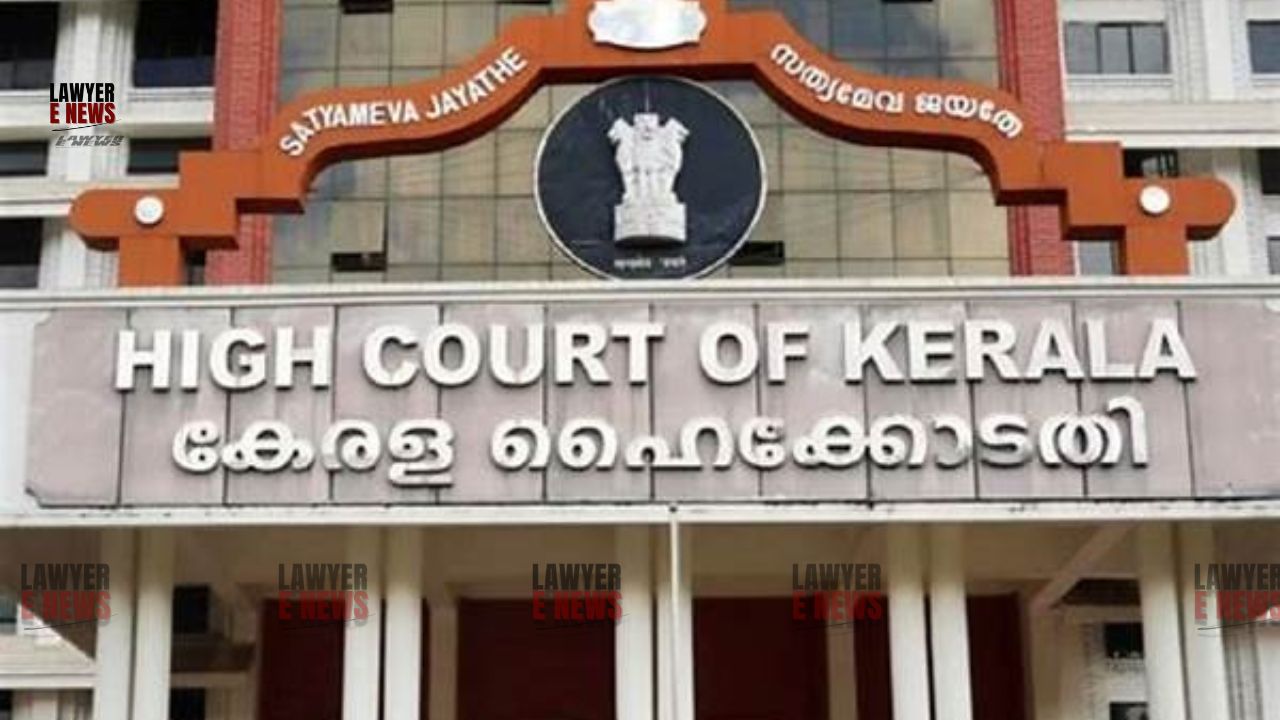
“When the plaintiff has paid 87% of the sale price within the agreed time and shows no delay or default, denying specific performance would cause irreparable injustice” — Justice C. Pratheep Kumar In a significant ruling High Court of Kerala allowed a suit for specific performance of a land sale agreement that had been denied by the trial court nearly 30 years ago. The Court ruled that the appellant-plaintiff, M.B. Thambi, who had paid a substantial 87% of the total consideration towards the purchase of 11.538 cents of property in Ernakulam, was legally and equitably entitled to have the sale executed in his favour. The ruling overturned the judgment of the III Additional Sub Court, Ernakulam, in O.S. No. 169 of 1996.
Justice C. Pratheep Kumar held that the denial of specific performance would amount to “irreparable loss, injuries and inconvenience” to the plaintiff, particularly in the absence of any cogent evidence of loan as alleged by the defendant.
“The defendant cannot plead loan when he executed a sale agreement, received ₹7 lakhs and failed to return even a single rupee” — Court Rejects Defendant’s Theory of Sham Sale Agreement
The dispute arose from an agreement dated 16.01.1995 (Exhibit A1) wherein the plaintiff agreed to purchase the suit property for ₹70,000 per cent, amounting to a total consideration of approximately ₹8,07,660. On the date of agreement, the plaintiff paid ₹5,00,000 as advance, and a further ₹2,00,000 was paid on 15.01.1996, with the agreement being extended by one month at the request of the defendant. This extension was also endorsed on the agreement itself (Exhibit A1(a)).
The defendant, Martin Payuva, contended that the transaction was not a sale but a loan arrangement, and that the documents were executed merely as security. He claimed that he had handed over the title deeds temporarily and never intended to sell his land. He further contended that his property was worth ₹5 lakhs per cent, and no rational seller would have agreed to the much lower rate of ₹70,000 per cent.
The Court, however, flatly rejected these claims, observing:
“The contention of the defendant that he never agreed to sell the property… cannot be believed, especially in the absence of any convincing evidence to the contrary.”
It noted that the defendant had not produced even a scrap of paper to show repayment of any amount, nor had he disclosed any terms typically associated with a loan — such as interest rate, duration, or repayment method.
“Defendant received ₹7 lakhs and claims no sale was ever intended — yet has no proof of repayment or even an alternative agreement” — Court Highlights Implausibility of Defence
Justice Pratheep Kumar emphasized that once Exhibit A1 and its endorsement A1(a) were admitted by the defendant, it was up to him to prove the contrary, which he failed to do. Further, the court pointed to the complete absence of any repayment of the alleged loan, stating:
“If he had paid any interest for the said amount… he could have produced at least some scrap of paper… But, the defendant could not produce even a scrap.”
The Court also analyzed the valuation evidence, where the defendant tried to show the consideration was grossly inadequate. It noted that the defendant’s own valuer (DW2) had no credible basis, did not rely on any public documents, and provided inflated estimates which even the defendant hadn’t claimed in his pleadings.
In contrast, the plaintiff produced Exhibit A2, a registered sale deed from 1991 which showed the value of the same land as ₹16,900 per cent. The Court concluded that the agreed sale price in 1995 — ₹70,000 per cent — was not undervalued, but rather a substantial appreciation.
“Discretion under Specific Relief Act Must Be Judicious, Not Arbitrary” — Court Applies Pre-2018 Legal Framework
The defendant’s counsel argued that specific performance should not be granted based on the amended Specific Relief Act, 2018, which mandates that the relief is no longer discretionary. However, the Court clarified that since the transaction dated back to 1995, the unamended Section 20 of the Act would apply.
Relying on the Supreme Court's decision in Katta Sujatha Reddy v. Siddamsetty Infra Projects Pvt. Ltd. (2023) 1 SCC 355, the Court held:
“Even under the unamended law, discretion must be sound, reasonable, and guided by judicial principles… Specific performance cannot be denied merely because the value of property has increased subsequently.”
The Court rejected the claim that specific performance would cause hardship to the defendant, stating:
“Since the defendant has received 87% of the total sale consideration… even if the value of the property has increased, it will not cause any prejudice.”
“No Laches or Delay on Plaintiff’s Part; Suit Filed Promptly After Defendant Defaulted” — Court Praises Plaintiff’s Diligence
The Court found that the plaintiff had acted promptly and diligently throughout:
Sent notice within the original agreement period.
Extended the agreement at the defendant’s request.
Filed suit within 8 months of original agreement, when the defendant refused to execute the sale deed.
Justice Pratheep Kumar observed:
“There were no latches on the part of the plaintiff… He was always ready and willing to perform his part of the contract.”
Plaintiff Entitled to Sale Deed; Defendant to Execute Conveyance or Court Will Do So
Allowing the appeal, the Court granted a decree for specific performance and directed the plaintiff to deposit the balance sale consideration along with 8% interest per annum from the date of agreement till date of deposit. Upon doing so, the defendant is to execute a registered deed of conveyance. In case of refusal, the plaintiff is entitled to have the sale deed executed through court process.
“After executing the sale deed… the defendant could receive the balance sale consideration along with interest so deposited by the plaintiff.”
Date of Decision: 23rd September 2025





