-
by sayum
05 August 2026 3:07 PM







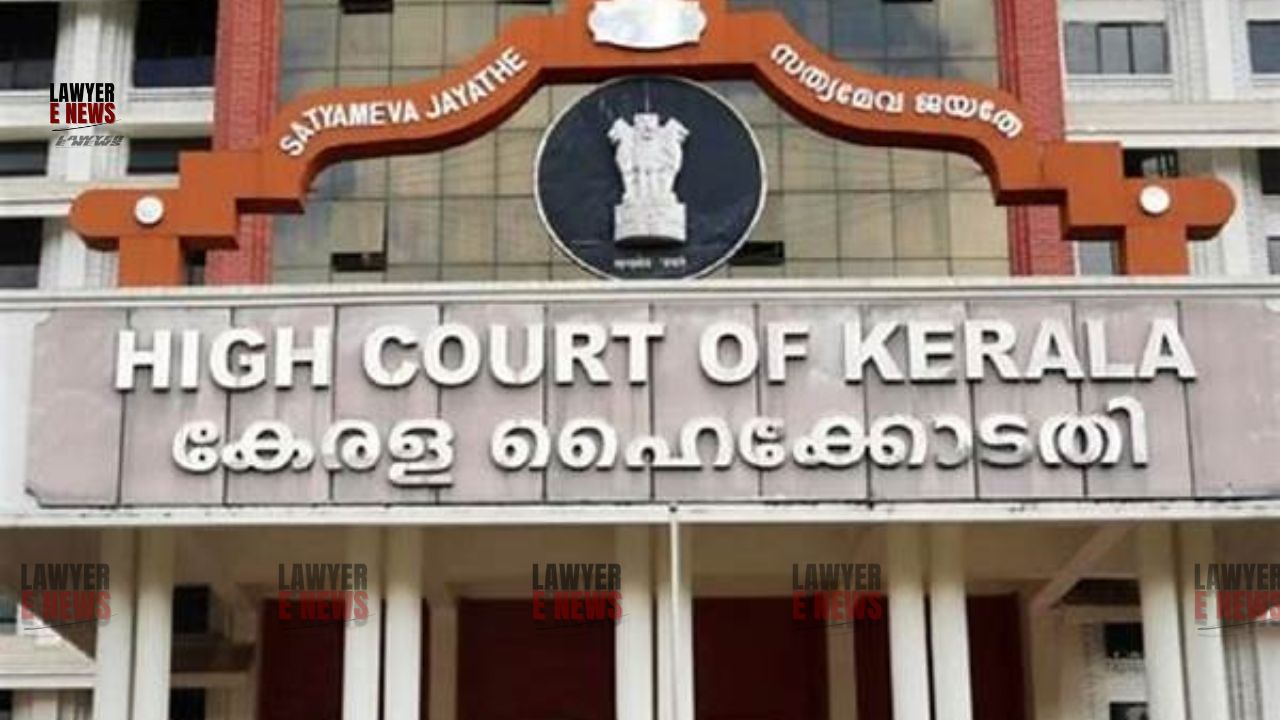
“Absence of Direct or Constructive Knowledge of Notice to Accused Defeats Section 138 Prosecution”: In a significant ruling Kerala High Court has quashed the conviction of an accused under Section 138 of the Negotiable Instruments Act, 1881, on a fundamental procedural lapse. Justice P.V. Kunhikrishnan held that, “If there is no evidence that the accused had knowledge of the service of statutory notice, it cannot be considered valid service under Section 138(b) of the Act.” Relying on binding precedent laid down by the Supreme Court, the Court found that the complainant failed to establish mandatory service of legal notice upon the drawer of the dishonoured cheque and thus the conviction could not stand.
The case arose from a business transaction where the accused, Saju, purchased construction materials worth ₹92,500 from M/s Shalimar Hardwares, a proprietary concern represented by one Mohammedkunju. In discharge of this legally enforceable debt, the accused issued a cheque dated 02.04.2019 drawn on State Bank of India, Pallickal Branch.
However, upon presentation, the cheque was dishonoured on 03.04.2019 with the bank endorsement “funds insufficient”. The complainant issued a legal demand notice dated 27.04.2019, but crucially, this notice was received not by the accused himself but by a relative on 30.04.2019.
The Judicial First Class Magistrate Court-II, Kayamkulam, convicted the accused and sentenced him to three months simple imprisonment with a direction to pay ₹92,500 as compensation under Section 357(3) of the CrPC. On appeal, the sentence was reduced to one month by the Additional Sessions Judge-I, Mavelikkara, but the conviction was upheld. Challenging the same, the accused approached the High Court in revision, arguing that no valid statutory notice was served on him.
The High Court framed the central legal issue succinctly: “Whether service of notice under Section 138(b) of the Negotiable Instruments Act, 1881, on a relative of the accused, without any evidence of the accused’s knowledge, is legally sufficient to sustain a conviction?”
The Court categorically held that the law under Section 138 requires the statutory notice to be served upon the drawer of the cheque and no one else. Justice Kunhikrishnan highlighted the exact legislative language stating, “As per Section 138(b) of the Act, the payee or the holder in due course of the cheque… makes a demand for the payment of the said amount of money by giving a notice in writing, to the drawer of the cheque…”
The Court closely scrutinized the complainant’s evidence, particularly the cross-examination of PW1, who candidly admitted, “The notice was served on the relative of the accused. I do not know whether the accused was aware of it.”
Quoting directly from the deposition, the Court noted:
“From the above-extracted passage in the evidence of PW1, it is clear that the notice was served on the relative of the accused. PW1 has no case that the accused has knowledge of the receipt of the notice by his relative.”
The Court clarified that neither direct service nor constructive notice could be inferred in the absence of evidence showing the accused was aware of the notice. As the judgment puts it, “If there is no such evidence, it is to be presumed that the statutory notice under Section 138(b)… is not served on the accused.”
Reference to Binding Precedent by Supreme Court
The High Court drew support from the landmark decision of the Supreme Court in Thomas M.D. v. P.S. Jaleel [2009 KHC 4398], where it was held:
“In the present case, the notice of demand was served upon the wife of the appellant and not the appellant. Therefore, there is no escape from the conclusion that complainant respondent had not complied with the requirement of giving notice in terms of clause (b) of proviso to Section 138 of the Act.”
Justice Kunhikrishnan observed, “The Apex Court has clearly laid down that service of notice on a family member, in absence of proof of knowledge by the drawer, cannot cure the defect of improper service under Section 138(b).” He added, “The High Court cannot overlook this mandatory condition, which is foundational to prosecution under the NI Act.”
Quashing the conviction and sentence, the High Court declared, “Therefore, the conviction and sentence imposed on the revision petitioner… are set aside and the revision petitioner is acquitted.”
The Court further ordered, “The bail bond, if any, executed by the petitioner will stand cancelled. The amount, if any, deposited by the revision petitioner… shall be disbursed to him forthwith.”
Justice Kunhikrishnan concluded emphatically, “Service of notice on the relative of the accused is not sufficient, especially when there is no evidence from the complainant that the accused was aware of the service of notice on his relative.”
This ruling by the Kerala High Court reinforces the indispensable nature of statutory safeguards under Section 138 of the Negotiable Instruments Act, 1881. The judgment serves as a reminder that non-compliance with procedural mandates, such as valid service of notice, strikes at the very root of criminal liability in cheque dishonour cases. Upholding the principles of fairness, the Court has once again reiterated that “legal consequences must follow legal compliance”.
Date of Decision: 02 July 2025