-
by sayum
28 August 2026 10:07 AM







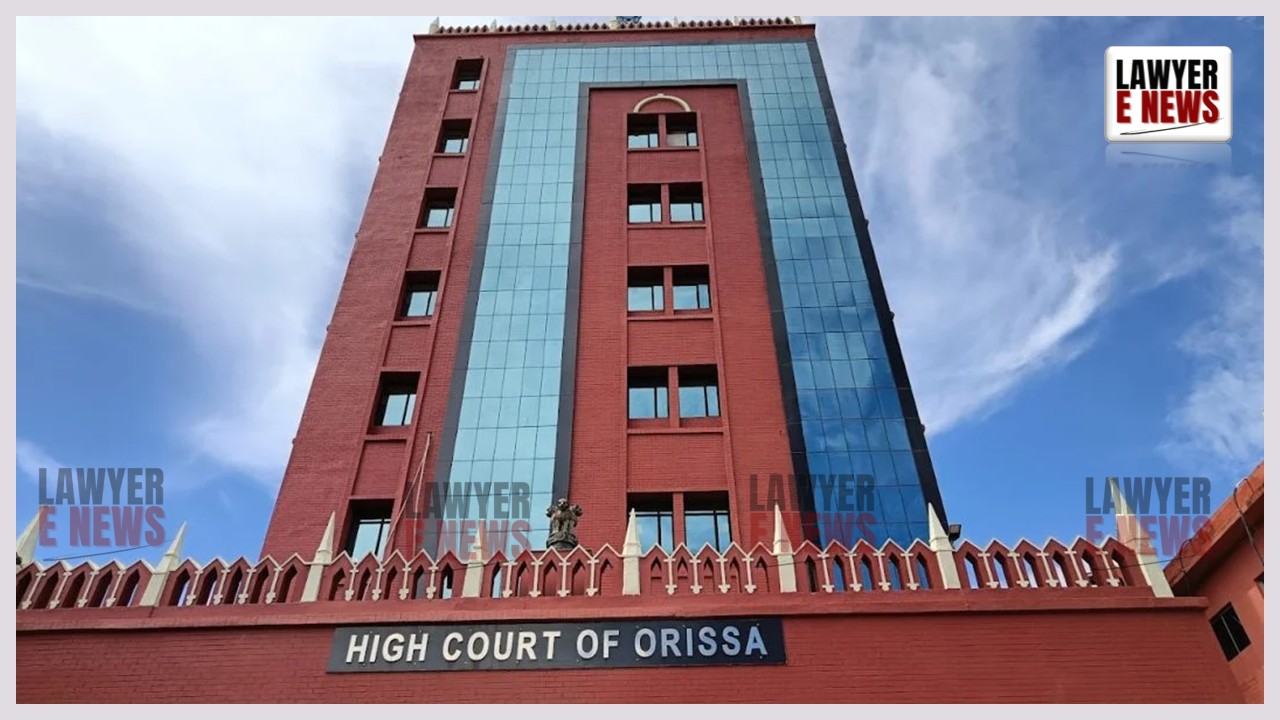
“Cash in Custody Serves No Purpose When Proper Documentation Can Preserve Its Evidentiary Value” - Orissa High Court in Lakshman Srinivasan v. Republic of India (CBI) [CRLREV No. 660 of 2024] allowed the release of ₹15 lakh in cash seized by the Central Bureau of Investigation (CBI) from the office of the accused in a major financial fraud case. Justice Sibo Sankar Mishra held that idle retention of currency, particularly when there is no immediate evidentiary necessity, does not serve the purpose of justice and instead hampers economic fluidity.
The Court observed, “Currency is meant to be in circulation to facilitate trade, commerce, and overall economic growth. Keeping large sums of money idle in custody neither benefits the State nor the affected individuals.”
The petitioner, Lakshman Srinivasan, had been arrested in September 2022 on allegations of orchestrating a multi-crore Ponzi scheme through M/s Infinity Realcon Ltd., which collected over ₹565 crore from investors between 2009 and 2014. During searches conducted at his offices and residences, ₹15 lakh in cash was recovered by the CBI from a cupboard at his office in Anand Lok Building, Kolkata.
An application under Sections 451 and 457 CrPC was filed by Srinivasan for release of the seized cash, asserting that it was his legally held money comprising withdrawals from his and his wife’s bank accounts, personal loans from family friends, and savings from his mother’s widow pension. The Trial Court, however, rejected his application, stating, “The source of the seized cash is not clear… and the cash is not properly accounted for by him.”
Justice Mishra examined whether continued retention of the seized amount was justified, particularly when its evidentiary value could be preserved through procedural safeguards. Drawing from the Supreme Court’s ruling in Sunderbhai Ambalal Desai v. State of Gujarat, the Court held, “The property should not be retained in the custody of the court or of the police for any time longer than what is absolutely necessary… The idea is that the property should be restored to the original owner after the necessity to retain it ceases.”
Referring to a recent precedent from the same Court in Santosh Kumar Tripathy v. State of Odisha, the Judge reiterated that, “The trial court is directed to release the seized cash… by preserving color photographs of the currency notes.”
The Court stressed the need for a balance between the interests of justice and economic circulation of money, observing, “If the money remains stagnant, it serves no practical purpose and fails to contribute to economic activity. Currency must continue to circulate; otherwise, it restricts liquidity in the financial system and prevents the owner from utilizing the funds for legitimate purposes.”
Though critical of the petitioner’s role in the broader scam, the Court did not ignore procedural rights and equity. It stated, “With appropriate safeguards in place, there is no justification to retain the seized cash in judicial custody when its circulation can be ensured without compromising the trial.”
Accordingly, the Court ordered the release of the cash on the following terms:
“A formal Panchnama shall be prepared, along with high-resolution colour photographs of the seized currency, duly signed by the investigating officer, the petitioner, and two independent witnesses.”
It further directed, “The petitioner shall furnish a bank guarantee equivalent to ₹7.5 lakh and secure the remaining ₹7.5 lakh through indemnification of immovable property or equivalent financial security.”
An affidavit of undertaking was also mandated from the petitioner, stating that the released amount would be returned if required during trial and that any misuse would invite legal consequences.
Taking a broader view, the Court laid down comprehensive structural guidelines to be followed in cases involving seized property, observing that the absence of a unified approach has led to inefficiency and unnecessary burden on the justice system. It stated, “Seized currency should not remain stagnant in judicial custody… Appropriate action must be taken by the authorities and courts below to dispose of items unless necessary for trial.”
The Court also observed, “Vehicles, perishable goods, electronic devices, precious metals, and even narcotic substances must be dealt with in a time-bound and lawful manner to prevent depreciation, misuse, or logistical burdens.”
Highlighting the gravity of economic crimes, it nevertheless underscored the importance of balancing procedural integrity with economic rationale.
Concluding the judgment, Justice Mishra held, “With the above observations and directions, the CRLREV is allowed, subject to compliance with the conditions as stipulated above.”
This decision not only provides relief to the petitioner but also sets a clear procedural framework for courts and investigating agencies across Odisha. The Court directed its Registry to circulate this judgment to all subordinate courts and investigative agencies, noting, “Structured guidelines can ensure seized property is managed in a manner that is efficient, legally sound, and beneficial to both the justice system and society at large.”
Date of Decision: 10 April 2025