
-
by sayum
26 August 2026 1:49 PM







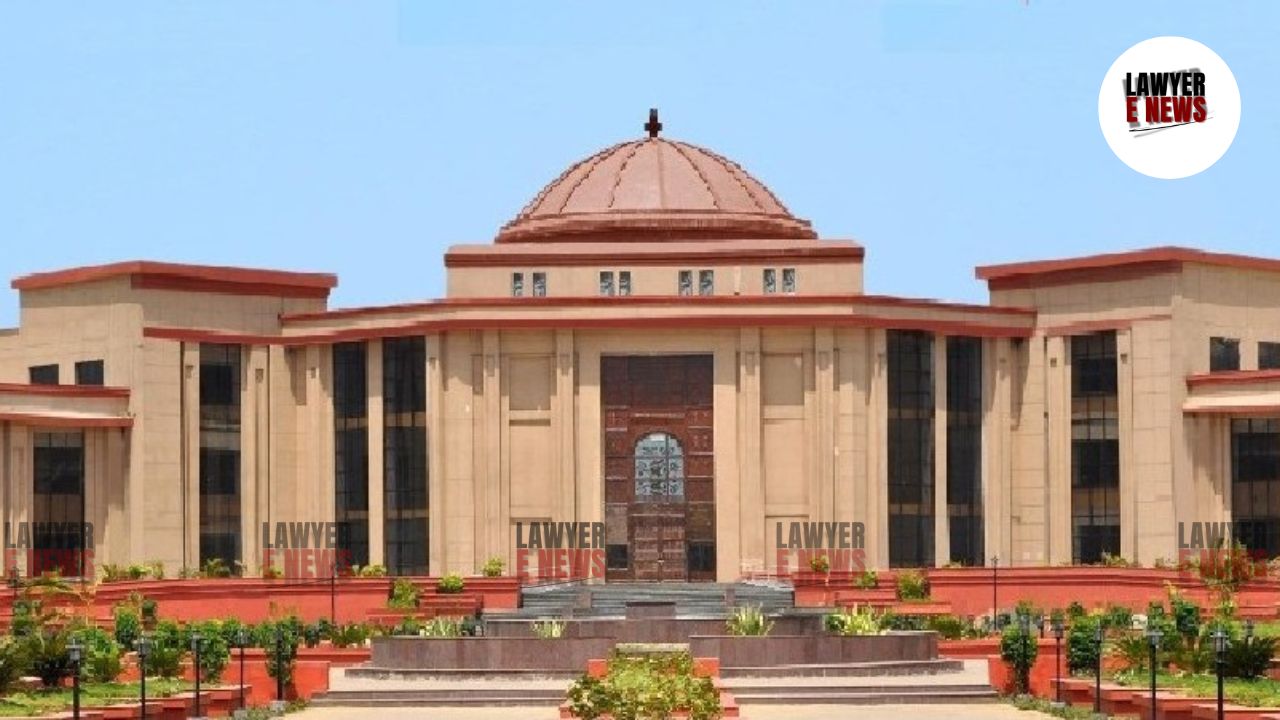
In a comprehensive ruling that settles several recurring procedural disputes in NDPS prosecutions, the Chhattisgarh High Court has dismissed three criminal appeals and affirmed the conviction and sentence of fifteen years rigorous imprisonment awarded to four persons for possession of 175 bottles of Codeine-containing cough syrup in commercial quantity.
Division Bench of Hon'ble Shri Ramesh Sinha, Chief Justice and Hon'ble Shri Ravindra Kumar Agrawal, Judge, disposing of the appeals on 11th March, 2026, held that recovery from bags and a ladies purse does not attract the mandatory requirement of Section 50 of the NDPS Act; that seizure at a public place is governed by Section 43 and not Section 42; that delay in routing samples through the Drug Inspector before forwarding to the Forensic Science Laboratory does not vitiate the prosecution case when the chain of custody is established; and that the statutory presumptions of conscious possession under Sections 35 and 54 of the NDPS Act stood unrebutted.
The judgment, arising from a common conviction by the Special Judge (NDPS Act), Bilaspur in Special Sessions (NDPS) Case No. 124/2023, will serve as a practical reference guide for prosecutors and defence counsel alike on the recurring procedural battlegrounds of NDPS trials.
Legal Issues and Court's Observations
Section 42 or Section 43? — The Public Place Distinction
The first major procedural battleground was whether the seizure ought to have been governed by Section 42 of the NDPS Act — which deals with search of buildings, conveyances or enclosed places on prior secret information and requires the information to be reduced to writing and forwarded to a superior officer — or Section 43, which governs seizure in public places or during transit.
The defence contended that the police had received prior secret information and that Section 42 therefore applied, making non-compliance with its procedural requirements fatal to the prosecution. The Court emphatically rejected this contention.
Relying on the Supreme Court's ruling in Firdoskhan Khurshidkhan v. State of Gujarat (2024), the Court held: "Section 42 of the NDPS Act deals with search and seizure from a building, conveyance or enclosed place. When the search and seizure is effected from a public place, the provisions of Section 43 of the NDPS Act would apply and hence there is no merit in the contention that non-compliance of the requirement of Section 42(2) vitiates the search and seizure."
The Court reinforced this with the Supreme Court's three-Judge Bench ruling in State of Haryana v. Jarnail Singh (2004), which had clearly distinguished the two sections: Section 42 applies to entry and search of buildings and enclosed places, while Section 43 applies to seizure in any public place or during transit — and the two operate in mutually exclusive domains. The Cultural Stage and Yoga Centre area at Shobha Vihar, from which the accused were intercepted while moving in transit, was unquestionably a public place within the explanation appended to Section 43. The contention of non-compliance with Section 42 was accordingly "misconceived and rejected."
"Search of Bag Is Not Search of Body" — Section 50 and Its Limits
The most vigorously contested issue was whether the mandatory safeguard of Section 50 of the NDPS Act had been violated. Section 50 requires an authorised officer about to search any person to inform him of his right to be searched before a Gazetted Officer or Magistrate. Counsel for Smt. Sneha Goyal additionally argued that Section 50(4) — which requires that the personal search of a female shall be conducted only by a female — was also violated, since it was her purse that was searched.
The Court, after a meticulous survey of Supreme Court authorities, rejected both contentions with clarity. The principle settled beyond doubt by the Constitution Bench in State of Punjab v. Baldev Singh (1999) and consistently followed thereafter is that Section 50 applies only to personal bodily search — not to the search of bags, containers, vehicles or any article carried by the accused.
The Court extracted the Supreme Court's definitive holding in State of Himachal Pradesh v. Pawan Kumar (2005): "A bag, briefcase or any such article or container, etc. can, under no circumstances, be treated as body of a human being... In order to make a search of such type of objects, the body of the carrier will not come in contact of the person conducting the search. Such objects cannot be said to be inextricably connected with the person, namely, the body of the human being."
Applying this to the facts, the Court held: "The purse carried by the female accused was taken from her possession and opened for the purpose of search, and the contraband bottles were recovered from the said purse. Such search of a purse or bag does not involve touching or searching the body of the accused and therefore cannot be construed as a personal search so as to attract the mandatory requirement under Section 50 of the NDPS Act." The contention of non-compliance with Section 50(4) for the female accused was held to be "wholly misconceived and devoid of merit."
Delay in Routing Samples — Chain of Custody Controls
A significant challenge was levelled against the prosecution's handling of the seized samples. The samples had been first forwarded to the Drug Inspector, Food and Drug Administration, and only thereafter — after resealing — sent to the Regional FSL. The defence argued this violated Rule 13 of the NDPS (Seizure, Storage, Sampling and Disposal) Rules, 2022, which requires samples certified by the Magistrate to be sent directly to the forensic laboratory without delay.
The Court acknowledged the importance of the statutory procedure but fastened on a critical evidentiary fact: the defence had not raised this objection during trial and, critically, had not put a single question to PW-10 (the Investigating Officer) regarding the delay or alleged violation of Rule 13 during cross-examination. No suggestion of tampering was ever put to any prosecution witness.
"In criminal trials, cross-examination is the most effective method available to the defence to challenge the credibility of prosecution witnesses and to expose any irregularity in the investigation. When the defence has not chosen to confront the witnesses on such crucial aspects during cross-examination, it cannot subsequently be permitted to raise such a contention at the appellate stage merely by way of argument," the Court held.
Further, the FSL report itself recorded that the seals on the sample packets were intact and tallied with the specimen seal. The Drug Inspector had also found the seals intact on receipt. The chain of custody — from seizure through the Drug Inspector to the FSL — was duly established through oral and documentary evidence, making the delay in routing immaterial.
Informant as Investigating Officer — No Per Se Bias
PW-10 Sub-Inspector Bharat Lal Rathore was simultaneously the informant, a member of the raiding party and the Investigating Officer. The defence argued this created bias vitiating the investigation. The Court applied the Constitution Bench ruling in Mukesh Singh v. State (NCT of Delhi) (2020), which had expressly overruled the earlier line of authority holding that such dual role automatically entitles an accused to acquittal. The question of actual bias or real likelihood of bias is to be determined on the facts of each case. The appellants had placed no material showing any enmity, motive or actual prejudice, and their plea of false implication remained a bare assertion.
Conscious Possession — Presumptions Unrebutted
Once possession of the commercial quantity of Codeine-containing cough syrup was established from the bags and sacks carried by the appellants — corroborated by seizure memos, the Drug Inspector's report and the FSL chemical analysis — the statutory presumptions under Sections 35 and 54 of the NDPS Act stood triggered. The burden shifted to the accused to explain that their possession was not conscious. The only response from the accused was a bald denial during examination under Section 313 Cr.P.C. No defence evidence was led. The Court held the presumptions unrebutted and the prosecution case proved beyond reasonable doubt.
The fact that two independent witnesses did not support the prosecution case in material particulars was held to be immaterial — it is well settled that the testimony of official witnesses cannot be discarded merely because independent witnesses have turned hostile, provided the official testimony is reliable and consistent, as it was in this case.
Decision
Dismissing all three criminal appeals and affirming the conviction and sentence, the Chhattisgarh High Court has delivered a ruling that consolidates the law on four frequently litigated procedural issues in NDPS prosecutions. The judgment crystallises: that Section 50 is confined to bodily search and does not extend to bags, purses or containers; that seizures in public places are governed by Section 43 and compliance with Section 42 is neither required nor applicable; that delay in sample dispatch does not vitiate prosecution when the chain of custody is intact and no cross-examination challenge was mounted; and that the dual role of informant-investigator does not per se create bias without proof of actual prejudice. All four appellants are directed to continue serving their remaining sentences of fifteen years rigorous imprisonment.
Date of Decision: 11th March, 2026





