-
by sayum
08 August 2026 6:12 AM







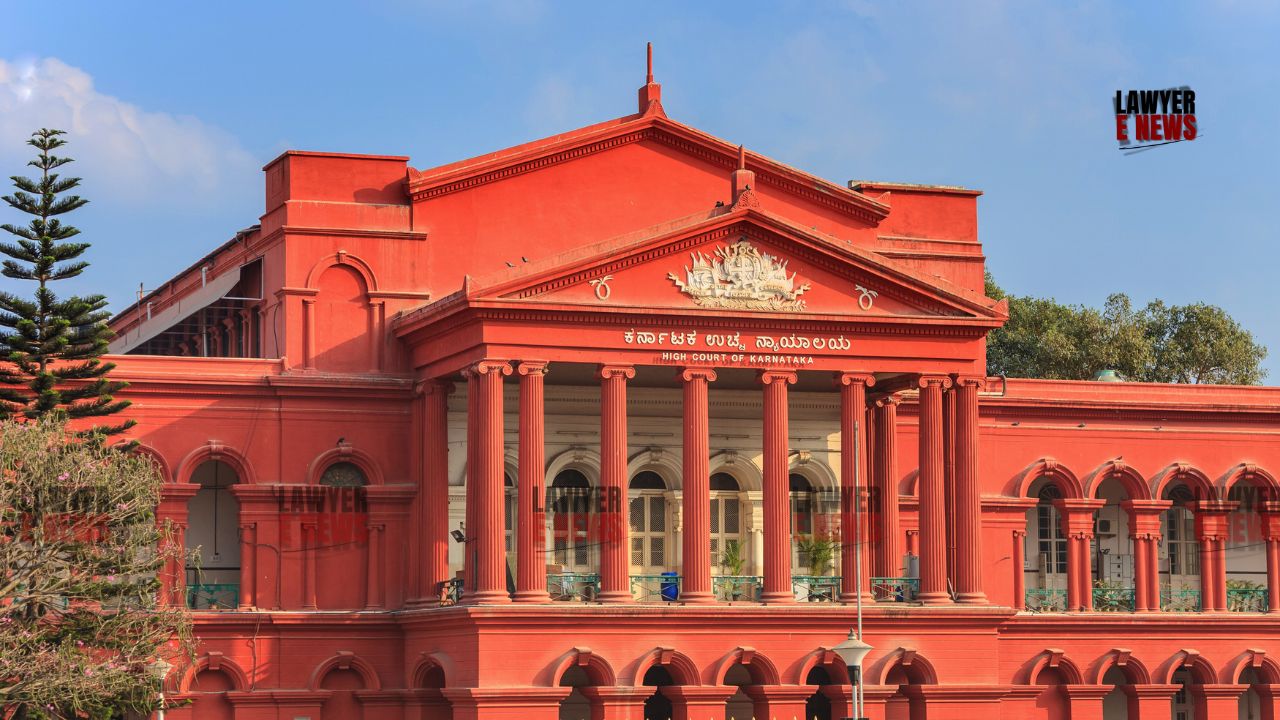
"Rejection of application would not be justified especially in present case where it is filed at a highly belated stage of arguments after completion of trial in an apparent attempt to set the clock back, re-open evidence stage and protract proceedings." Karnataka High Court, in a significant ruling, held that criminal revision petitions under Section 397 of the CrPC are not maintainable against interlocutory orders rejecting forensic applications in cheque bounce cases.
A single bench of Justice Ravi V Hosmani observed that trial proceedings under Section 138 of the Negotiable Instruments Act cannot be permitted to be derailed by belated requests to send documents for expert examination filed merely to protract litigation.
The petitioner had instituted a private complaint under Section 138 of the NI Act alleging that the respondent had issued a cheque for Rs. 30,00,000 to discharge a friendly loan, which was dishonoured upon presentation due to a blocked account. After traversing through multiple jurisdictional transfers, the trial reached the stage of final arguments before the JMFC court. At that belated juncture, the accused filed an application under Section 45 of the Indian Evidence Act seeking to refer the disputed cheque to a forensic laboratory to determine the age of the ink.
Scope Of Revisional Jurisdiction
The primary question before the court was whether a revision petition under Section 397 of the CrPC is maintainable against an interlocutory order passed by a trial court rejecting an application for forensic examination. The court examined the statutory bar against interlocutory revisions and noted the settled legal position.
Interlocutory Nature Of Orders "Order Rejection Request For Forensic Testing Is Interlocutory"
The bench noted that orders declining to summon expert evidence or closing a party's right to lead evidence are purely interlocutory in nature. Citing the Supreme Court's classifications in Girish Kumar Suneja v. CBI and the Delhi High Court ruling in Varun Aggarwal v. State of NCT of Delhi, the court reaffirmed that statutory revisions cannot be maintained against such interim procedural orders.
Bar Against Belated Tactics "Application Filed At Stage Of Arguments To Protract Proceedings"
The court emphasized that the accused had filed the forensic application only when the matter was set for final arguments after the complete conclusion of the trial. The bench observed that such belated attempts are transparent ploys designed to set the clock back, reopen closed evidence stages, and unduly prolong the litigation.
Misalignment Of Pleading And Prayer "Prayer In Application Did Not Relate To Grounds Urged"
The court pointed out a fundamental disconnect in the accused's strategy, noting that while the defence orally argued the need to identify the author of the handwriting, the actual prayer in the application sought to determine the age of the ink used for the signature and contents. The bench underscored that scientific mechanisms to precisely establish the age of ink remain limited and cannot be invoked arbitrarily.
Distinguishing T Nagappa Precedent "T Nagappa's Case Not Applicable To Routine Belated Requests"
Addressing the reliance placed by the respondent on the apex court ruling in T Nagappa v. Y R Muralidhar, the High Court held that the said precedent involved specific allegations of a signed blank cheque being misused after a lapse of five years. In the absence of comparable exceptional circumstances, routine applications cannot be entertained to stall concluded proceedings.
Concurring with the petitioner's submissions, the High Court allowed the criminal petition and set aside the contrary order passed by the II Additional District and Sessions Judge, Kolar, in Crl.R.P. No. 10 of 2021. The ruling reinforces the summary nature of Section 138 NI Act trials, ensuring that statutory objectives are not frustrated by dilatory procedural tactics.
Date of Decision: 04 August 2026