-
by sayum
08 August 2026 6:12 AM







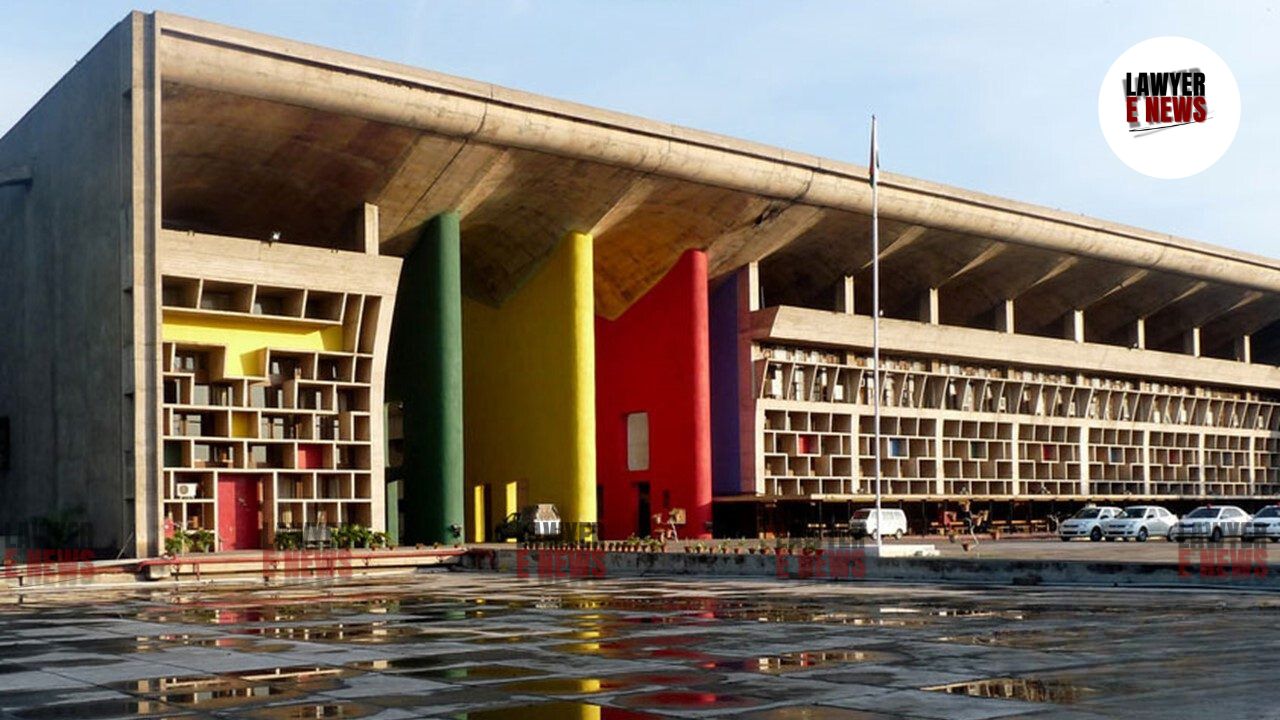
"The intention of the Legislature under the UA(P) Act makes the bail exception and jail the rule." Punjab and Haryana High Court, in a significant ruling dated July 14, 2026, held that the conventional principle of "bail is the rule, jail is an exception" does not apply to offences under the Unlawful Activities (Prevention) Act (UAPA).
A bench comprising Justice Rajesh Bhardwaj and Justice Deepak Manchanda observed that the legislative intent behind the stringent statute completely reverses traditional bail jurisprudence. The court made these crucial observations while dismissing the regular bail appeals of three accused allegedly involved in the 2021 Jalalabad tiffin bomb blast orchestrated by a cross-border terror module.
The case stems from an explosion on September 15, 2021, in Jalalabad, District Fazilka, where a motorcycle rider carrying a tiffin bomb was killed and two bystanders were severely injured. The National Investigation Agency (NIA) subsequently took over the probe, alleging that a Pakistan-based terror module of the Khalistan Liberation Force (KLF) and International Sikh Youth Federation (ISYF) orchestrated the blast to cause mass casualties. The appellants—Ranjit Singh, Gurpreet Singh, and Gurcharan Singh—approached the High Court after the Special NIA Court at Mohali dismissed their respective bail applications.
The primary question before the court was whether the appellants were entitled to regular bail on the ground of prolonged incarceration of nearly four years and an alleged delay in the conclusion of the trial. The court was also called upon to determine whether a prima facie case under the UAPA was established against the appellants based on the NIA's investigation and recovery of evidence.
Bail Jurisprudence Reversed Under UAPA
Delving into the statutory embargo under Section 43D(5) of the UAPA, the court emphasized that the parameters for granting bail in terror cases are entirely distinct from ordinary penal laws. Relying heavily on the Supreme Court's landmark decision in Gurwinder Singh vs. State of Punjab, the bench noted that the exercise of general power to grant bail is severely restrictive under the UAPA framework. The court explicitly stated that the oft-quoted phrase favoring liberty has no place when dealing with anti-terror legislation.
"Thus, Hon’ble the Supreme Court, while considering the bail under the Unlawful Activities (Prevention) Act, has held that ‘bail is the rule, jail is the exception’ does not find any place while dealing with bail applications under the UA(P) Act," the bench observed.
Delay In Trial Not A Sole Ground For Bail
Addressing the defense argument—predicated on the Supreme Court's ruling in Union of India vs. K. A. Najeeb—that the appellants had been behind bars for four years with over 150 witnesses yet to be examined, the court found no merit in granting relief solely on the basis of delay. The bench concurred with the NIA's submission that mere delay in a trial pertaining to grave terror offenses cannot be weaponized as a primary ground to secure bail. The court took judicial notice of the fact that the trial is actively progressing, with 18 out of 208 prosecution witnesses having already been examined.
Active Participation And Prima Facie Involvement
Examining the specific roles attributed to the accused, the court noted that the blast was the result of a very well-hatched conspiracy coordinated by handlers sitting across the border in Pakistan. The court firmly rejected the defense's contention that the accused were not named in the initial FIR and were merely implicated on the basis of disclosure statements of co-accused persons. It observed that the NIA had placed sufficient, corroborative material on record demonstrating their deep and active involvement in the conspiracy.
"There is enough material, which would show the prima facie involvement of all three appellants in not only hatching the conspiracy in carrying out the terrorist activity but they have actively participated in the execution of the same," the court noted.
Logistical Support And Criminal Antecedents
The court detailed the individual complicity of the appellants, noting that Ranjit Singh allegedly buried a tiffin bomb and provided his motorcycle for reconnaissance in exchange for terror funds. Similarly, Gurpreet Singh provided safe shelter to a co-conspirator to evade arrest, while Gurcharan Singh acted as a prominent drug peddler smuggling heroin and arms to finance the terror module. Furthermore, the court highlighted that all three appellants were habitual offenders burdened with multiple pending cases under the IPC, NDPS Act, and Explosive Substances Act.
Finding that the accusations against the appellants were prima facie true and squarely hit by the proviso to Section 43D(5) of the UAPA, the High Court declined to grant the concession of regular bail. Consequently, all three appeals filed under Section 21(4) of the National Investigation Agency Act were dismissed, and pending applications were disposed of accordingly.
Date of Decision: 14 July 2026