-
by sayum
08 August 2026 6:12 AM








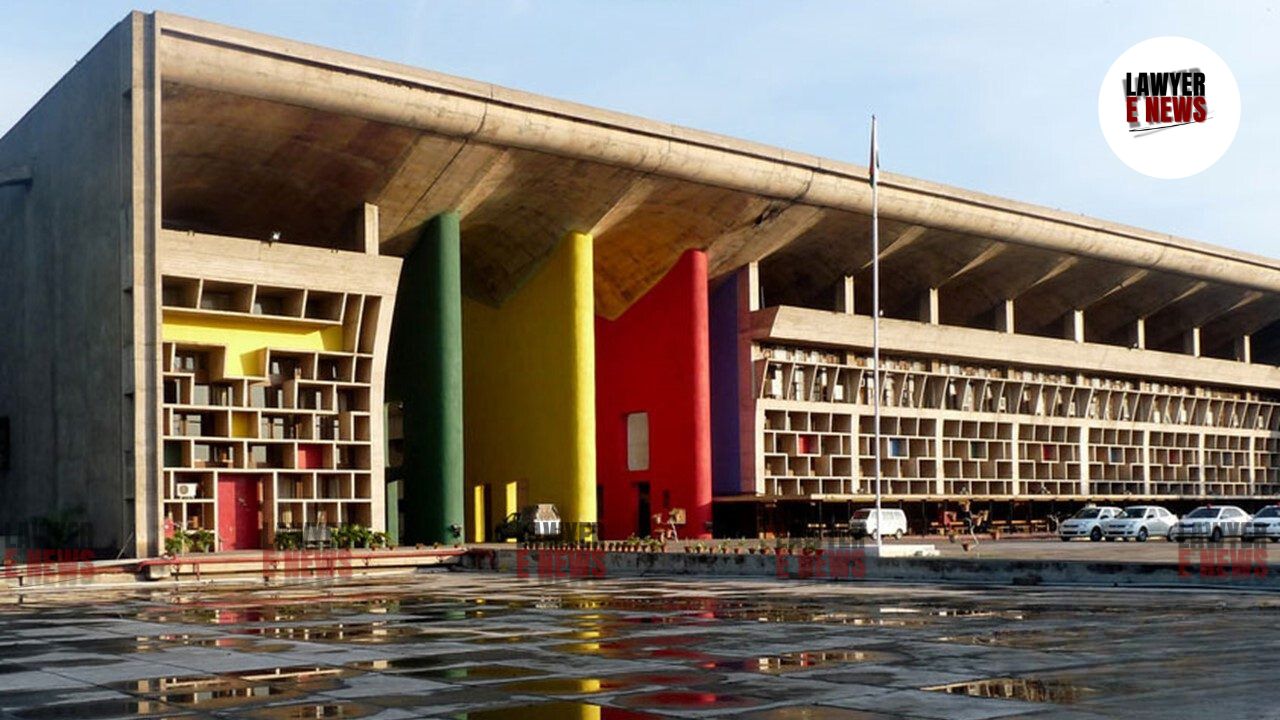
"Any legal representative of the deceased can prefer claim before the Tribunal irrespective of he being dependent or not dependent on the deceased." Punjab and Haryana High Court, in a significant ruling dated July 22, 2026, held that an adult family member can file a claim petition seeking compensation under Section 166 of the Motor Vehicles Act, 1988, even if they were not financially dependent on the deceased.
A bench of Justice Parmod Goyal observed that the statutory provision does not restrict claims solely to dependent family members, thereby allowing a sister to claim compensation for her deceased brother.
The appellant, the sister of the deceased Avtar Singh, filed an appeal after the Motor Accident Claims Tribunal (MACT), Rupnagar, dismissed her claim petition on October 1, 2003. The Tribunal had rejected the claim solely on the ground that the sister was not a dependent of the deceased, who died in a motor vehicular accident on September 2, 1999. The offending bus had struck the deceased's motorcycle, resulting in his death at the spot.
The primary question before the court was whether an adult member of the family, though not a dependent upon the deceased, is entitled to file a claim petition seeking compensation under the Motor Vehicles Act.
Right Of Legal Representatives To Claim Compensation
Delving into the legislative intent behind Section 166 of the 1988 Act, the Court clarified that the right to apply for compensation vests in all legal representatives. The Court explicitly noted that the provision does not mandate dependency as a prerequisite for filing a claim. Evaluating the scope of the law, the bench remarked that where death has resulted from a motor accident, the claim can be preferred by all or any of the legal representatives.
Supreme Court Precedents Applied
The High Court extensively relied on a catena of Supreme Court judgments, including Manjuri Bera Vs. Oriental Insurance Company Ltd. and Gujarat State Road Transport Corporation Vs. Ramanbhai Prabhatbhai. The Court noted that in earlier cases, it was held that non-dependent legal representatives were entitled only to compensation for the loss of estate. However, the bench observed that jurisprudence has since evolved significantly to protect the broader rights of legal heirs.
"Thus from the above discussed noted judgments, it is clear that a married sister / daughter, earning brother / son, a brother / son who is living separately or even a charity can seek compensation before the MACT."
Tribunal's Bounden Duty To Consider Application
Taking guidance from the Supreme Court's ruling in National Insurance Company Limited Vs. Birender & Ors., the High Court emphasized that it is the statutory duty of the Tribunal to adjudicate such claims holistically. The bench quoted the apex court, stating that it would be the bounden duty of the Tribunal to consider the application irrespective of whether the legal representative was fully dependent, and not to artificially limit the claim towards conventional heads only.
Assessment Of Income And Future Prospects
Addressing the quantum of compensation, the Court rejected the appellant's oral assertion that the deceased was earning Rs. 10,000 per month as a Punjabi singer, citing a lack of cogent and reliable evidence. Consequently, the bench assessed the income based on minimum wages for an upper-skilled worker in the year 1999, fixing it at Rs. 2,057 per month. Following the Supreme Court's landmark mandates in Pranay Sethi and Sarla Verma, the Court added 40% towards future prospects and applied a multiplier of 18.
Computation Of Compensation
Since the deceased was unmarried, the Court mandated a 50% deduction towards personal expenses. The total loss of dependency was computed at Rs. 3,11,040. In addition, the appellant was awarded Rs. 15,000 each for funeral expenses and loss of estate. The Court directed that the enhanced compensation shall carry a 7.5% interest from the date of filing the claim petition until the realization of the entire amount.
The High Court set aside the Tribunal's dismissal order and allowed the appeal, reworking and awarding a total compensation of Rs. 3,41,040 to the appellant. The judgment firmly establishes that legal representatives cannot be ousted from seeking compensation under the Motor Vehicles Act merely for lacking financial dependency on the deceased.
Date of Decision: 22 July 2026