-
by sayum
26 October 2026 4:04 PM








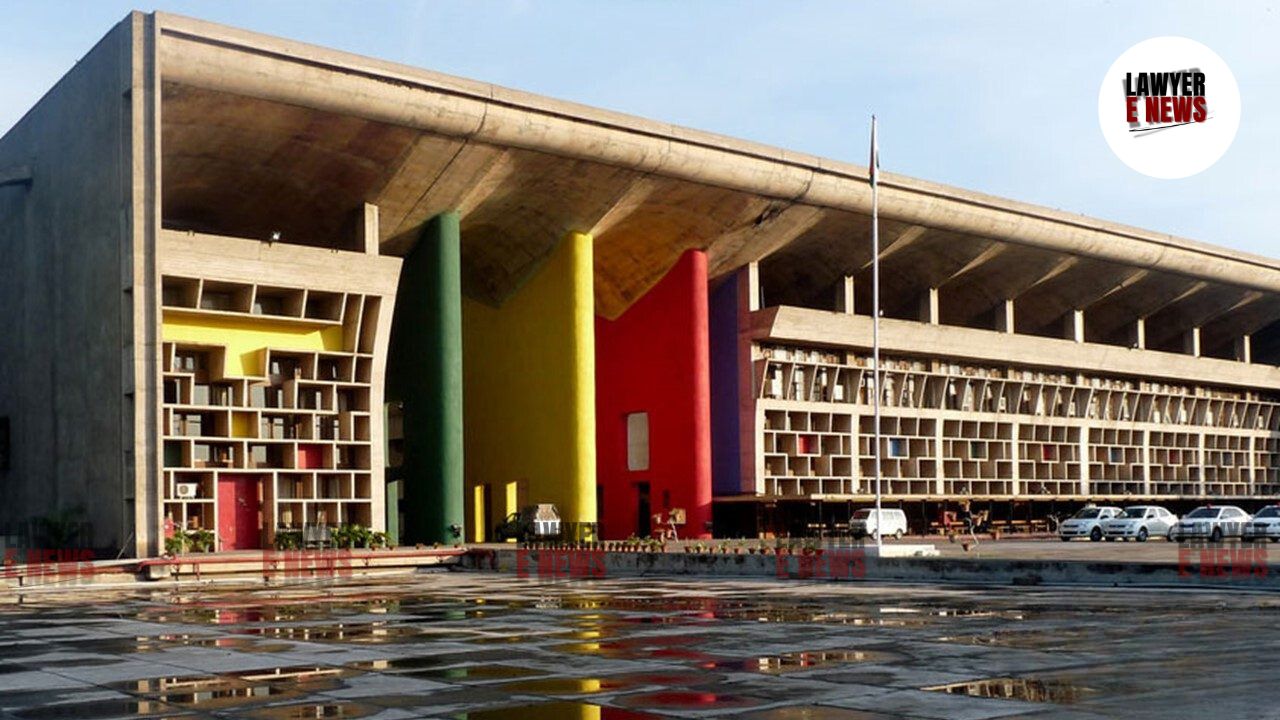
"Criminal Court while convicting an accused for commission of offence under Section 138 of the Act, cannot ignore the compensatory aspect of remedy and the compensatory aspect can only be given due regard if the sentence imposed is at least commensurate to the amount of cheque, if not more, so that this fine, once imposed, can be appropriated towards payment of compensation to the complainant..." Punjab and Haryana High Court, in a significant ruling, held that criminal courts adjudicating cheque bounce disputes under Section 138 of the Negotiable Instruments Act, 1881 must prioritize the compensatory aspect of the remedy over mere punitive incarceration.
A single bench of Justice N.S. Shekhawat observed that trial courts must avoid adopting a rigid, traditional penal approach by imposing nominal fines, and emphasized that the fine imposed ought to be commensurate with the cheque amount to enable restitution under Section 357 of the Code of Criminal Procedure, 1973.
The petitioner entered into an agreement to purchase land from the respondent and subsequently issued a cheque for ₹3,00,00,000 dated August 1, 2012, which was dishonoured twice with the remarks "Funds Insufficient". Following statutory notices, a complaint under Section 138 of the NI Act was instituted, culminating in the petitioner's conviction by the Sub-Divisional Judicial Magistrate, Dera Bassi, who awarded two years of imprisonment alongside a fine of just ₹10,000 without any compensation to the complainant. After the Additional Sessions Judge, SAS Nagar, Mohali merely modified the sentence from rigorous to simple imprisonment while upholding the fine, the petitioner approached the High Court in revision.
The solitary legal issue before the High Court was to determine the appropriate approach to be adopted by trial and appellate courts while imposing sentences on convicts under Section 138 of the Negotiable Instruments Act.
Legislative Intent Behind Section 138 NI Act Is Primarily Compensatory
Justice Shekhawat highlighted that Chapter XVII was introduced into the NI Act to enhance the credibility of commercial transactions and curb the menace of dishonoured negotiable instruments. The Court pointed out that while Section 138 provides for a punitive measure of imprisonment up to two years, the statutory discretion to impose a fine extending up to twice the cheque amount was consciously devised by Parliament to fulfill a compensatory function.
The Court referred extensively to its prior judgment in Jugjit Kaur v. Rajwinder Singh as well as the landmark ruling of the Supreme Court in Damodar S. Prabhu v. Sayed Babalal H. (2010), reiterating that dishonour of a cheque is fundamentally a regulatory offence concerning private commercial parties.
"Complainant's Interest Lies In Recovery Rather Than Retribution"
The Bench underscored that the primary objective of a complainant in initiating cheque bounce proceedings is the realization of the owed money rather than seeking penal retribution. Quoting the Supreme Court's observations in Damodar S. Prabhu, the Court noted that the threat of imprisonment serves primarily as a coercive mode to ensure recovery rather than a purely vindictive punishment.
The Court reiterated that unlike conventional crimes where retribution is paramount, the compensatory remedy under Section 138 of the Act must invariably take precedence over the punitive aspect.
Nominal Fines Defeat Object Of Chapter XVII NI Act
Relying on the apex court's ruling in Suganthi Suresh Kumar v. Jagdeeshan (2002), Justice Shekhawat emphasized that no drawer can be permitted to treat the dishonour of a cheque lightly. The Court observed that trial magistrates must ensure that sentences reflect the core statutory purpose, and imposing a mere "flea-bite" sentence where large sums remain unpaid wholly defeats the legislative mandate.
The bench reiterated that courts cannot ignore the compensatory mechanism and must ensure that fines are levied at a quantum sufficient to be appropriated towards restitution under Section 357 CrPC.
"Unlike that for other forms of crime, the punishment here (in so far as the complainant is concerned) is not a means of seeking retribution, but is more a means to ensure payment of money."
Courts Must Uniformly Exercise Power To Award Restitution Under Section 357 CrPC
The High Court drew support from the Supreme Court's pronouncement in R. Vijayan v. Baby & Anr (2012), which deprecated the traditional magistrate mindset of viewing Section 138 proceedings exclusively through the prism of punishment. The apex court had noted that complainants rarely pursue parallel civil suits due to the statutory expectation of receiving compensation linked to the cheque amount along with reasonable interest.
Justice Shekhawat reiterated the anguish expressed in Bir Singh v. Mukesh Kumar (2019), observing that failure to award adequate compensation severely prejudices complainants whose civil remedies often become time-barred during protracted criminal trials.
Complainant Denied ₹3 Crore For 14 Years Due To Flawed Sentencing
Applying these settled doctrines to the instant case, the High Court held that both the Trial Court and the Appellate Court had committed a grave error by imposing a paltry fine of ₹10,000 while completely failing to award any compensation to the complainant. The Court observed that the complainant had been deprived of an enormous sum of ₹3 Crores that had fallen due in August 2012, spanning nearly 14 years of protracted litigation.
Consequently, the High Court set aside the sentence orders passed by both lower courts and remanded the matter back to the trial court to consider the imposition of sentence de-novo after hearing both parties afresh in accordance with the established legal principles.
The High Court partly allowed the revision petition on the quantum of sentence, directed the de-novo sentencing exercise, and ordered the interim release of the petitioner on bail pending the trial court's final order on sentence.
Date of Decision: 17 August 2026