-
by sayum
25 August 2026 4:05 AM







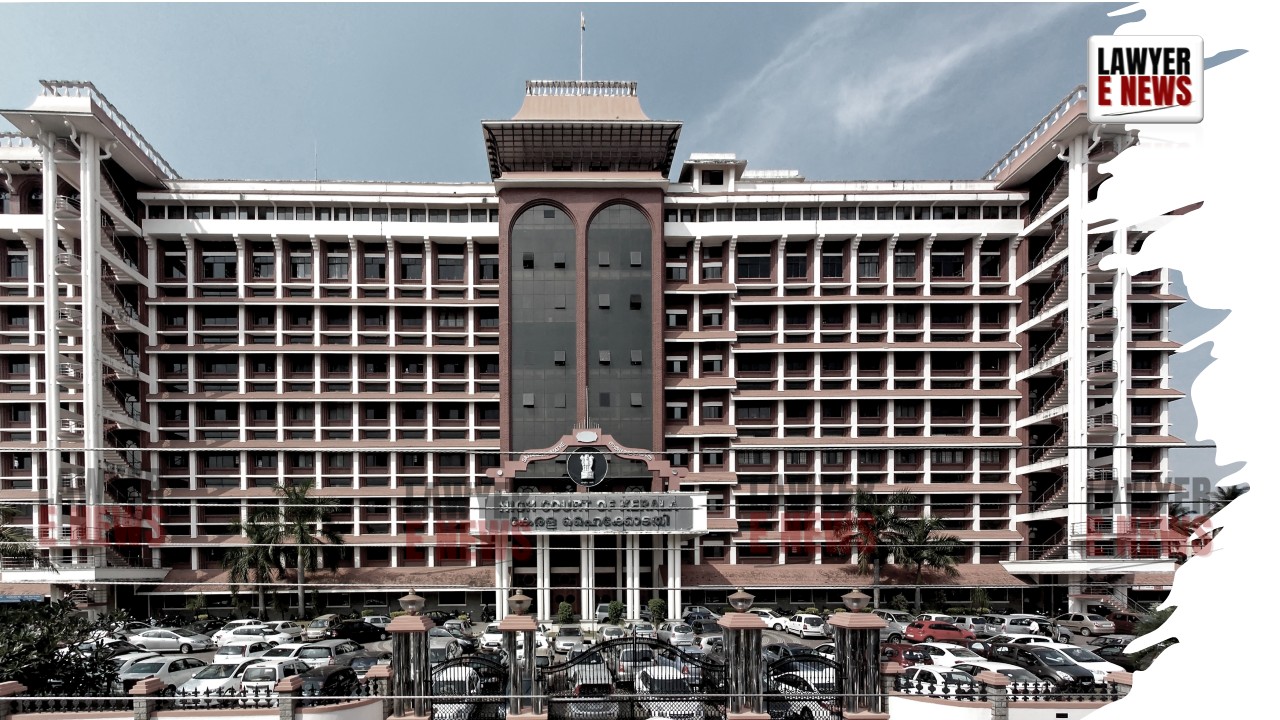
Kerala High Court dismissed two petitions filed by M/s Parthas Textiles and Praveen Raj Rajendran challenging the Debt Recovery Tribunal’s (DRT) refusal to grant interim relief against securitisation actions initiated by Asset Reconstruction Company (India) Ltd. (ARCIL) under the SARFAESI Act, 2002. The Court held that petitioners must exhaust statutory remedies available under the SARFAESI Act before invoking the writ jurisdiction under Article 226 of the Constitution. The Court further ruled that the DRT lacks jurisdiction to question the legality of assignment agreements between banks and asset reconstruction companies.
Court Reiterates Need for Exhausting SARFAESI Act Remedies Before Filing Writ Petitions
“Writ Jurisdiction Cannot Replace Statutory Remedies in Securitisation Cases,” Observes Kerala High Court
The case emerged from a securitisation action initiated by ARCIL after M/s Parthas Textiles defaulted on a loan from South Indian Bank, leading to the classification of the account as a Non-Performing Asset (NPA) in March 2021. ARCIL, acting under the SARFAESI Act, sought to take possession of the secured assets. The petitioners initially challenged these actions before the DRT, seeking a stay, but their applications were dismissed. Subsequently, they filed writ petitions in the Kerala High Court, contending that procedural lapses in the securitisation process warranted judicial intervention.
Maintainability of Writ Petition in SARFAESI Matters
The Court emphasized that the SARFAESI Act provides a complete and self-contained remedy structure, allowing aggrieved parties to seek redressal through the DRT and then appeal to the Debt Recovery Appellate Tribunal (DRAT). It cited judicial precedents mandating that writ petitions under Article 226 should only be entertained in exceptional cases where alternative remedies are inadequate or unavailable.
“Given the comprehensive statutory remedies provided under the SARFAESI Act, the writ jurisdiction of this Court cannot be routinely invoked to interdict securitisation measures,” the Court held [Paras 4-5, 10-11].
DRT’s Lack of Jurisdiction Over Assignment Agreements
The petitioners argued that the assignment of debt from South Indian Bank to ARCIL was flawed and should be reviewed. The Court dismissed this argument, clarifying that the DRT's jurisdiction under Section 17 of the SARFAESI Act is limited to reviewing the legality of securitisation actions, not contractual disputes over assignment agreements. The Court held that only measures under Section 13(4) of the SARFAESI Act, such as asset possession and sale, are within the DRT’s purview.
“The DRT does not have jurisdiction to examine the legality of assignment agreements, which fall outside its statutory remit under Section 17 of the SARFAESI Act,” the judgment stated [Para 12].
The petitioners had earlier approached the High Court seeking interim relief from possession proceedings, which the Court granted temporarily. However, after failing to comply with payment conditions, the interim relief was vacated, allowing ARCIL to proceed with the possession of certain assets. The Court noted that despite multiple opportunities and conditional relief, the petitioners failed to meet the terms.
“The petitioners were given sufficient interim relief with clear conditions, which they failed to comply with, thereby justifying the DRT’s actions and denial of further interim protection,” the Court observed [Paras 6-8].
The petitioners owed over Rs. 50 crores to South Indian Bank. The Court took judicial notice of this significant outstanding amount and the need for financial institutions to recover debts effectively under the SARFAESI Act framework. It highlighted the broader public interest in enforcing securitisation measures promptly to uphold the integrity of the financial system.
“The SARFAESI Act's purpose is to facilitate swift recovery of debts and prevent undue delays that impact the banking sector’s stability. Allowing routine challenges to securitisation measures undermines this legislative intent,” the Court observed [Para 9].
The Kerala High Court’s decision underscores the importance of adhering to statutory remedies under the SARFAESI Act before invoking the writ jurisdiction. The Court’s interpretation reaffirms that the DRT’s role is limited to reviewing securitisation measures, not the validity of assignment agreements, and that petitioners must utilize the appeal mechanisms within the SARFAESI framework before seeking relief from higher courts.
Writ Petition Dismissed: The petitions filed by M/s Parthas Textiles and Praveen Raj Rajendran were dismissed, emphasizing the necessity to exhaust statutory remedies.
Jurisdictional Clarification: The Court confirmed that the DRT lacks jurisdiction to examine the legality of debt assignment agreements.
Date of Decision: October 25, 2024