-
by sayum
18 August 2026 8:28 AM







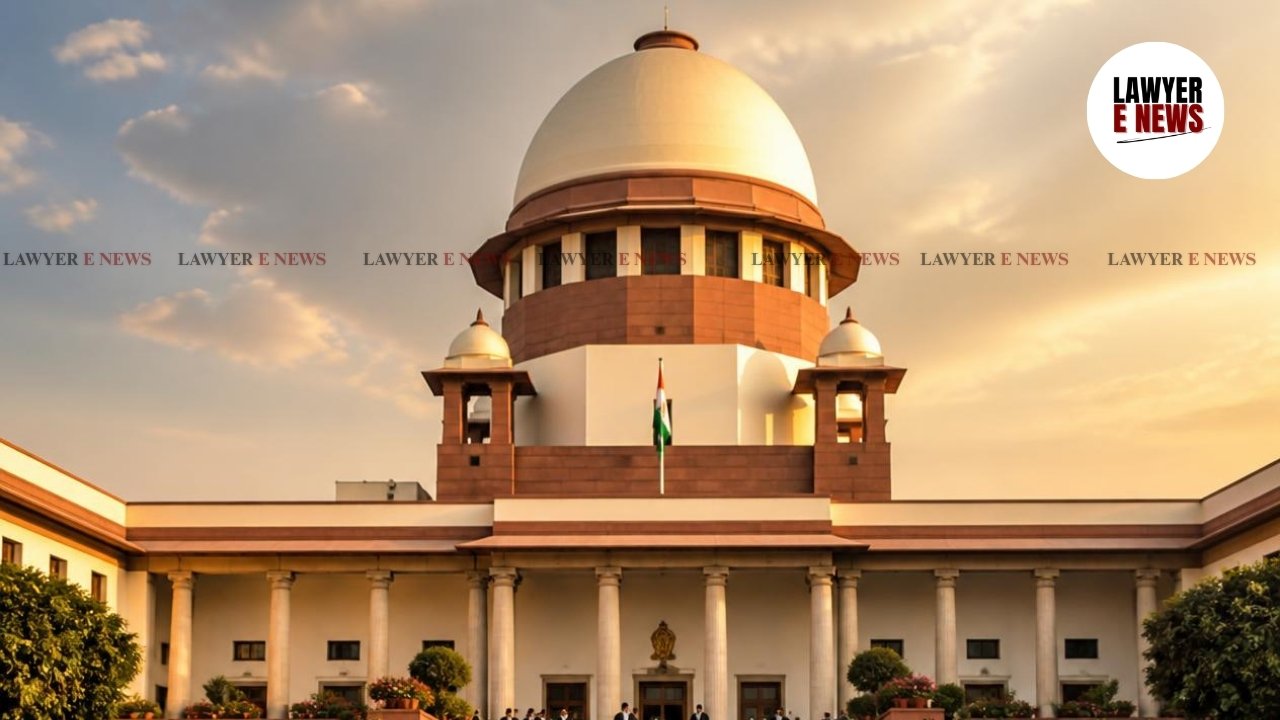
"On the very same set of depositions, assigning similar roles to all the accused persons, either all should have been convicted or acquitted." Supreme Court, in a significant ruling dated August 17, 2026, held that a trial court cannot adopt contradictory standards on the exact same set of facts to convict certain accused individuals while acquitting others without providing distinct reasoning.
A bench of Justices Sanjay Karol and Augustine George Masih observed that testimonies suffering from material contradictions and mutual inconsistencies cannot form the sole basis of a criminal conviction under Sections 148, 324, and 302 read with Section 149 of the Indian Penal Code, 1860.
The case originated from an incident dated January 6, 1993, in District Damoh, Madhya Pradesh, where an unlawful assembly allegedly attacked the complainant party, resulting in the death of one Gaflu and injuries to others. A criminal challan was initially filed against 11 accused persons under Sections 147, 148, 149, and 307 of the IPC. While the Trial Court acquitted five of the co-accused, it convicted the appellant Nepal Singh and four others, a view subsequently affirmed by the Madhya Pradesh High Court in Criminal Appeal Nos. 1272 and 1327 of 1995.
The primary question before the court was whether the testimonies of interested eye-witnesses, riddled with material contradictions, could legally sustain a conviction for murder and rioting. The court was also called upon to determine the validity of maintaining a conviction when co-accused assigned similar roles on identical evidence stood acquitted.
High Court Failed to Examine Material Contradictions in Eye-Witness Testimony
The Supreme Court examined the depositions of the prosecution witnesses, particularly PW-6, an injured eye-witness, and PW-7, the wife of the deceased. The bench noted that while their examination-in-chief appeared incriminating, a careful perusal of their cross-examination revealed mutual contradictions and heavy embellishments. The court emphasized that such depositions completely failed to inspire judicial confidence and could not be treated as trustworthy evidence.
Testimony Unworthy of Credence
"Their depositions are not worthy of credence. Their testimonies cannot be believed." The bench pointed out glaring flaws in the testimony of PW-6, who admitted that prior enmity existed, that the deceased Gaflu himself was an accused in a counter-assault against the landowner Prakash Pateriya, and that he allegedly fell unconscious upon receiving the first blow. The court questioned how an unconscious witness could vividly describe the specific assailants and weapons used, especially given his admission that he did not personally witness his father being struck by a farsa.
Prior Land Disputes and False Implication
"The possibility of the accused being falsely implicated cannot be ruled out." The court observed that the prosecution witnesses had suppressed vital aspects of a preceding altercation involving the land dispute between the parties. Furthermore, the bench noted that independent witnesses like PW-8 and PW-9 appeared to be planted witnesses whose testimonies lacked any evidentiary value. The mere recovery of common agricultural weapons such as lathis and farsas from rural households could not automatically link the accused to the crime without corroborative, credible eyewitness accounts.
Identical Evidence Cannot Warrant Bifurcated Findings - "Either all should have been convicted or acquitted."
Critiquing the approach of the lower courts, the Supreme Court underscored a fundamental flaw in selectively believing evidence for some while discarding it for others. The bench held that when the prosecution assigns identical roles to all accused persons on the exact same set of depositions, the trial court must provide explicit, cogent reasoning as to why an acquittal granted to some co-accused cannot be extended to the remaining convicts. The High Court committed a grave error by failing to address this discriminatory assessment of evidence.
Supreme Court Sets Aside Conviction
Concluding that the prosecution failed to establish the guilt of the appellant beyond reasonable doubt, the Supreme Court allowed the appeals and quashed the impugned judgment of the Madhya Pradesh High Court. The conviction and sentence awarded to appellant Nepal Singh under Sections 148, 324/149, and 302/149 of the IPC were set aside. The court directed that the appellant be set free forthwith if not required in any other case, and ordered his bail bonds to stand cancelled.
Date of Decision: 17 August 2026