-
by sayum
21 October 2026 5:27 PM







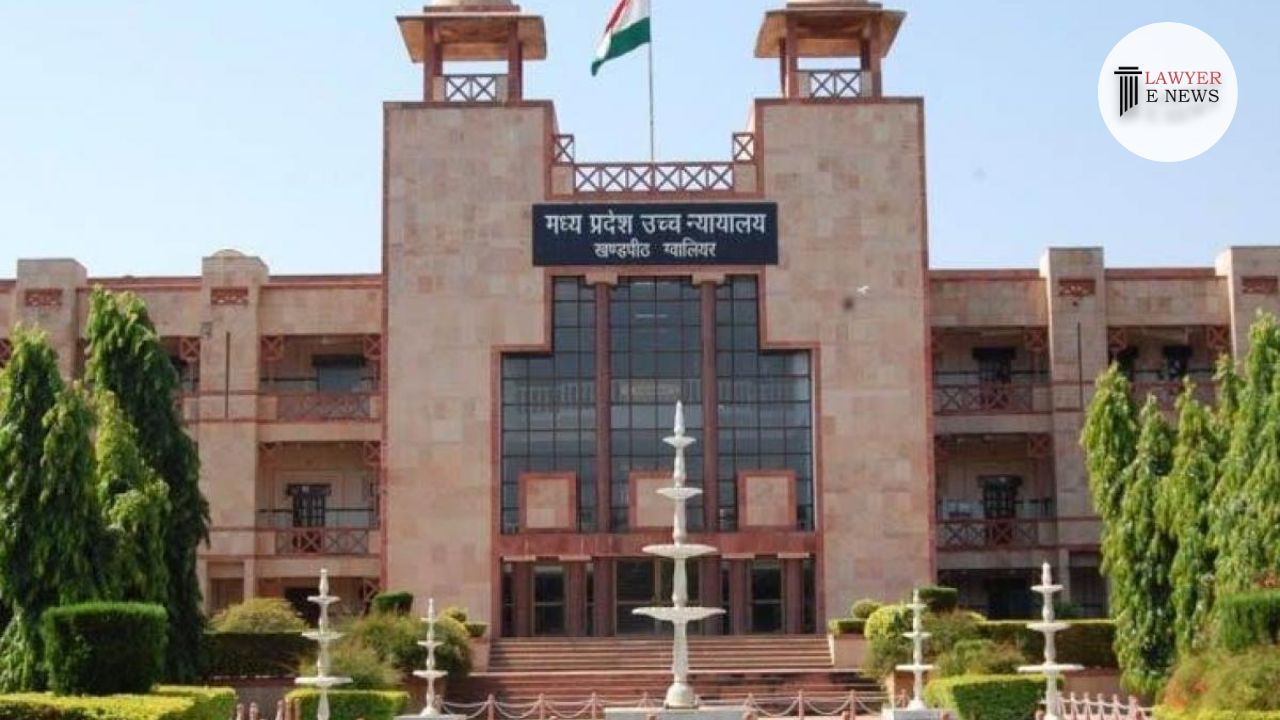
The Madhya Pradesh High Court noted that a defendant in a civil lawsuit who asserts the existence of a will in defiance of the allegations made in the plaint may present proof to the plaintiff.
The statements made by the Plaintiff would only be decided after determining whether or not there is a Will in place, according to Justice Vivek Agarwal, in a case where the Plaintiff claims that a person died intestate and the Defendant contends that there is a Will.
It is clear from reading the record and hearing knowledgeable counsel for the parties that Section 101 of the Evidence Act stipulates that "Whoever wants a court to rule on a legal right or liability based on his assertions of certain facts must establish those assertions. It is argued that the burden of proof rests with the party required to establish the existence of any truth." In the current case, defendants are relying on the executed Will of the deceased-Laxman to assert their ownership of the suit property, however plaintiffs contend that because defendants are, respectively, Laxman's illegitimate children and concubines, they are not entitled to the property. Only once it is proven that deceased-Laxman died intestate will questions raised by the plaintiffs be considered and inter se rights will be resolved in accordance with Hindu law of succession. Their rights and obligations would be based on the validity of his will, if he had one, which would need to be proven.
The Appellants/Plaintiffs had filed a lawsuit against the Respondents/Defendants before the lower court, asking for a declaration of title with relation to the property under dispute. They had also argued in their complaint that the suit's assets belonged to their late father, who passed away intestate, and that the defendants had no right, title, or interest in the suit's assets.
On the other hand, the Defendant asserted that the Plaintiffs' deceased father had left a Will. The trial court took the said submission into consideration and issued an order instructing the Defendants to present evidence to the Plaintiff in order to establish the validity of the Will. The Appellants, who were incensed, decided to appeal, contending that they ought to have been given the chance to present their case to the Defendants.
The Court agreed with the justification for having the defendants present their case first after carefully considering the arguments made by the parties and the documents submitted to the case. The Court noted two rules regarding the burden of proof in relation to a Will, namely,- i. Sir Dinshaw Fardunji Mulla referred to Hindu Law in his statement. The party presenting a will has the burden of proving that the will is the last testament of a free and competent testator, and they must do so in order to satisfy the court's conscience.
It is the responsibility of those who propose the Will to allay any doubts and to demonstrate positively that the successor knew and approved the contents of the Will. Only after this is done will the burden of proof shift to those who oppose the Will to show fraud or undue influence, or whatever they rely on.
Therefore, the Court agreed with the reasoning of the court below and held that the impugned order was neither illegal nor arbitrary. Therefore, when these rules of proving a Will are taken into consideration, the order passed by the learned Civil Judge when tested on the basis of the aforesaid rules cannot be said to be illegal or arbitrary because the defendants are staking their claim on the basis of a registered Will left by the deceased-Laxman has to prove their Will first and then the Court will decide
When the Hon. Supreme Court's decision in Anil Rishi (supra) is considered, it is found that even in that decision, it is ruled that normally, the burden of establishing a truth rests with the party who most strongly claims the issue's affirmative. When this element is taken into account, it becomes clear that defendants asserting their rights under the Will have been correctly asked to present their evidence first and that the assailed ruling does not call for interference.
As a result of the aforementioned observations, the Court decided it was appropriate to reject the appeal and refrain from interfering with the contested order.
SANJAY INGLE AND ANR. VS PANCHFULA BAI AND ANR.