-
by sayum
27 July 2026 3:39 PM







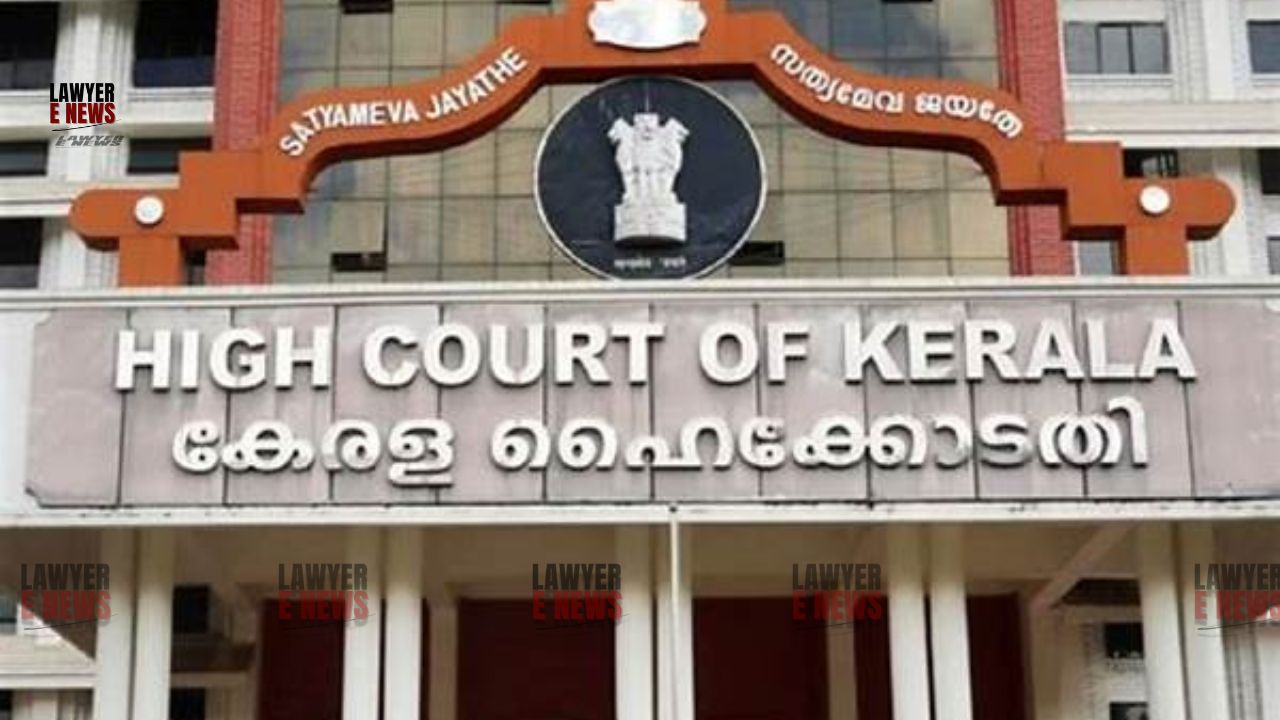
"Nature and frequency of these transactions, viewed in conjunction with the amounts involved in the remaining transfers, indicate that they were gratuitous payments exchanged between spouses in the ordinary course of their matrimonial relationship," Kerala High Court has ruled that routine financial transactions between spouses intended for meeting day-to-day expenses and household needs are gratuitous in nature and cannot be recovered as entrusted funds.
A division bench comprising Justice Sathish Ninan and Justice P. Krishna Kumar observed that such transfers, often captioned as "gifts" or "monthly expenses," do not fasten a legal obligation on the recipient spouse to return the amount after the relationship sours.
The Court made these observations while partly allowing an appeal filed by a husband against a Family Court order that had directed him to return over ₹3.44 lakhs transferred to his account by his wife during their stay in Bangalore. The bench emphasized that for a recovery claim to succeed, there must be evidence of entrustment for a specific purpose rather than the ordinary exchange of funds inherent in a marriage.
The parties were married in 2011 under the Special Marriage Act and later resided in Bangalore, where the wife was employed. The wife approached the Family Court seeking recovery of gold ornaments and money, alleging that the husband harassed her and forcibly took control of her ATM cards and bank accounts. The Family Court, Thodupuzha, partly decreed the petition, allowing the wife to realize three specific sums from the husband, leading to the present appeal.
The primary question before the Court was whether the wife was entitled to recover amounts transferred to the husband’s bank account during the subsistence of their cohabitation. The Court also examined whether payments made for car repairs and the closure of a recurring deposit under alleged coercion could be sustained as recoverable debts.
Court’s Observations on Gratuitous Spousal Transactions
The High Court scrutinized the bank statements (Ext.A5) produced by the wife, which detailed 52 transactions ranging from ₹100 to ₹60,000. The bench noted that several payments were made with descriptions such as “MB FOR MY HERO,” “gift,” or “monthly expenses.” The Court found that these descriptions indicated the payments were voluntary contributions to the household rather than loans or entrusted funds.
Normal Financial Conduct Between Spouses Not Recoverable
The bench observed that the frequency and nature of these transfers suggested they were part of the normal financial conduct between a husband and wife. According to the Court, even if the wife’s version of the transfers was accepted, the funds could not be treated as having been entrusted to the respondent for any specific purpose or for the benefit of the matrimonial relationship that would necessitate a return.
Court Rejects Allegations of Coercion for Routine Transfers
Regarding the wife’s argument that the payments were made under threat or coercion, the Court held that the very descriptions accompanying the transactions rendered such allegations highly improbable. The Court noted that if a payment is truly made under coercion, it is unlikely to be labeled as a "gift" or intended for "my hero" in the bank’s transaction remarks.
Reliance on Precedents and Section 70 of the Contract Act
The respondent-wife placed reliance on the decision in Royson Mathew v. Minimol K. and Others [2020 (3) KHC 307], arguing that recovery cannot be defeated by a plea of gratuitous payment if the money was obtained through ill-treatment. However, the High Court distinguished the facts, noting that the evidence in the present case pointed toward the ordinary course of matrimonial life rather than involuntary deprivation of property.
Recovery for Specific Damages and Coerced RD Closure Upheld
While setting aside the decree for the bank transfers, the Court upheld the recovery of ₹12,566 for car repairs, noting the husband had admitted to using and damaging the vehicle. It also affirmed the recovery of ₹50,000 obtained by the husband through the premature closure of the wife's recurring deposit. The Court found the wife's specific narration of the threats leading to the RD closure to be probable and supported by bank records.
The Court concluded that the Family Court erred in granting a blanket decree for all bank transfers without adverting to the nature of the transactions. In its final order, the High Court modified the impugned decree by setting aside the direction to recover ₹3,44,367 while maintaining the other directions regarding car repair costs and the recurring deposit amount.
Date of Decision: 22 June 2026