
-
by sayum
26 August 2026 1:49 PM







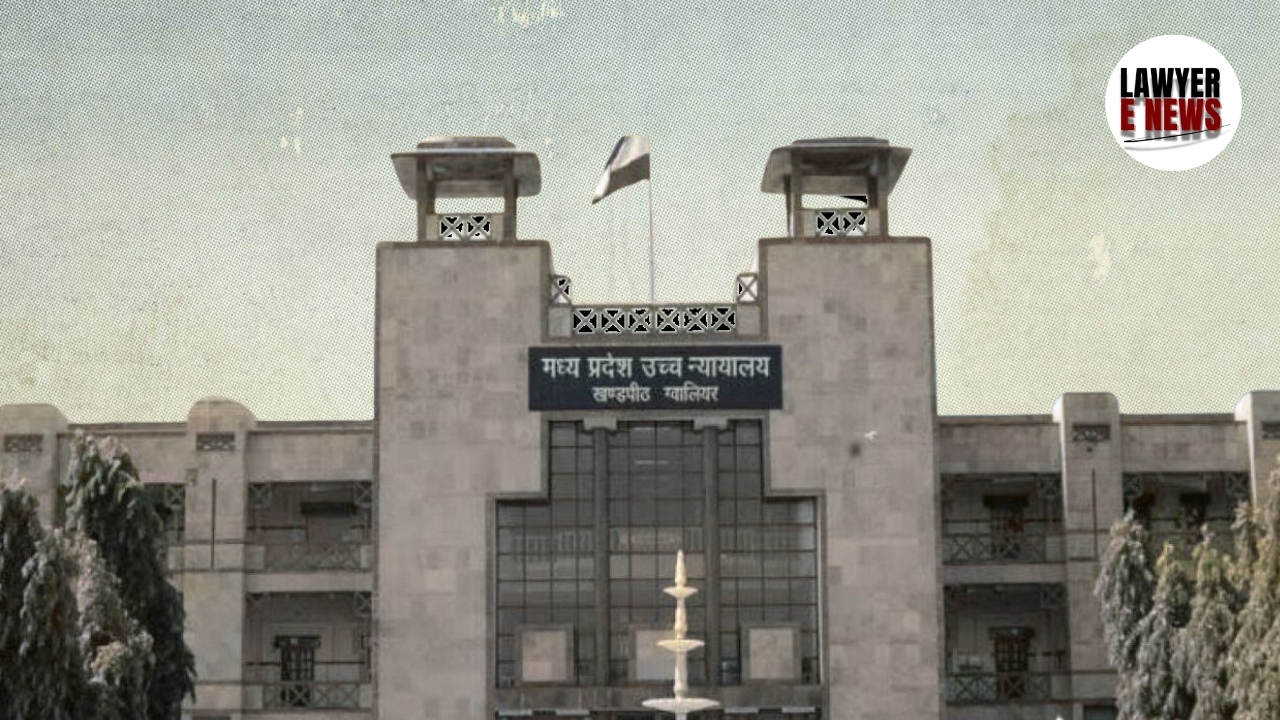
“A Party Found at Fault in Matrimonial Proceedings Cannot Seek Maintenance as a Matter of Right—Relief Under Sections 24 and 25 Remains Discretionary” - In a significant ruling that delves deep into the intersection of matrimonial rights, maintenance, and judicial discretion, the Madhya Pradesh High Court held that a decree for restitution of conjugal rights under Section 9 of the Hindu Marriage Act cannot be rendered irrelevant when adjudicating applications for maintenance or permanent alimony under Sections 24 and 25.
Delivering a well-reasoned and jurisprudentially layered judgment, a Division Bench comprising Justice Vishal Dhagat and Justice Anuradha Shukla affirmed the Family Court’s decree of restitution of conjugal rights and dismissed the wife’s appeal, clarifying that the conduct of the parties and the fault principle remain integral in deciding maintenance claims.
“Court cannot pass a judgment directing the trial Court to ignore judgment and decree passed under the Hindu Marriage Act, 1955 while considering application for maintenance,” the Bench held, while also preserving the appellant's liberty to seek maintenance separately to avoid destitution. [Para 13–14]
“Maintenance Not an Absolute Right—Relief Depends on Conduct, Circumstances and Fault”: Bench Applies Post-1976 Interpretation of Section 25
The High Court rejected the appellant-wife’s argument that the decree for restitution of conjugal rights must have no bearing on her future claim for maintenance or permanent alimony, noting that after the 1976 amendment to Section 25, the conduct of parties and other circumstances of the case are critical considerations.
“Once a party is successful in establishing the fault of the other, that party is entitled to relief. But a party found at fault cannot claim maintenance as a matter of right. The principle of fault is basic and fundamental. No party can take advantage of their own wrong.” [Para 11]
The Court emphasized that while Section 25 allows courts to prevent destitution, such relief must be tempered by the conduct of the applicant, especially where the other spouse has been exonerated in judicial findings.
“Court May Grant Maintenance Even to Erring Spouse—But Only to Prevent Vagrancy, and with Restrained Quantum”
Interestingly, the Court acknowledged the evolving approach of courts toward awarding maintenance even to erring spouses, particularly where the spouse is financially dependent or risks destitution, citing the Supreme Court’s decision in Rameshchandra Daga v. Rameshwari Daga [(2005) 2 SCC 33].
“Lately, courts are granting maintenance irrespective of fault to save a person from vagrancy. In such cases, quantum must be proportionate to basic life amenities, especially when the paying party is not at fault.” [Para 12]
However, the High Court clarified that this does not translate into a blanket direction that decrees under Section 9 shall not affect maintenance claims.
“No judgment can be passed that decree of restitution of conjugal rights will not have any effect on considering application for grant of maintenance.” [Para 14]
“No Independent Proof of Cruelty, Dowry Demands, or Mental Illness of Husband—Restitution Decree Properly Granted”: Allegations Found Baseless
The Court undertook a detailed review of the evidence and held that the wife failed to substantiate her allegations of cruelty, dowry demand, or suppression of the husband's alleged mental illness. There was no FIR, no medical reports, and the evidence presented was hearsay and uncorroborated.
“Appellant failed to examine key witnesses or produce reliable material. On the contrary, respondent made repeated genuine efforts to resume cohabitation, which were refused.” [Para 5]
It was found that the respondent-husband had taken the appellant to her paternal home during pregnancy at her own request, and later attempted to bring her back on multiple occasions. Her refusal, including before the Parivar Paramarsh Kendra, indicated wilful desertion without sufficient cause.
“Maintenance under Section 24 Ceases Upon Final Judgment—Relief Under Section 25 May Still Be Sought Post-Decree”: Court Affirms Dual Nature of Maintenance Relief
The Court provided a detailed clarification on the dual remedies of maintenance:
Section 24 (interim maintenance) is applicable only during the pendency of matrimonial proceedings, and ceases upon conclusion.
Section 25 (permanent alimony) can be invoked either at the time of passing any decree under the Act—including Section 9—or at any time thereafter, by filing a fresh application.
“Either spouse may apply for permanent alimony, but the relief is discretionary. Fault and conduct are central to adjudication.” [Para 10]
The Bench emphasized that even after a decree for restitution of conjugal rights, the financially weaker spouse may apply for permanent alimony, though the merits and conduct must be examined carefully by the court.
“Principle of Judicial Discretion and Proportionality Reaffirmed—Maintenance Cannot Be Weaponised”
Relying on Chand Dhawan v. Jawaharlal Dhawan [(1993) 3 SCC 406] and Sukhdev Singh v. Sukhbir Kaur [2025 SCC OnLine SC 299], the Court reaffirmed that maintenance provisions under the Hindu Marriage Act are meant to ensure justice—not to allow misuse.
“The discretion conferred on the Court under Sections 24 and 25 must be exercised with regard to justice, fairness, and balance—not merely sympathy.” [Paras 8–9]
Appeal Dismissed, Restitution Decree Upheld, Maintenance Claim Not Barred But Conditional on Lawful Evaluation
Upholding the Family Court’s decree dated 27.11.2014 in Civil Suit No. 37-A/2014, the High Court dismissed the wife’s appeal, and refused to direct that the restitution decree would have no effect on her future maintenance claims.
“First Appeal is dismissed. Judgment and decree of the Family Court is affirmed. Appellant is at liberty to apply separately for maintenance under law, but relief shall depend upon conduct and facts.” [Paras 15–16]
Date of Decision: 25 September 2025





