
-
by sayum
26 August 2026 1:49 PM







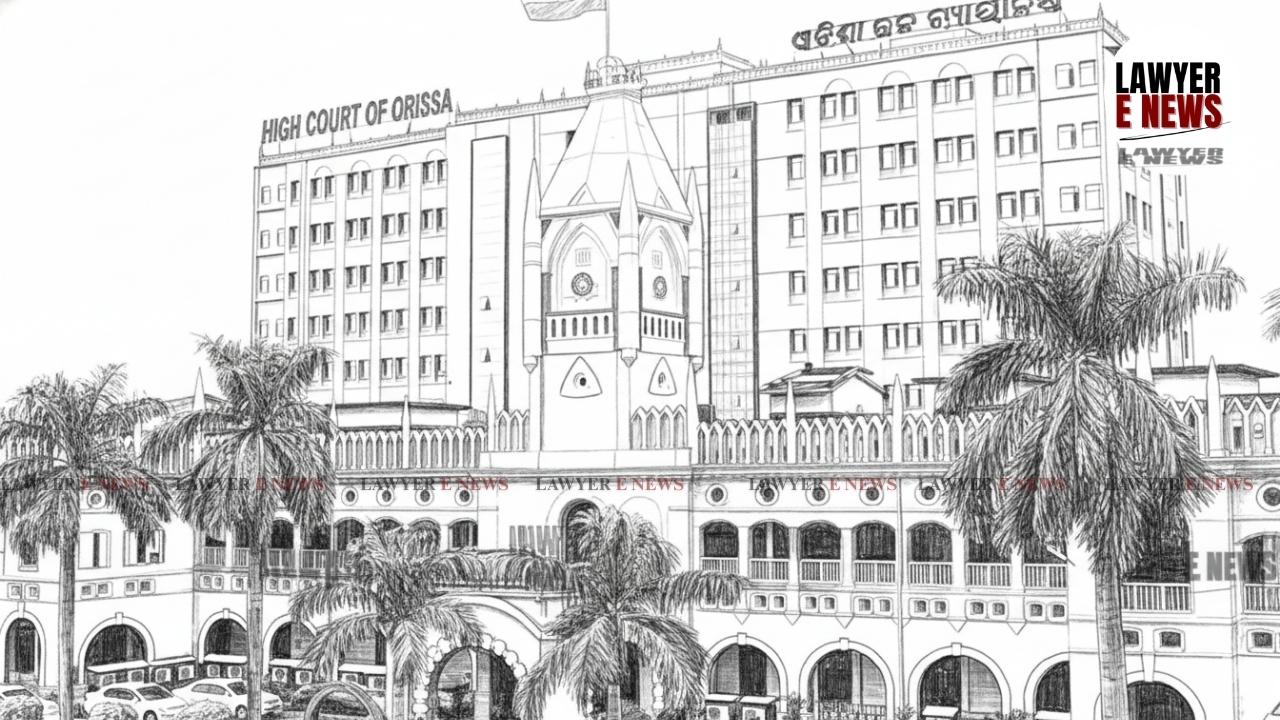
“Backlog Vacancies Are a ‘Separate Class’ — Their Non-Segregation Vitiates Recruitment Process”, Orissa High Court delivered a crucial ruling on the interplay between reservation policy, backlog vacancies, and constitutional limits under Article 16.
Justice Biraja Prasanna Satapathy held that the OPSC advertisement for recruitment of 5248 Medical Officers was legally flawed, as it failed to segregate backlog vacancies and resulted in reservation exceeding the 50% ceiling. While declining to quash the entire process due to public interest and shortage of doctors, the Court moulded relief to balance constitutional mandates with administrative necessity.
The petition challenged Advertisement No. 9 of 2024-25 issued by the Odisha Public Service Commission for recruitment of Medical Officers. Out of 5248 posts, only 411 were unreserved, while the remaining 4837 posts were earmarked for reserved categories, including a large number of backlog vacancies.
The petitioners contended that such distribution grossly violated the 50% ceiling rule laid down in Indra Sawhney and R.K. Sabharwal. They further argued that backlog vacancies lying unfilled for more than three recruitment years ought to have been de-reserved under Section 7 of the ORV Act, 1975.
The State defended the advertisement by invoking Article 16(4-B), asserting that backlog vacancies are exempt from the 50% ceiling and can be filled separately.
The Court addressed the core constitutional question: whether clubbing backlog vacancies with current vacancies to exceed the 50% reservation ceiling is permissible.
Answering in the negative, the Court held:
“Backlog vacancies are required to be treated as a separate class… and cannot be clubbed with the vacancies of the recruitment year.”
The Bench emphasized that Article 16(4-B) does not dilute the 50% ceiling, but only permits backlog vacancies to be filled independently, without disturbing the balance of the current year’s recruitment.
On the impugned advertisement, the Court made a categorical finding:
“While advertising 411 posts for UR category, vacancies for reserved categories at 4837… admittedly exceed the 50% ceiling… such an advertisement could not have been issued.”
The Court thus found clear non-compliance with constitutional principles and binding precedents, particularly Indra Sawhney and Sangam Nath Pandey.
On the issue of segregation of backlog vacancies, the Court held that both the government requisition dated 12.02.2025 and the advertisement failed to distinguish between backlog and current vacancies, which is mandatory: “Such backlog vacancies should have been segregated… but admittedly the same has not been followed.”
This failure rendered the advertisement legally defective, as it distorted the application of the 50% ceiling.
On the demand for de-reservation, the Court refused to grant relief. It held that since the posts were base level posts, de-reservation was impermissible in light of M. Nagraj and subsequent State clarifications: “This Court is not inclined to direct de-reservation of backlog vacancies… such posts have to be filled only by the specified category.”
However, the Court took note of the “complete dearth of doctors” in the State and the fact that the selection process had already been completed. Invoking its power to mould relief, it held: “The Commission is permitted to recommend 411 UR candidates as well as 411 reserved category candidates proportionately…”
Further, it allowed the State to: “Fill up the remaining reserved category posts from backlog vacancies after receipt of recommendation.”
This approach ensured that constitutional balance under Article 16(1) and 16(4) is maintained while not paralysing public healthcare recruitment.
The Orissa High Court reaffirmed that reservation policy must operate within constitutional discipline, particularly the 50% ceiling and mandatory segregation of backlog vacancies.
At the same time, the Court demonstrated judicial pragmatism by moulding relief instead of striking down the entire recruitment, thereby safeguarding both constitutional equality and urgent public interest.
Date of Decision: 17.03.2026





