-
by sayum
17 August 2026 10:04 AM







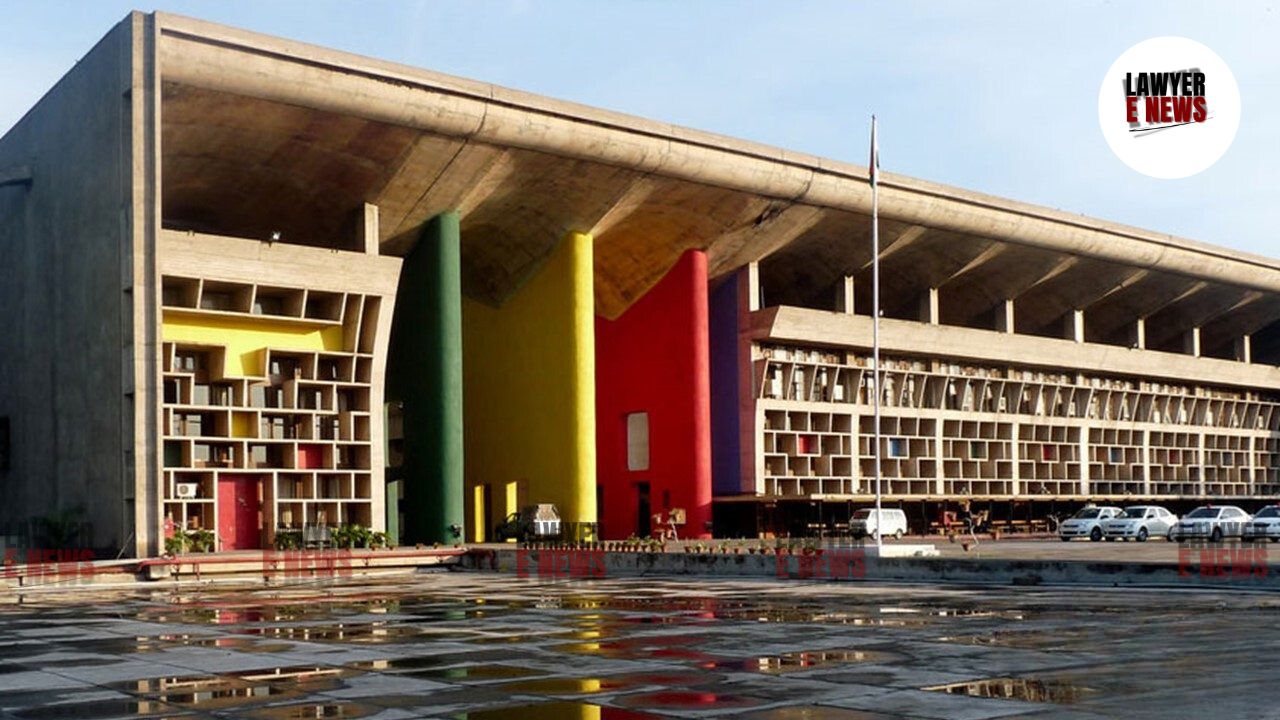
"It is clear from the reading of the aforesaid judgments that the ordinary principle of grant of reinstatement with full back wages, when the termination is found to be illegal is not applied mechanically in all cases." Punjab & Haryana High Court, in a significant ruling, affirmed that reinstatement with full back wages is not an automatic consequence when the termination of a daily wage worker is found to be illegal solely due to procedural defects under Section 25-F of the Industrial Disputes Act, 1947.
A single bench of Justice Kirti Singh upheld a Labour Court's award of lump sum compensation, instead of reinstatement, for a driver whose services were terminated without proper procedure, especially where his performance was found unsatisfactory.
The petitioner, Baldev Singh, was engaged as a daily wage driver on November 16, 1994, by respondent No. 2. His services were terminated on June 4, 1996, allegedly without notice, charge-sheet, enquiry, or compensation, despite juniors being retained. The Labour Court, Bathinda, in its award dated October 20, 1999, found the termination to be procedurally irregular but awarded a lump sum compensation of ₹5,000 instead of reinstatement with continuity of service and full back wages.
The primary question before the High Court was whether the Labour Court erred in awarding lump sum compensation instead of directing reinstatement with continuity of service and full back wages, despite finding the termination of a daily wage worker in violation of Section 25-F of the Industrial Disputes Act, 1947.
Labour Court's Findings Affirmed
The High Court noted that the Labour Court, after appreciating the evidence, concluded that the workman had served continuously for over 240 days in a calendar year, and his termination was effected without notice or charge-sheet. Crucially, the Labour Court also observed that the workman's services were "not unjustified, given the unsatisfactory services rendered." Consequently, it declined reinstatement and awarded lump sum compensation.
No Automatic Reinstatement for Procedural Flaws
The Court emphasized that merely because a termination is found to be illegal, particularly for a daily wager, reinstatement with back wages does not automatically follow. The High Court referred to the shift in legal position articulated by the Supreme Court.
Reliance on Jagbir Singh v. Haryana State Agriculture Marketing Board
The bench extensively cited the Supreme Court's decision in Jagbir Singh v. Haryana State Agriculture Marketing Board and another, 2009 (3) SCT 790. The apex court in that case held:
"It is true that earlier view of this Court articulated in many decisions reflected the legal position that if the termination of an employee was found to be illegal, the relief of reinstatement with fullback wages would ordinarily follow. However, in recent past, there has been a shift in the legal position and in long line of cases, this Court has consistently taken the view that relief by way of reinstatement with back wages is not automatic and may be wholly inappropriate in a given fact situation even though the termination of an employee is in contravention to the prescribed procedure. Compensation instead of reinstatement has been held to meet the ends of justice."
The Supreme Court in Jagbir Singh further distinguished between daily wagers and permanent employees, stating that an award of reinstatement with full back wages for daily wagers, even when retrenchment violates Section 25-F of the Industrial Disputes Act, has often not been found proper, and compensation has been awarded instead.
Principles from B.S.N.L. Vs. Bhurumal
The High Court also relied upon B.S.N.L. Vs. Bhurumal, 2014 AIR (SCW) 528, which reiterated that for daily wage workers, where termination is illegal due to procedural defects like non-compliance with Section 25-F, monetary compensation is an appropriate remedy.
"When it comes to the case of termination of a daily wage worker and where the termination is found illegal because of procedural defect, namely in violation of Section 25-F of the Industrial Disputes Act, this Court is consistent in taking the view in such cases reinstatement with back wages is not automatic and instead the workman should be given monetary compensation which will meet the ends of justice."
Rationale for Denying Reinstatement to Daily Wagers
The Supreme Court in Bhurumal explained the rationale: even if reinstated, the management could terminate the employee by paying retrenchment compensation. A daily wager has no right to regularization, and reinstatement after a long gap would not serve a useful purpose if they can be legally terminated again shortly thereafter.
Caveat for Unfair Labour Practice
It was clarified in Bhurumal that if the termination of a daily wage worker is found illegal due to unfair labour practice, victimisation, or violation of 'last come first go' principles (where juniors are retained or regularized), reinstatement should ordinarily be the rule, unless weighty reasons for compensation exist. However, in the present case, the Labour Court's finding regarding "unsatisfactory services" was a key factor.
Limited Scope of High Court's Supervisory Jurisdiction
The High Court underscored that while exercising supervisory jurisdiction under Articles 226/227 of the Constitution of India, it does not re-appreciate evidence or sit in appeal over findings of fact. Interference is warranted only if a finding is perverse, based on no evidence, or vitiated by an error of law apparent on the face of the record.
No Ground for Interference Found
Applying these established parameters, the High Court found no perversity, illegality, or infirmity in the Labour Court's award. The findings were based on a fair appreciation of the evidence, and the decision to award compensation instead of reinstatement aligned with the authoritative pronouncements of the Supreme Court, especially given the dual findings that services were procedurally terminated but not unjustified due to unsatisfactory performance.
The Punjab & Haryana High Court dismissed the writ petition, thereby affirming the Labour Court's award of ₹5,000 lump sum compensation to the daily wage driver. The ruling reinforces the principle that for daily wage workers, a purely procedural irregularity in termination under the Industrial Disputes Act does not automatically entitle them to reinstatement, and monetary compensation can be an appropriate and just remedy, particularly when other factors like unsatisfactory performance are noted.
Date of Decision: 03 August 2026