-
by sayum
17 August 2026 10:05 AM







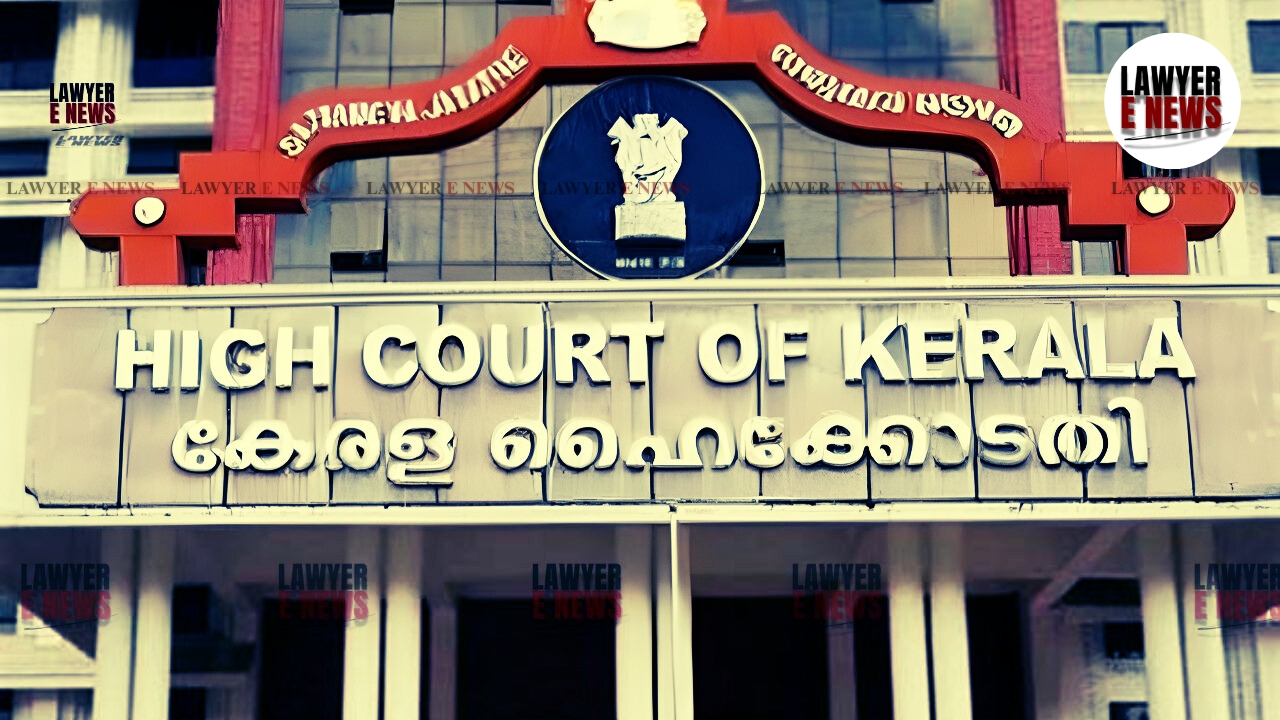
"There is a constitutional obligation on the State to consider the representations of detainees, irrespective of whether such representation was made before or after the reference is made to the Advisory Board and in any event, such representation cannot be kept pending till the Advisory Board decides the matter." Kerala High Court, in a significant ruling dated July 22, 2026, held that the State Government is constitutionally obligated to independently and expeditiously consider a detenu's representation against a preventive detention order.
A bench of Chief Justice Soumen Sen and Justice Syam Kumar V.M. observed that the government cannot keep a representation pending merely to await the decision of the Advisory Board, ruling that such a delay violates the fundamental rights guaranteed under Article 22(5) of the Constitution.
The petitioner's husband was detained under the Kerala Anti-Social Activities (Prevention) Act, 2007 (KAAPA) after being classified as a 'known rowdy' following his involvement in a criminal case. A detention order was passed on February 17, 2026, and the detenu submitted a representation to the Government on February 25, 2026. The State Government forwarded the matter to the Advisory Board and only disposed of the representation on April 6, 2026, alongside accepting the Board's recommendation to confirm the detention, resulting in a 37-day delay.
The primary question before the court was whether the detaining authority ought to have considered the representation independently of any opinion formed by the Advisory Board. The court was also called upon to determine whether the unexplained delay of 37 days by the State Government in considering the representation vitiated the order of preventive detention.
Independent Obligation of the State Government
The High Court heavily relied on the Supreme Court's Constitution Bench decisions in Pankaj Kumar Chakrabarty v. State of West Bengal, Haradhan Saha, and Abdul Karim, alongside a coordinate bench decision of the High Court in Kumari A.V. v. State of Kerala. The bench noted that Article 22(5) of the Constitution imposes a dual obligation on the appropriate Government and a dual right in favour of the detenu. The government must ascertain whether the detention order conforms with its power under the relevant law, while the Board separately assesses if there is sufficient cause for detention.
"The obligation of the appropriate Government to afford to the detenu the opportunity to make a representation and to consider that representation is distinct from the Government's obligation to constitute a Board and to communicate the representation... to the Board to enable it to form its opinion."
Unexplained Delay Violates Constitutional Mandate
Addressing the timeline, the court observed that while the KAAPA does not prescribe a strict statutory time limit for the Government to consider a representation, constitutional courts have consistently held that such processes must be concluded within a reasonable time. The State Government had failed to explain the 37-day delay in its statement of facts. The bench emphasized that unexplained delay in disposing of a representation relating to personal liberty violates Article 21 of the Constitution.
"If the reason for the Government's decision was to await the decision of the Advisory Board, it would fall foul of the mandate under clause (5) of Article 22 of the Constitution of India."
Cannot Await Advisory Board's Recommendation
The court rejected the State's approach of deciding the detenu's representation together with the Advisory Board's report via a single combined order on April 6, 2026. It clarified that the government must act independently and there is no legal mandate requiring it to wait for the Advisory Board's decision. By effectively sitting on the representation until the Board gave its opinion on March 31, 2026, the government failed to exercise its independent constitutional duty to evaluate the continued need for detention.
"The detention order thus cannot be sustained in absence of any explanation offered by the State for not considering the said representation made simultaneously, but not considered separately and only after the Advisory Board forwarded its recommendation."
Finding procedural lapses that infringed upon the detenu's constitutional rights, the High Court allowed the writ petition and set aside the detention order. The Superintendent of Central Prison, Kannur, was directed to release the detenu forthwith, provided his detention was not required in connection with any other pending criminal case.
Date of Decision: 22 July 2026