
-
by sayum
27 July 2026 3:39 PM







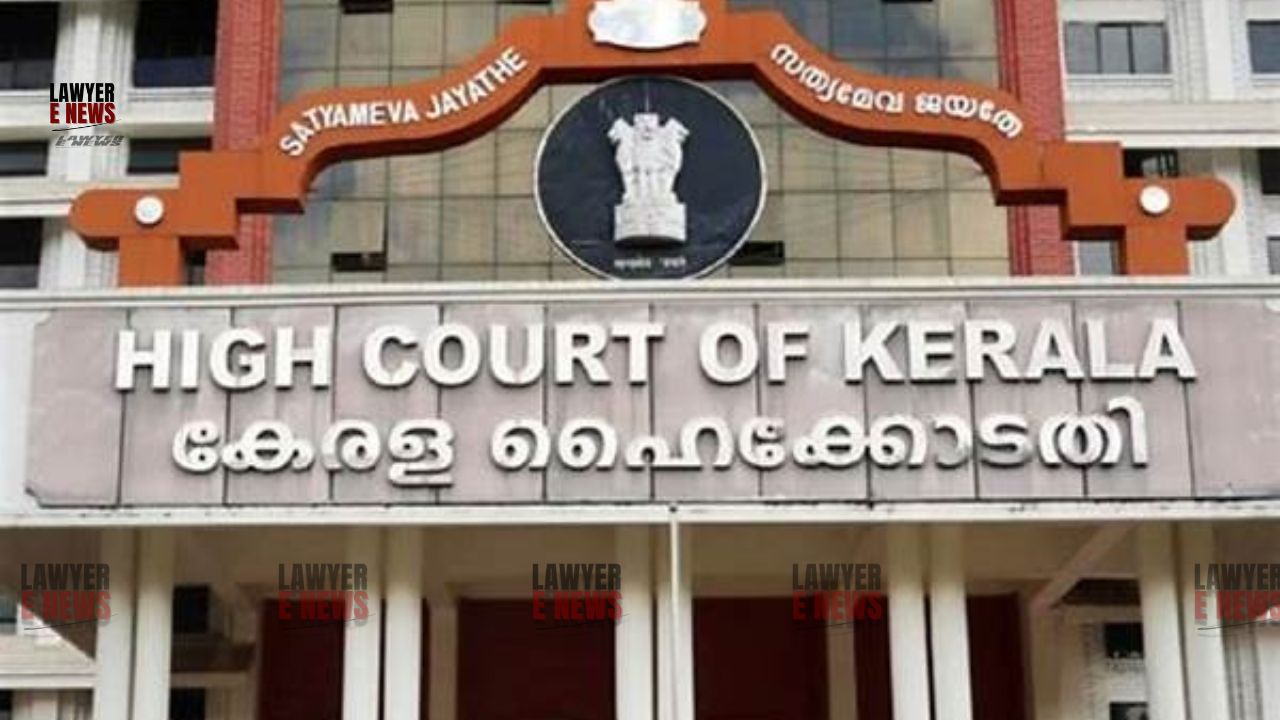
"Legislature, in its wisdom, has purposefully omitted the opportunity of hearing in Section 36AAA and hence the opportunity of hearing could not be read into Section 36AAA." Kerala High Court, in a significant judgment dated July 3, 2026, has clarified that while the Reserve Bank of India (RBI) is not required to provide a personal hearing before superseding the Board of Directors of a Co-operative Bank under Section 36AAA of the Banking Regulation Act, it must strictly comply with the statutory mandate of consulting the State Government.
A bench of Justice M.A. Abdul Hakhim observed that consultation with the Registrar of Co-operative Societies (RCS) does not equate to consultation with the State Government as required by law.
The petitioner, the former President of the Irinjalakuda Town Co-operative Bank, challenged an order issued by the RBI under Section 36AAA read with Section 56 of the Banking Regulation Act, 1949. This order had superseded the bank's Board of Directors and appointed an Administrator following an inspection that revealed financial irregularities. The petitioner contended that the order violated principles of natural justice and was passed without the mandatory consultation with the State Government of Kerala.
The primary questions before the court were whether an opportunity of hearing must be granted before superseding a board under Section 36AAA of the Banking Regulation Act. The court also examined whether consultation with the Registrar of Co-operative Societies constitutes sufficient compliance with the requirement to consult the State Government. Finally, it considered if the RBI could supersede a democratically elected committee without recourse to the Kerala Co-operative Societies Act.
Legislature Purposefully Omitted Right Of Hearing Under Section 36AAA
The Court conducted a comparative analysis between Section 36AA and Section 36AAA of the Banking Regulation Act. It noted that while Section 36AA, which deals with the removal of managerial personnel, expressly provides for a "reasonable opportunity of making a representation," Section 36AAA contains no such provision for the supersession of an entire Board. The Bench concluded that this omission was intentional on the part of the Parliament to ensure swift action in the public interest.
The Court relied on the precedent set by the Bombay High Court in Sandeep S. Ghandat v. Reserve Bank of India, agreeing that importing natural justice into Section 36AAA could paralyse the regulatory process. The Bench observed that if a show-cause notice were required, it could lead to delays, causing further deterioration of the bank's affairs and prejudicing the interests of depositors.
"The intention of the Parliament is not to include the principles of natural justice in Section 36-AAA. In other words, there is a clear mandate to the contrary in the statute."
Consultation With Registrar Is Not Equivalent To Consultation With State Government
On the second issue, the Court held that the RBI's consultation with the Registrar of Co-operative Societies was legally insufficient. The Proviso to Section 36AAA(1) mandates consultation with the "concerned State Government." The Court noted that under the Kerala Co-operative Societies Act, the State Government (represented by the Secretary of the Cooperation Department) is a superior authority to the Registrar.
The Court reiterated the settled legal principle that when a statute prescribes a specific manner for an act to be performed, it must be done in that manner alone. Since the Registrar is an officer subordinate to the State Government, the RBI's failure to seek comments directly from the Government through the appropriate departmental secretary rendered the consultation process ineffective and the resulting order unsustainable.
"The Registrar of Co-operative Societies cannot represent the State Government in such a consultation process... any order passed without such consultation is to be held unsustainable."
RBI Has Overriding Powers Over Co-operative Banks In Banking Matters
Regarding the petitioner’s claim that a democratically elected body should only be removed under the State Co-operative Act, the Court held that the Banking Regulation Act carries overriding weight in matters of financial administration. It noted that the RBI possesses greater expertise in monitoring the banking business of co-operative societies compared to state authorities.
The Court observed that the first proviso to Section 32(1) of the Kerala Co-operative Societies Act itself acknowledges that the provisions of the Banking Regulation Act shall apply to co-operative societies carrying on banking business. Therefore, a co-operative bank cannot claim immunity from RBI's supersession powers simply because it operates under a democratic setup provided by state law.
"When there is a clear provision as Section 36AAA in the Banking Regulation Act providing for supersession of the Board of Directors of the Co-operative Banks, the Co-operative Bank cannot claim any immunity from the proceedings."
Court Declines To Interfere In Public Interest Despite Legal Flaw
Despite finding that the RBI failed to properly consult the State Government, the Court declined to set aside the supersession order under Article 226 of the Constitution. The Bench noted that the Administrator had already been managing the bank for nine months and the term was set to expire shortly. Restoring the old management at this late stage was deemed contrary to the interests of the depositors.
The Court emphasized that the power under Article 226 is discretionary and should not be exercised if it results in public prejudice. While dismissing the petition, the Court directed that if the RBI intended to extend the supersession beyond the current one-year term, it must strictly do so only after a fresh and valid consultation with the State Government of Kerala.
The High Court dismissed the writ petition, upholding the exclusion of natural justice in board supersessions but strictly affirming the need for high-level inter-governmental consultation. The ruling balances the need for rapid regulatory intervention with the procedural safeguards intended to respect federal structures in the co-operative sector.
Date of Decision: 03 July 2026