-
by sayum
24 August 2026 10:50 AM







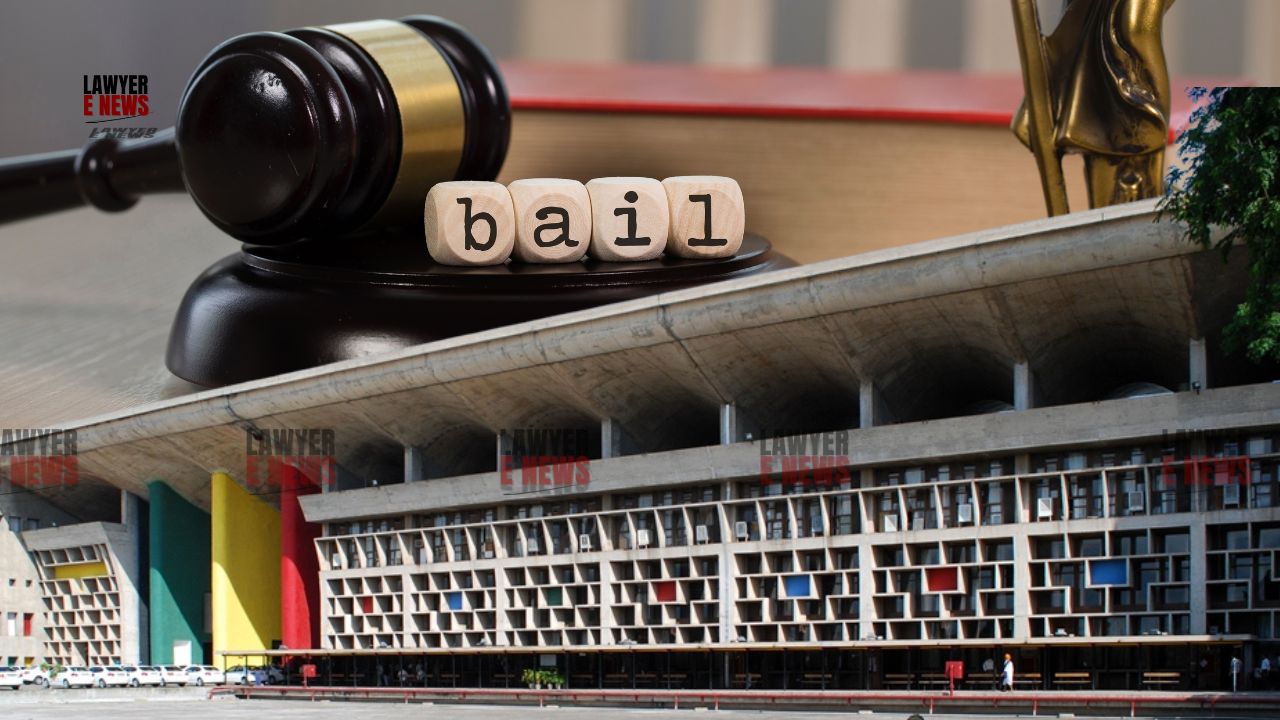
Pre-Trial Incarceration Should Not Be a Replica of Post-Conviction Sentencing - Punjab and Haryana High Court granted regular bail to Gopal Kumar, an accused in a jail murder conspiracy case, on the ground that the evidence linking him to the alleged offense was insufficient to justify continued pre-trial incarceration. Justice Anoop Chitkara, while allowing the Section 439 CrPC bail petition in Criminal Miscellaneous Petition No. 57021 of 2024, emphasized that "even the evidence of conspiracy is sketchy, which might be sufficient to launch prosecution or frame charges but is insufficient to deny bail." The case involved the murder of an inmate inside Kapurthala Central Jail, where the prosecution claimed that Gopal Kumar facilitated the crime by preventing the closing of a jail gate. The Court, however, ruled that prolonged pre-trial detention was not justified given the absence of direct participation in the assault.
The case stemmed from an incident on July 13, 2023, at Kapurthala Central Jail, where a group of prisoners brutally assaulted an inmate, Simranjit Singh, causing his death. The FIR No. 175, registered at Police Station Kotwali, Kapurthala, included charges under Sections 302 (murder), 303 (murder by a life convict), 120-B (criminal conspiracy), 148 (rioting, armed with a deadly weapon), 332 (voluntarily causing hurt to deter a public servant from duty), and provisions of the Prisons Act, 1894, and the Arms Act, 1959. Initially, 22 prisoners were named in the FIR, but four additional accused, including Gopal Kumar, were subsequently added based on CCTV footage and investigation reports.
The prosecution alleged that Gopal Kumar was part of a conspiracy to commit the murder and played a role by preventing the security personnel from closing the gate, thus aiding the attackers’ escape. The State strongly opposed bail, arguing that "the murder was premeditated and carried out within the confines of the jail," making the offense particularly grave. The State’s affidavit explicitly noted that Gopal Kumar had not inflicted any injuries on the deceased but claimed that he had actively facilitated the crime by ensuring the escape route remained open for the assailants.The High Court examined whether the petitioner's alleged role in the conspiracy justified his continued detention. Justice Chitkara observed that while there was prima facie evidence connecting Gopal Kumar to the crime, it was not sufficient to deny him bail indefinitely. The Court stated that "even as per the affidavit filed by the State, the allegation against the petitioner is of criminal conspiracy, and it is explicitly mentioned that he did not cause any injury to the deceased. Even the evidence of conspiracy is sketchy, which might be sufficient to launch prosecution or frame charges but is insufficient to deny bail."
The Court further noted that "pre-trial incarceration should not be a replica of post-conviction sentencing." Given that the petitioner had been in custody since August 19, 2023, and considering the nature of the allegations, the Court held that continued detention was not warranted at this stage.
Granting bail with stringent conditions, the Court directed that the petitioner must not tamper with evidence, threaten witnesses, or commit any further offenses. The Court imposed a special condition requiring Gopal Kumar to surrender all firearms and ammunition within 15 days of his release, stating that "restricting firearms would instill confidence in the victim(s), their families, and society; it would also restrain the accused from influencing witnesses and repeating the offense."
The Court also referenced the Supreme Court’s judgment in Mohammed Zubair v. State of NCT of Delhi, 2022:INSC:735, emphasizing that bail conditions must be reasonable and proportionate. The Court cited the Apex Court’s ruling that "the bail conditions imposed by the Court must not only have a nexus to the purpose that they seek to serve but must also be proportional to the purpose of imposing them. The courts, while imposing bail conditions, must balance the liberty of the accused and the necessity of a fair trial."
The Court further ruled that "this bail is conditional, and the foundational condition is that if the petitioner indulges in any non-bailable offense, the State shall file an application for cancellation of this bail before the Sessions Court, which shall be at liberty to cancel this bail."
Summarizing its decision, the Court stated that "without commenting on the case's merits, in the facts and circumstances peculiar to this case, and for the reasons mentioned above, the petitioner makes a case for bail. This order shall come into force from the time it is uploaded on this Court's official webpage."
Thus, the Punjab and Haryana High Court, while granting bail, reaffirmed that pre-trial detention must not be used as punishment, especially in cases where the prosecution’s evidence remains inconclusive. The Court ensured that bail was granted with strict conditions to safeguard the integrity of the trial while upholding the principle of personal liberty.
Date of Decision: January 24, 2025