-
by sayum
24 August 2026 10:50 AM







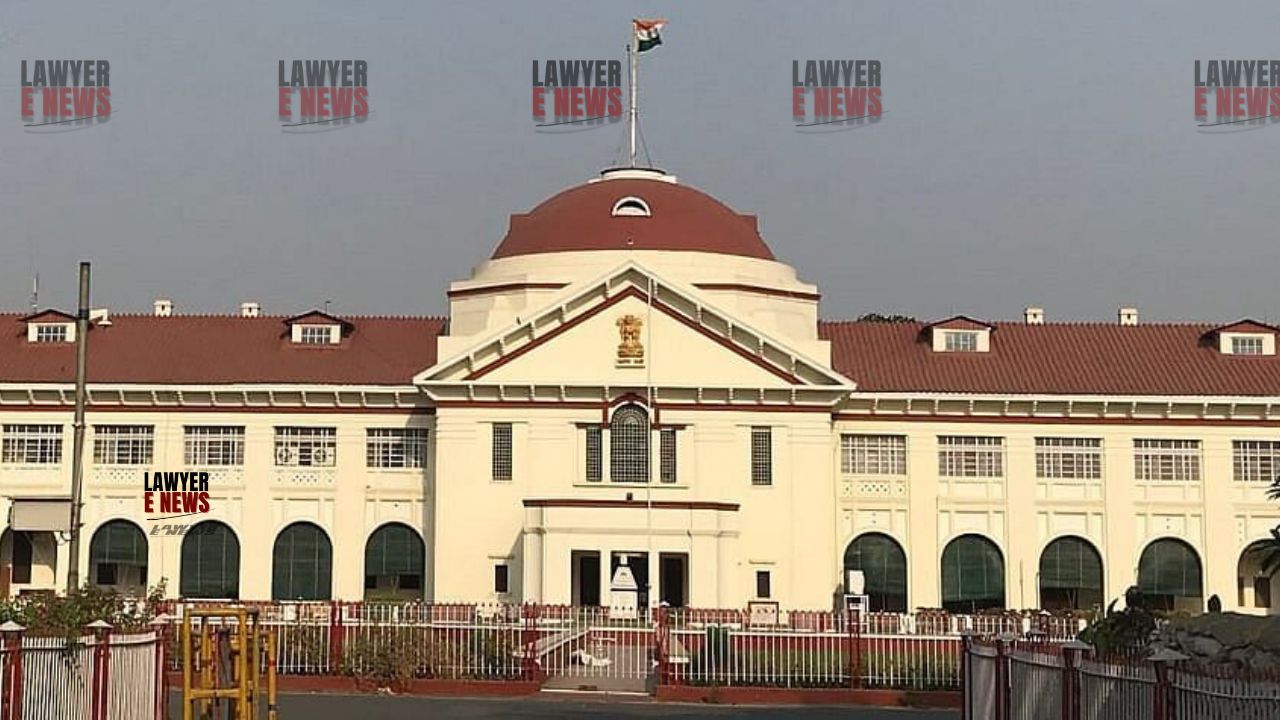
Equivalence of Qualifications is a Policy Decision, Not Subject to Judicial Review - Patna High Court, in a significant ruling on service law, upheld the exclusion of B.Tech (Civil) degree holders from applying for the post of Junior Engineer (Civil) under the Bihar Water Resource Department Subordinate Engineering (Civil) Cadre Recruitment Rules, 2023. A bench comprising the Acting Chief Justice and Justice Partha Sarthy dismissed Civil Writ Jurisdiction Case No. 7714 of 2023 and Civil Writ Jurisdiction Case No. 8423 of 2023, rejecting the petitioners’ challenge to Rule 8(1)(ii) and (iii) of the 2023 Rules, which prescribed a diploma in Civil, Mechanical, or Electrical Engineering as the only eligibility criterion for Junior Engineer appointments.
The petitioners, all B.Tech degree holders, argued that a higher qualification (B.Tech) should automatically subsume a lower qualification (Diploma) and that their exclusion was arbitrary and unconstitutional under Article 14 of the Constitution. They relied on Supreme Court precedents, including Jyoti K.K. v. Kerala Public Service Commission (2010) and Puneet Sharma v. HP Electricity Board (2021), to assert that degree holders should be eligible for diploma-based positions unless explicitly excluded.
The State of Bihar, supported by intervenors (diploma holders), opposed the challenge, arguing that the qualification requirements were a policy decision made by the government after due deliberation. The State contended that a degree in Civil Engineering does not necessarily include the skills imparted in a diploma course, and that Junior Engineer positions were specifically designed for diploma holders to ensure a level playing field in public employment. The State further argued that degree holders had ample opportunities to apply for higher posts such as Assistant Engineers, whereas diploma holders had limited employment options.
Recruitment Rules Are a Policy Matter, Not Subject to Judicial Review
The Court ruled that “equivalence of qualifications is not a matter for judicial review but a decision to be made by the employer.” It emphasized that the power to prescribe qualifications for public employment is vested in the State under Article 309 of the Constitution, and courts cannot interfere unless there is manifest arbitrariness or constitutional infirmity.
Higher Qualification Does Not Automatically Subsume a Lower Qualification
Addressing the petitioners' contention that a B.Tech degree should be considered equivalent or superior to a diploma, the Court categorically held that “a diploma and a degree are distinct qualifications serving different functional purposes.” The syllabus, training, and job roles associated with a Junior Engineer (Civil) differ significantly from those of a degree-holder. It observed:
“Subsuming a diploma within a degree is impermissible unless the recruitment rules explicitly state so. The technical curriculum of a diploma is designed specifically for junior-level engineering tasks, which differs from the broader scope of a degree.”
Distinguishing Supreme Court Precedents: Jyoti K.K. and Puneet Sharma
The Court distinguished the Supreme Court rulings in Jyoti K.K. and Puneet Sharma, clarifying that:
In Jyoti K.K., the Kerala Public Service Commission’s recruitment rules contained a specific provision allowing higher qualifications to be treated as equivalent to prescribed qualifications, which is absent in Bihar’s 2023 Rules.
In Puneet Sharma, the recruitment rules for Himachal Pradesh Electricity Board included a quota for degree holders in Junior Engineer posts, indicating an intention to allow them. However, in Bihar, the 2023 Rules deliberately exclude degree holders without any such quota or equivalence provision.
“The rules in Jyoti K.K. and Puneet Sharma explicitly permitted higher qualifications to be considered. In contrast, the Bihar Recruitment Rules of 2023 unambiguously prescribe only a diploma for Junior Engineer posts, making the petitioners' reliance on those cases misplaced.”
Exclusion of Degree Holders is Rational and Non-Arbitrary
The Court held that differentiating between diploma and degree holders for recruitment purposes is a legitimate policy choice and does not violate Article 14 of the Constitution. It stated: “The classification made by the State is rational, as it ensures that diploma holders, who otherwise have limited employment avenues, are not displaced by degree holders who have access to higher posts.”
Diploma as the Sole Prescribed Qualification Was a Conscious Policy Decision
The Court rejected the petitioners' argument that "diploma" should be interpreted as a "minimum qualification" rather than the sole qualification. It noted that the State's decision to exclude degree holders was deliberate and based on administrative needs. It observed:
“Had the State intended degree holders to be eligible, it would have explicitly stated so. The rules do not mention ‘minimum qualification’ but rather specify diploma as the exclusive criterion, thereby excluding degree holders.”
No Infringement of Equality Under Article 14
The Court concluded that there was no discrimination against degree holders, as they are eligible for Assistant Engineer positions and other senior roles, which diploma holders cannot apply for. The State’s objective to create a separate cadre for diploma holders was justified.
The High Court dismissed the writ petitions, upholding the constitutionality of Rule 8(1)(ii) and (iii) of the Bihar Water Resource Department Subordinate Engineering (Civil) Cadre Recruitment Rules, 2023. It ruled that the exclusion of degree holders from Junior Engineer posts was a valid policy decision, not subject to judicial intervention.
“The petitioners' challenge to the constitutionality of the Bihar Water Resource Department Subordinate Engineering (Civil) Cadre Recruitment Rules, 2023, fails. The writ petitions are dismissed.”
Date of Decision: January 28, 2025