-
by sayum
24 August 2026 3:22 PM








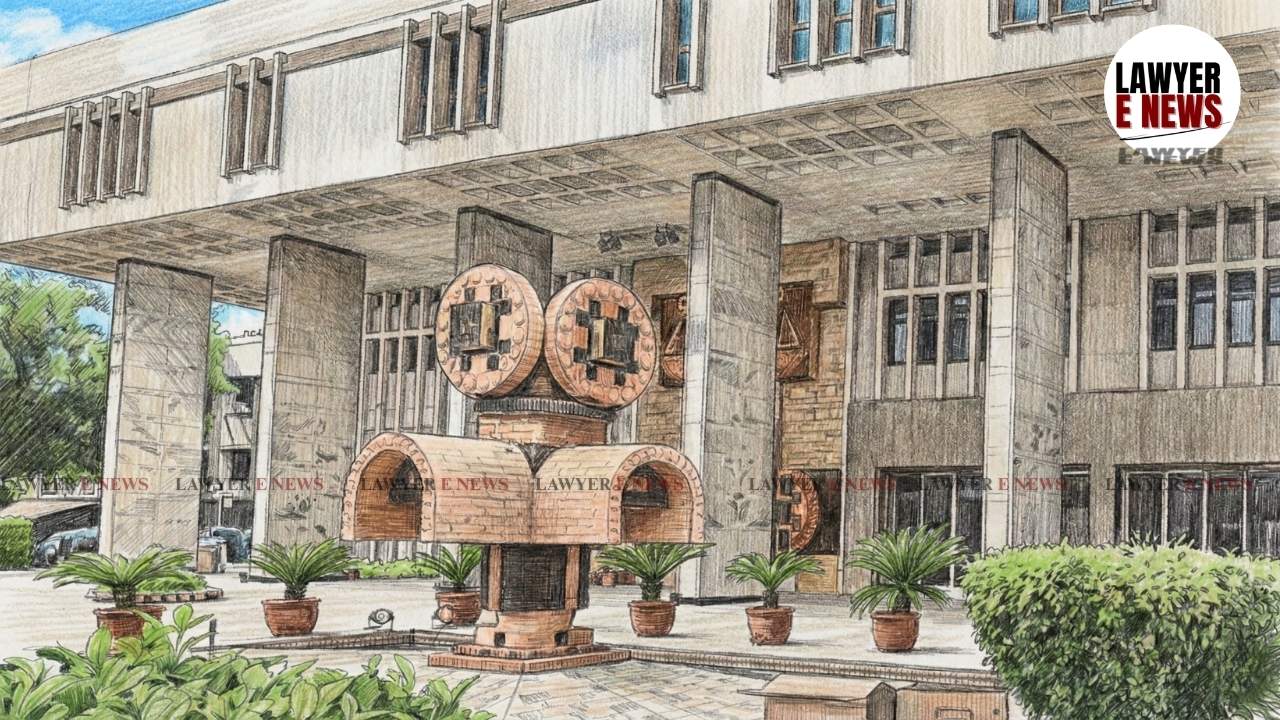
In a case under UAPA Act, Punjab and Haryana High Court granted bail to the appellant, Parveen Singh, who had been incarcerated for nearly two years under charges that included the Unlawful Activities (Prevention) Act, 1967 (UAPA), Arms Act, 1959, and various provisions of the Indian Penal Code (IPC). The Court, presided over by Justice Anupinder Singh Grewal and Justice Lapita Banerji, held that the appellant’s prolonged detention without the framing of charges violated his right to liberty and speedy trial under Article 21 of the Constitution of India.
Parveen Singh was arrested in connection with FIR No.192 dated 05.12.2022, registered at Police Station City Khanna, District Ludhiana, under Section 25 of the Arms Act, Sections 386, 384, 506, 473, 120-B IPC, and later, Sections 17, 18, 20 of the UAPA were added. The allegations against him included receiving funds from a UK national and transferring part of this money to a co-accused. The prosecution contended that these funds were used for illegal purposes, including the purchase of weapons.
The appellant sought bail, citing the absence of incriminating material linking the funds to illegal activities and his prolonged pre-trial detention of over one year and nine months. The Special Court in Ludhiana had earlier rejected his bail application.
Prolonged Pre-Trial Detention and Right to Liberty: The appellant argued that his detention violated his right to liberty under Article 21, as no charges had been framed despite being in custody for nearly two years. There was also no recovery of arms or other incriminating material.
Stringent Bail Conditions Under UAPA: The Court had to consider whether the stringent conditions for granting bail under Section 43-D(5) of the UAPA could be relaxed in light of the appellant’s prolonged incarceration and lack of substantial evidence linking him to the alleged offenses.
Lack of Evidence of Illegal Use of Funds: The prosecution alleged that the appellant had received money from a UK national, part of which was transferred to a co-accused. However, there was no evidence connecting this money to the purchase of weapons or any unlawful activities.
Prolonged Detention and Article 21: The Court underscored that Article 21 guarantees the right to a speedy trial, and prolonged pre-trial detention without the framing of charges violates this constitutional right. The Court cited the Supreme Court’s judgment in Union of India vs. K.A. Najeeb (2021), where it was held that lengthy incarceration, even in UAPA cases, can justify bail.
"Long custody by itself would entitle the accused under UAPA to the grant of bail by invoking Article 21 of the Constitution of India," the Court stated [Para 6].
Bail Under UAPA Despite Statutory Restrictions: While acknowledging the stringent provisions for granting bail under Section 43-D(5) of the UAPA, the Court emphasized that Constitutional Courts have the discretion to grant bail when there is an unreasonable delay in the trial. The Court noted that 62 witnesses were yet to be examined, and there was no clear timeline for the conclusion of the trial.
"The rigours of Section 43-D(5) of UAPA will melt down where there is no likelihood of trial being completed within a reasonable time and the period of incarceration already undergone has exceeded a substantial part of the prescribed sentence," the Court remarked [Para 6].
Lack of Incriminating Evidence: The Court found that there was no concrete evidence linking the funds received by the appellant to the purchase of arms or any other illegal activity. No recovery of arms or ammunition had been made, and there was insufficient material to justify his continued detention.
"No recovery of any arms and ammunition or other incriminating material has been effected from the appellant," the Court noted [Para 5].
Union of India vs. K.A. Najeeb, (2021) 3 SCC 713: The Court cited this Supreme Court judgment, which held that prolonged incarceration under UAPA, without the likelihood of trial concluding soon, can justify bail under Article 21 of the Constitution.
Shoma Kanti Sen vs. State of Maharashtra, 2024 SCCOnline SC 498: The Court referred to this case, where the Supreme Court emphasized that pre-conviction detention must be balanced against an accused’s right to liberty when there is significant delay in the trial process.
Vernon vs. State of Maharashtra, 2023 SCCOnline SC 885: The Supreme Court in this case reiterated that serious allegations alone cannot justify indefinite detention without trial.
Sheikh Javed Iqbal @ Ashfaq Ansari vs. State of Uttar Pradesh, Criminal Appeal No. 2790 of 2024: The Court highlighted that Article 21 takes precedence even in cases involving stringent statutes like UAPA when there is prolonged pre-trial detention.
The Punjab and Haryana High Court allowed the appeal and set aside the order of the Special Court, Ludhiana. The Court granted bail to the appellant, Parveen Singh.
The Court also observed that if any of these conditions are violated, the prosecution would be at liberty to seek cancellation of bail.
In this significant ruling, the Punjab and Haryana High Court balanced the stringent provisions of the UAPA with the constitutional right to liberty and a speedy trial under Article 21. The Court recognized that prolonged pre-trial detention without substantial progress in the case violates fundamental rights, especially when no incriminating evidence has been found. The judgment underscores the duty of Constitutional Courts to ensure that the process of trial does not become a punishment in itself.
Date of decision October 16, 2024