-
by sayum
05 August 2026 3:07 PM







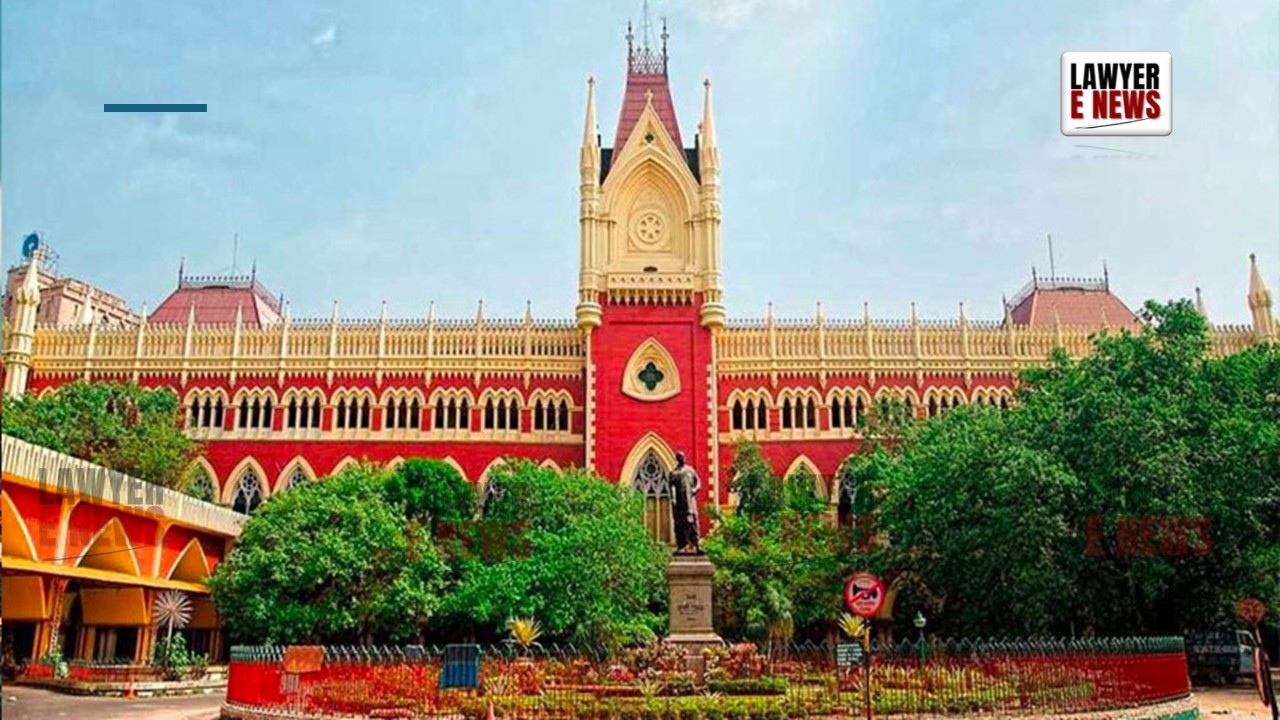
“A Holographic Will Commands High Presumption Of Regularity”, Calcutta High Court, in a landmark pronouncement, reaffirmed the enduring nature of probate rights under succession law and held that mere delay in publication of a Will, even after 30 years, cannot by itself constitute suspicious circumstances sufficient to invalidate the testamentary disposition of a deceased person.
In a comprehensive judgment delivered by a Division Bench comprising Justice Rajasekhar Mantha and Justice Ajay Kumar Gupta, the Court dismissed the appeal challenging the grant of letters of administration of a holographic Will executed in 1968 by Hridoy Krishna Kundu, upholding the Trial Court’s decision passed by the Additional District Judge, Alipore.
“Limitation Does Not Extinguish Probate Rights; Right Accrues When Dispute Arises” – High Court Clarifies Article 137 Limitation Application
The principal objection by the appellants was the 30-year delay in bringing the Will to light, coupled with alleged suspicious circumstances surrounding its execution. They argued that the letters of administration were time-barred under Article 137 of the Limitation Act, 1963. Rejecting this, the Court categorically held:
“The right to apply for letters of administration is a continuing right that accrues when necessity arises, particularly upon dispute, as held in Kunvarjeet Singh Khandpur v. Kirandeep Kaur, (2008) 8 SCC 463. In the present case, the application was filed after disputes arose between the heirs, and therefore, it cannot be said to be time-barred.”
The Court further invoked the Supreme Court's ruling in Sameer Kapoor v. State, (2020) 12 SCC 480 to reiterate that probate proceedings are actions in rem, grounded in moral duty, and not extinguished by the mere passage of time.
“Suspicion Cannot Supplant Proof: Onus Is On Objector” – Bench Reiterates Well-Settled Testamentary Principles
On the allegation of suspicious circumstances, the Court firmly observed: “The law is well-settled that the burden of dispelling suspicious circumstances lies initially on the propounder, but once execution and attestation are proved by cogent evidence, the onus shifts to the objector to substantiate their claims.”
Referring to H. Venkatachala Iyengar v. B.N. Thimmajamma, AIR 1959 SC 443, the Court meticulously analysed the criteria for proving a Will and concluded: “The Will, in this case, is holographic, written entirely in the testator’s hand. Such Wills, under law, enjoy a heightened presumption of genuineness. The attesting witness (PW1), an Advocate by profession, provided clear, credible testimony affirming the testator’s sound mental and physical condition at the time of execution.”
The Court noted the lack of any convincing rebuttal from the appellants, particularly highlighting that the daughter of the deceased — the only child disinherited by the Will — chose not to contest the proceedings.
“No Law Compels Immediate Probate; Family Settlement Does Not Negate Testamentary Rights”
The appellants further argued that after the testator’s death, the properties had been mutated jointly among the heirs, implying a waiver of testamentary rights. Rejecting this argument, the Court asserted: “Mutation of property is merely evidence of possession, not title. No family arrangement can extinguish the legal requirement to obtain letters of administration once a valid Will exists. The duty to give effect to a Will cannot be waived by parties.”
Relying on A.E.G. Carapiet v. A.Y. Derderian, AIR 1961 Cal 359, the Bench emphasized: “A probate court is not influenced by private settlements; it is bound to adjudicate solely on the validity of the Will and cannot grant conditional or compromised probates.”
Court Disregards Alleged Health Issues, Holds Objectors Failed to Discharge Burden
On claims of the testator’s incapacitation, the Court noted inconsistencies in the appellants' own evidence regarding the nature of the testator’s ailments and stressed: “The mere mention of old age or ailments in a Will does not invalidate it. The objectors failed to produce medical or factual evidence to establish incapacity.”
The Court particularly stressed the evidentiary strength of the Will itself, stating: “The Will’s reference to an earlier testament given to the deceased daughter’s first husband is a fact only the testator would know, fortifying its authenticity.”
Conclusion: Appeal Dismissed, Letters of Administration Affirmed
The Court ultimately concluded: “In absence of credible evidence of coercion, forgery, or incapacity, and with the Will duly executed and attested, this appeal fails. The long delay, standing alone, cannot cast a cloud of suspicion.”
The First Appeal was dismissed without costs, confirming the validity of the holographic Will and the grant of letters of administration to the respondents.
Date of Decision: 7th July 2025