-
by sayum
05 August 2026 3:07 PM







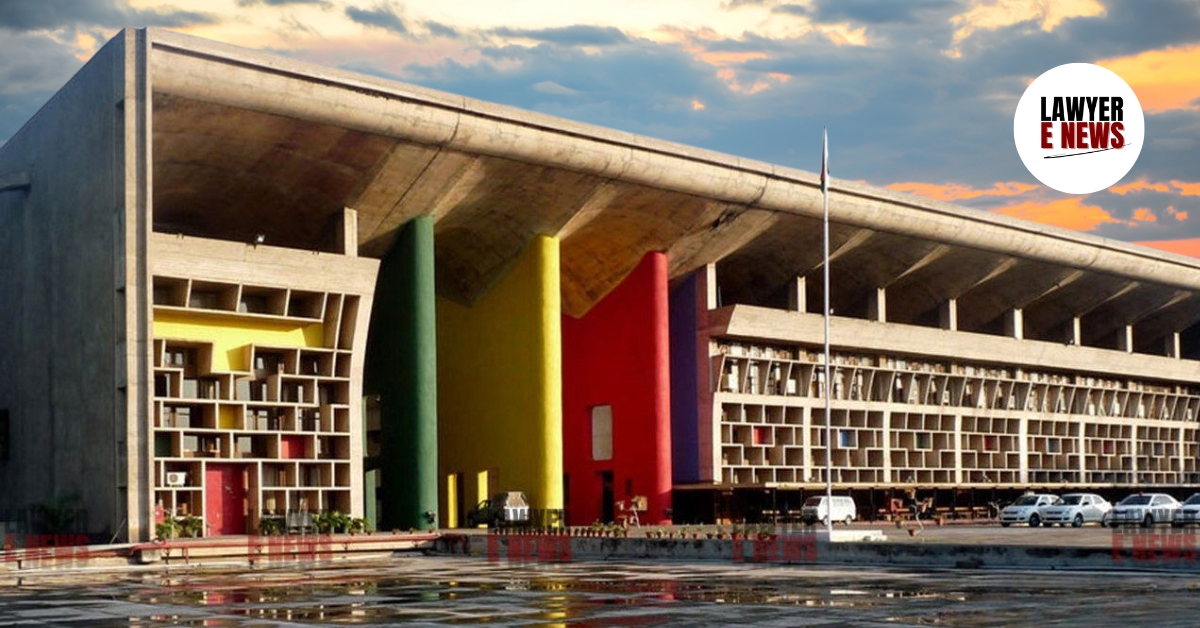
“The constitutional guarantee under Article 311(2) is not a mere formality… No employee can be dismissed from service without being given a fair chance to explain his side,” Punjab and Haryana High Court delivered a critical ruling, setting aside the dismissal of an army personnel employed as a clerk in the Army Ordnance Corps. The Court found the dismissal procedurally flawed and in gross violation of Article 311(2) of the Constitution of India, which guarantees due process before removal from service.
Justice Namit Kumar ruled that the disciplinary inquiry had been conducted in breach of natural justice, primarily due to non-supply of inquiry reports and absence of adequate opportunity to rebut evidence.
“Wherever a civil servant’s livelihood is at stake, the law demands strict compliance with natural justice”—High Court restores clerk’s dignity and service
The petitioner, Jagtar Singh, had joined the Army Ordnance Corps in 1972 and was promoted to the rank of Havildar (Clerk). In 1994, he was served with a charge-sheet on allegations of making false entries and altering service records. A Court of Inquiry and subsequent disciplinary inquiry followed. Ultimately, in June 1999, he was dismissed from service under Army Rules, without being given a copy of the Court of Inquiry report or the inquiry officer’s findings.
Jagtar Singh challenged the dismissal order on the ground that it violated the mandate of Article 311(2), the Army Act, 1950, and Army Rules, 1954, all of which require a fair hearing.
The central legal question was whether the procedural safeguards under Article 311(2) and corresponding rules had been duly followed before dismissing the petitioner from service.
The Court made it clear: “The failure to furnish a copy of the inquiry report to the petitioner before imposing the punishment is in itself a fatal illegality.”
Justice Namit Kumar relied on the Constitution Bench decision in Union of India v. Mohammad Ramzan Khan, (1991) 1 SCC 588, which held that:
“A government servant is entitled to a copy of the inquiry officer’s report before the disciplinary authority takes a final decision.”
Additionally, the Court noted that:
“Even the proceedings of the Court of Inquiry were not supplied to the petitioner… This completely disabled him from rebutting the evidence.”
The Court further rejected the Union of India’s argument that the inquiry was valid because it complied with internal military regulations:
“The requirement of natural justice is not dependent on administrative convenience. It is a constitutional guarantee. Military or civil, the rule of law must prevail.”
The High Court concluded that the dismissal order was unsustainable in law and in equity. Accordingly, it passed the following directions:
“The order of dismissal dated 07.06.1999 is hereby set aside. The petitioner shall be deemed to be in continuous service with all consequential benefits.”
However, the Court left it open for the Union of India to proceed afresh, if so advised, in accordance with law and only after furnishing the petitioner all relevant documents and giving him a proper opportunity to be heard.
This judgment underscores the Supreme importance of due process and procedural fairness, especially in disciplinary matters affecting public servants. By reinforcing Article 311(2), the Court sent a strong message:
“Dismissal without fair hearing is not justice; it is a unilateral execution of authority without legal sanction.”
The case not only restores the livelihood of a dismissed army clerk but also reasserts the constitutional boundaries within which disciplinary powers must be exercised.
Date of Decision: 1 August 2025