-
by sayum
28 August 2026 2:11 PM







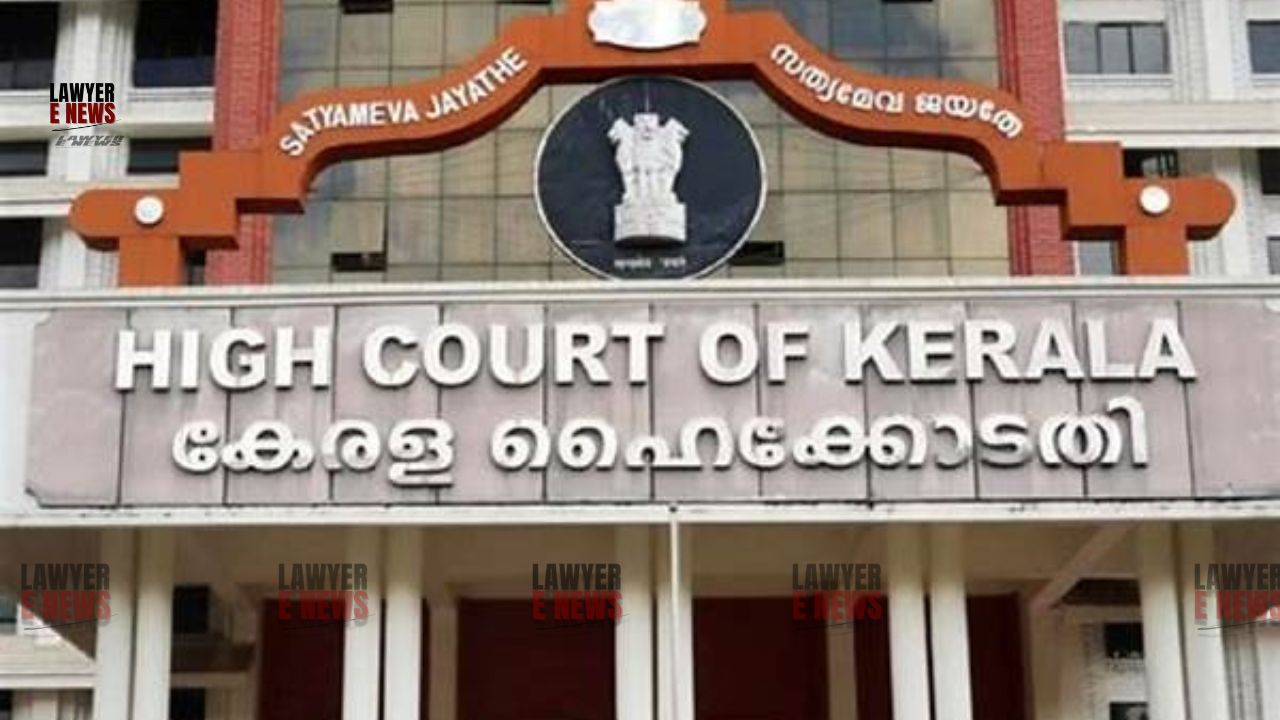
“Entering into a new contract at ₹689/MT when the same material was available at ₹621/MT is not an innocuous act—it raises a triable presumption of corruption” — Kerala High Court dismissed the discharge petitions of two former directors of Malabar Cements Ltd (MCL), refusing to interfere with the criminal proceedings initiated against them in connection with a financial scandal involving an allegedly fraudulent supply contract that caused a direct loss of ₹26,61,394 to the State-owned enterprise.
Justice A. Badharudeen, sitting at Ernakulam, held that the materials produced by the prosecution “clearly disclose a triable case” and that the order passed by the Special Judge refusing discharge did not suffer from legal infirmity. The case concerns an interest-free advance of ₹32 lakhs paid by MCL to M/s Crescent Mines & Minerals, which allegedly resulted in financial loss and criminal misconduct, attracting offences under the Prevention of Corruption Act and the Indian Penal Code.
“Supply of Limestone at Inflated Rate Without Due Diligence is Not a Boardroom Decision—It is a Criminal Act if Public Money Is Lost” – High Court Observes on Role of Public Officials
The case has its origins in the supply of sweetener grade limestone during 2004–2007. Malabar Cements Ltd., a public sector company under the Government of Kerala, entered into an agreement with M/s Crescent Mines & Minerals, granting them a contract to supply limestone at ₹689/MT. The previous supplier, M/s Parveen Mines & Minerals, had been supplying the same material at ₹621/MT.
It was alleged that the agreement with Crescent Mines was executed despite knowing that their leased mines lacked sufficient quantity and quality of limestone. Only ₹5 lakh out of the ₹32 lakh advance was recovered, resulting in a direct loss of ₹26,61,394.
The 6th and 7th accused—John Mathai (Chairman of MCL) and N. Krishna Kumar (Director)—were part of the Board of Directors’ meeting held on 21.05.2005, which ratified the decision to provide interest-free advance to Crescent Mines. The Vigilance and Anti-Corruption Bureau alleged that their participation was not merely administrative but instrumental in facilitating the contract which ultimately benefited private parties and caused public loss.
The petitioners argued that they merely attended board meetings in their official capacity and bore no personal culpability. Senior counsel appearing for the petitioners asserted that the new contract price was justified due to increased statutory levies and diesel prices, and that MCL even made a minor profit of ₹3,25,472 during the contract period.
But the Court was not convinced. Justice A. Badharudeen noted: “If 1 MT limestone was available at Rs.621/-, a new agreement for purchase at Rs.689/MT cannot be presumed to be in the interest of the company without closer scrutiny, especially when a direct loss of Rs.26,61,394/- is shown on record.”
The Public Prosecutor pointed out that Crescent’s mines were later found to have only a fraction of the limestone claimed—4.67 lakh MTs versus the promised 14 lakh MTs—and that the quality was subpar. A report by the Mines and Geology Department was cited to assert that Crescent Mines did not meet the required standards for supply.
The learned counsel for the additional respondent, Human Rights Protection Centre, argued that John Mathai, the then Chairman, had a history of influencing contracts in favor of specific individuals, including the 5th accused, proprietor of Crescent Mines. It was submitted:
“The petitioners were not passive members of the Board but functionaries who actively enabled illegal advantage to private players at public cost.”
The Court accepted the proposition that the price difference, coupled with inferior quality supply and lease misrepresentations, pointed to more than a procedural lapse—it indicated prima facie criminal misconduct under Section 13(1)(c) and (d) read with Section 13(2) of the Prevention of Corruption Act, and Sections 409, 420, and 120B of IPC.
The Court reaffirmed the well-settled principle that at the stage of discharge, it is not necessary to prove the offence conclusively, but to establish whether the materials disclose a grave suspicion.
Citing the Supreme Court judgment in State of Karnataka v. Muniswamy [(1977) 2 SCC 699], the Court reiterated:
“The High Court is entitled to quash a proceeding if it comes to the conclusion that allowing the proceeding to continue would be an abuse of the process of the Court or that the ends of justice require that the proceeding ought to be quashed. But when the allegations show a triable case, discharge must be refused.”
Similarly, reference was made to Union of India v. Prafulla Kumar Samal [AIR 1979 SC 366], wherein it was held that:
“If two views are equally possible and the Judge is satisfied that the evidence while giving rise to some suspicion but not grave suspicion, he will be fully within his right to discharge the accused.”
In the present case, however, the Court held that the prosecution’s allegations, supported by documents and statutory audit material, go beyond mere suspicion and warrant a full trial.
In rejecting the plea, the Court concluded: “The Special Court rightly negatived the discharge plea for the reasons extracted hereinabove, and therefore, the said order does not require any interference.”
The interim stay granted earlier by the High Court was vacated, and the matter was remitted back to the Special Court, Thrissur, for trial.
“A Boardroom Signature Cannot Shield Public Officials from Criminal Accountability” – Kerala High Court Sends Strong Message on Abuse of Office
Date of Decision: 10 September 2025