-
by sayum
04 August 2026 1:39 PM







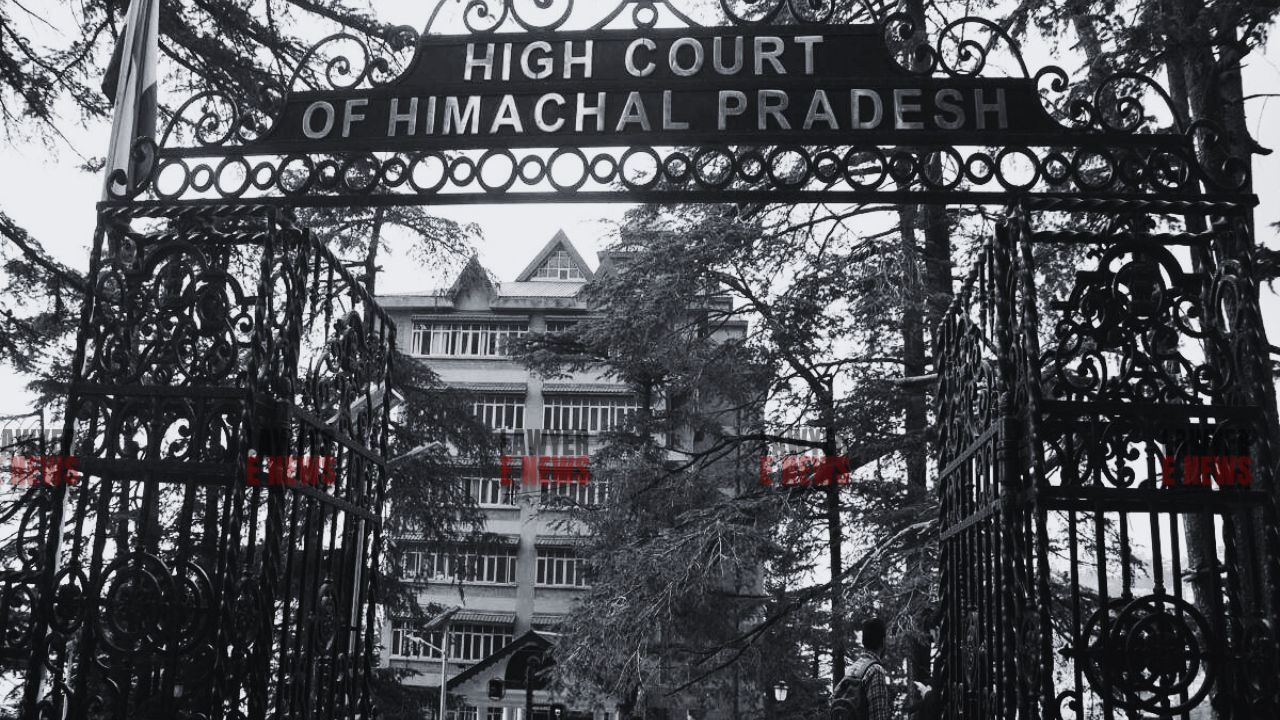
“Even if the signature on the cheque is admitted, the complainant must still establish the existence of a legally enforceable liability — mere issuance of a cheque is not conclusive proof” — In a decision Himachal Pradesh High Court upheld the acquittal of an accused under Section 138 of the Negotiable Instruments Act, 1881. The Court reiterated that while Sections 118 and 139 NI Act raise a presumption in favour of the holder of a cheque, that presumption is rebuttable, and cannot substitute for concrete evidence of debt, especially when the complainant’s testimony is riddled with contradictions and devoid of financial documentation.
Justice Rakesh Kainthla declared: “The statutory presumption is not an irrebuttable presumption. The accused may rebut the presumption either by leading evidence or by demonstrating contradictions in the complainant’s case.”
“Where There Is No Proof of Transaction, No Presumption of Legally Enforceable Debt Can Survive”
The complainant alleged that he had lent ₹10 lakh to the accused in August 2010, for which the accused issued a cheque dated September 21, 2011. The cheque was dishonoured with the remark “Payment Stopped by Drawer.” However, the trial court acquitted the accused, and the complainant approached the High Court in appeal.
The High Court found that the complainant had not established even the basic elements of the transaction. The Court observed:
“The complainant has not placed on record any document to prove that he was in possession of ₹10 lakh in 2010 or that he actually gave this amount to the respondent.”
It further held that “no receipt was executed, nor was any promissory note prepared. Even Income Tax records were not filed. The absence of documentation in a transaction of such magnitude severely weakens the complainant’s case.”
“Cheque Presented for ₹10 Lakh Despite ₹1.5 Lakh Being Returned — Offence Under Section 138 Not Made Out”
Crucially, the accused had led defence evidence showing that he had repaid ₹1.5 lakh through two cheques. These repayments were confirmed through bank records and remained unrefuted. Yet, the complainant presented the original cheque for the full ₹10 lakh without adjusting for the part repayment.
The Court held: “The complainant has failed to explain why the cheque for ₹10 lakh was presented after receiving part payment of ₹1.5 lakh. This conduct runs contrary to the law laid down in Dashrathbhai Trikambhai Patel v. Hitesh Mahendrabhai Patel (2023).”
Quoting the Supreme Court, the Court observed: “The cheque must reflect the correct liability as on the date of presentation. Presentation of a cheque for an inflated amount, ignoring partial repayment, defeats the object of the Act.”
Thus, the Court concluded that “no offence under Section 138 NI Act is made out when the amount due is less than what is claimed, and this discrepancy is unexplained.”
“Contradictions in Complainant’s Testimony Undermine Credibility”
The complainant had deposed that the entire loan was given in August 2010, but under cross-examination claimed staggered payments over two months. He could not specify whether the cheque was issued in September 2011 voluntarily or extracted later. There were also inconsistencies about the exact date and mode of loan disbursement.
Justice Kainthla held: “The contradictions regarding the timing and mode of loan payment shake the foundation of the complainant’s version. The trial court was justified in finding that the accused had raised a probable defence.”
He further held that: “It is settled law that the presumption under Section 139 stands rebutted if the accused raises a defence that is credible on the preponderance of probabilities. The accused need not prove innocence beyond reasonable doubt.”
Reiterating that conviction under Section 138 NI Act cannot rest solely on the existence of a cheque, the High Court concluded that “the accused has successfully rebutted the presumption by demonstrating inconsistencies, absence of financial proof, and part repayment.”
Justice Kainthla affirmed: “Presentation of a cheque without proving the actual enforceable debt defeats the legislative purpose of the Negotiable Instruments Act. Courts must scrutinise such claims closely where the presumption stands challenged.”
The appeal was dismissed, and the acquittal of the accused was upheld.
Date of Decision: 01 May 2025