
-
by sayum
26 August 2026 1:49 PM







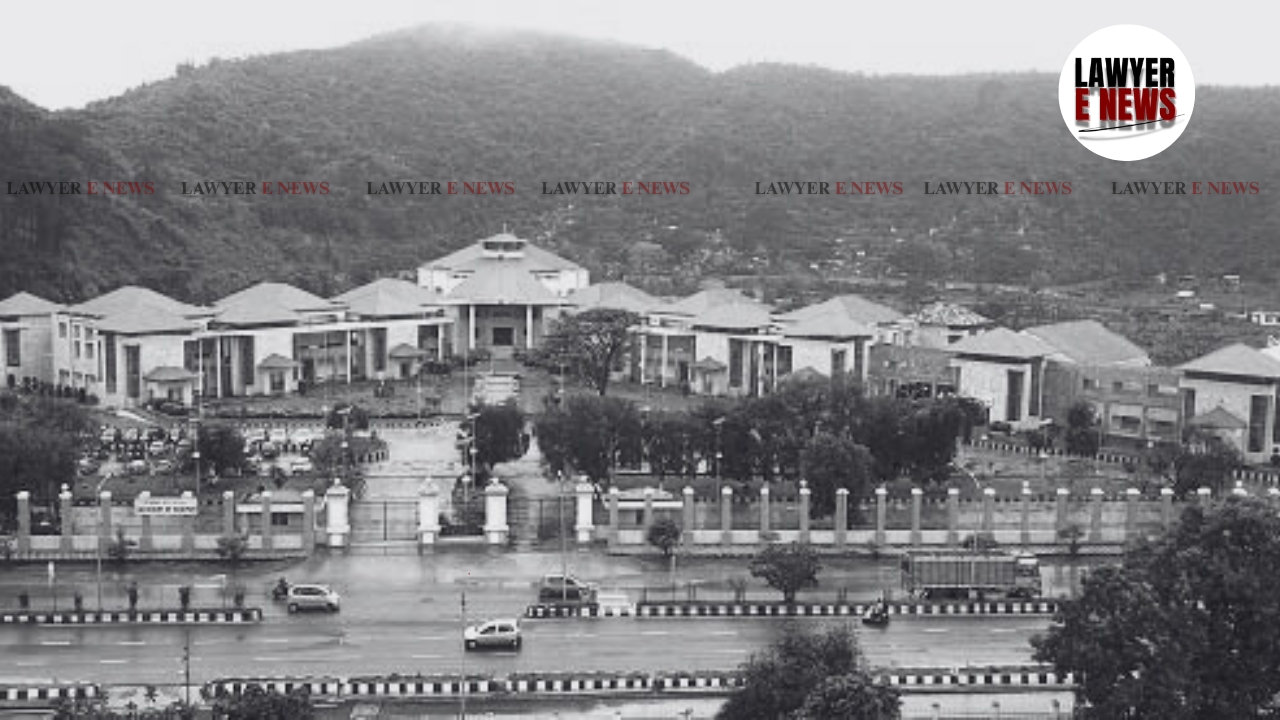
“Signature on Cheque Is Not Equivalent to Its Issuance” - In a significant reaffirmation of the statutory limits on presumptions under the Negotiable Instruments Act, the Manipur High Court dismissed an appeal filed under Section 378 CrPC challenging the acquittal of the accused in a cheque dishonour case under Section 138 NI Act. The Court held that the complainant had “blatantly failed” to prove the existence of a legally enforceable debt, and the mere admission of signature on the cheque was not enough to attract the presumption under Section 139.
The case stemmed from a failed land transaction, wherein the complainant claimed that a sum of ₹24,00,000/- was paid in cash to the accused, who then allegedly issued a post-dated cheque that was dishonoured for insufficient funds. Despite statutory compliance with legal notice requirements, the High Court upheld the trial court’s acquittal, finding no evidence of a valid debt and rejecting the complainant’s attempt to rely solely on statutory presumptions.
“Existence of Legally Enforceable Debt is a Condition Precedent to Attract Section 138 NI Act”: Court Reiterates Three-Fold Test
The Court, while citing Ranjit Sarkar v. Ravi Ganesh Bhardwaj [(2025) 7 SCC 234], emphasized that Section 138 of the NI Act demands proof of three essential elements: the existence of a legally enforceable debt, issuance of cheque in discharge of such liability, and dishonour due to insufficient funds. Without establishing the first, the rest cannot stand.
“Existence of legally recoverable debt is not a matter of presumption under Section 139 of the Act,” the Court observed, adding that “presumption merely arises in respect of issuance of cheque for discharge of a liability, not the liability itself.”
The High Court clarified that the burden of proving the debt lies initially on the complainant. The complainant, who alleged having paid ₹24 lakh in cash to the respondent in connection with the failed land deal, was unable to produce any written agreement, receipts, or independent corroboration to support the claim.
“Statutory Presumption Cannot Stand on Bare Signature Alone”: Court Finds No Foundation to Apply Section 139
Rejecting the complainant’s argument that the accused had admitted to signing the cheque, the Court underscored the distinction between “signature” and “issuance”.
“The accused admitted that the signature on the cheque is his but categorically denied ever issuing the cheque or delivering it to the complainant,” the Court noted. “Mere admission of signature on the cheque, without admission of execution or issuance, is not sufficient to attract presumption under Section 139.”
The trial court had earlier observed that 14–15 cheques from the accused’s cheque book were allegedly misplaced, and the accused claimed the cheque in question could have been among them. The complainant failed to rebut this claim or establish that the cheque was ever delivered or handed over by the accused for discharge of a debt.
“Complainant Failed to Prove Payment of ₹24 Lakh in Cash”: High Court Rejects Tax Return Entries as Substantive Proof of Transaction
The complainant sought to bolster his case by submitting Income Tax Returns showing ₹24 lakh as receivable from the respondent. However, the Court found these documents inadequate, stating:
“Mere entries in income tax returns reflecting amounts as receivable are insufficient to establish the actual transfer of funds, especially in cash, when there is no corroborative evidence to show such a transaction took place.”
The Court pointed to contradictions in the complainant’s witnesses’ testimonies. Two key witnesses—brothers of the complainant—admitted to separate and unrelated financial dealings with the respondent and clearly stated they had no knowledge about the ₹24 lakh cheque or the alleged cash payment.
“Admission of Signature is Not Equivalent to Execution of Cheque”: Legal Principle Clarified in Light of Supreme Court Precedents
The judgment relied heavily on authoritative pronouncements from the Supreme Court, particularly Basalingappa v. Mudibasappa [(2019) 5 SCC 418], Dattatraya v. Sharanappa [(2024) 8 SCC 573], and Vijay Kumar v. Vishwanath Rao N. [MANU/SC/0541/2025], all of which affirm that the presumption under Section 139 is a rebuttable one and hinges on proper establishment of foundational facts.
In Basalingappa, the apex court had held:
“Section 139 mandates a presumption that the cheque was for the discharge of any debt or other liability, but this presumption is rebuttable. The accused may rebut it by showing, on a preponderance of probabilities, that no such debt or liability existed.”
The Manipur High Court applied this standard, concluding that the accused had “cast sufficient doubt” on the complainant’s case by denying issuance of the cheque and showing inconsistencies in the complainant’s own evidence.
“Scope of Appellate Interference Against Acquittal is Limited”: No Perverse Findings by Trial Court
The High Court also addressed the limited scope of appellate interference in acquittal cases under Section 378 CrPC. Citing Gamini Bala Koteswara Rao v. State of A.P. [(2009) 10 SCC 636], the Court observed:
“High Court can reappraise evidence and conclusions drawn by the trial court but only in a case where the judgment is perverse, i.e., against the weight of evidence.”
In the present case, the trial court’s reasoning was found to be sound, fact-based, and legally correct. There was no perversity or illegality in the appreciation of evidence. The accused had not only rebutted the presumption but also shown that the complainant had not discharged his initial burden under Section 138 NI Act.
No Debt, No Delivery, No Presumption – Acquittal Upheld
Summing up its decision, the High Court held:
“In the case in hand, the complainant failed to establish the existence of a legally recoverable debt within the meaning of Section 138 of the NI Act. Mere admission of signature on the cheque will not attract the presumption under Section 139.”
The appeal was dismissed, and the acquittal recorded by the learned Chief Judicial Magistrate, Imphal West, was affirmed. No costs were imposed.
Date of Decision: 17 October 2025





