-
by sayum
28 August 2026 2:11 PM







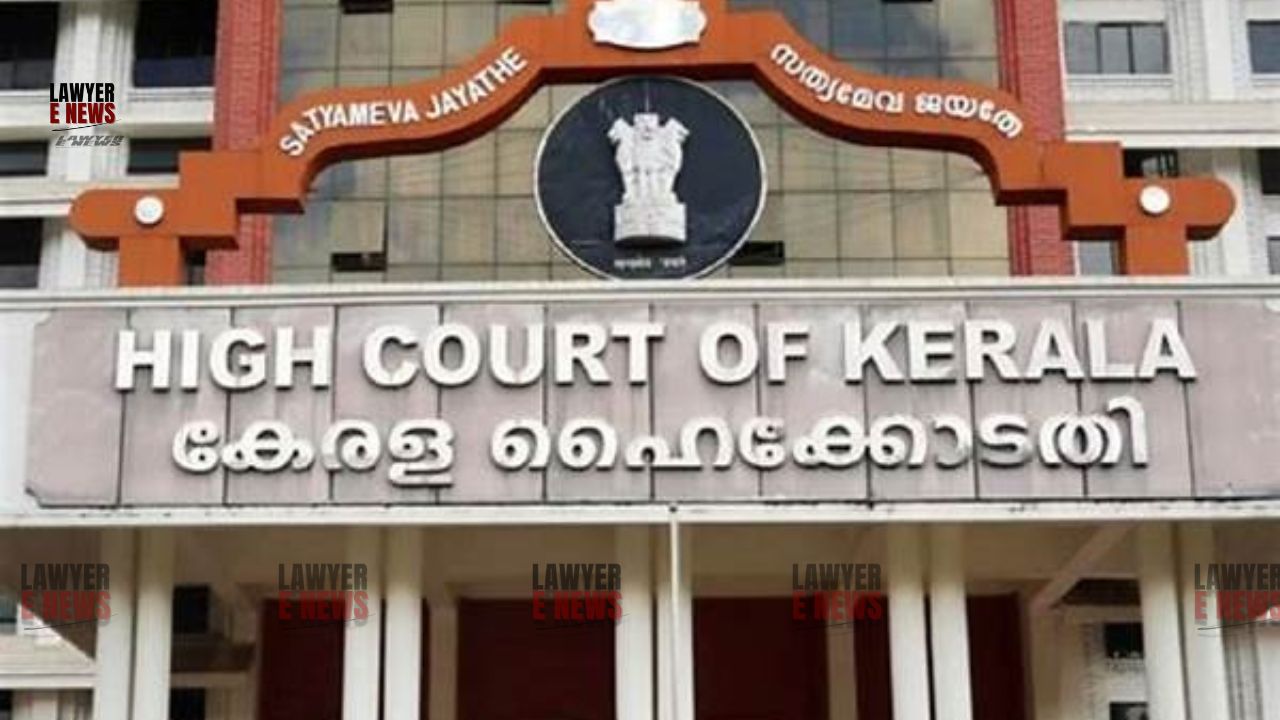
"Conduct of the appellant itself, without anything more, establishes the falsity of her claim that she is the legally wedded wife of the respondent," Kerala High Court, in a significant ruling, held that the presumption of marriage arising from public documents such as Aadhaar cards, passports, and school records is rebuttable and can be dislodged by the contrary conduct of the parties.
A Division Bench of Dr. Justice A.K. Jayasankaran Nambiar and Justice Preeta A.K. observed that while such documents carry weight, they do not provide an irrebuttable proof of marriage, especially when the claimant’s own actions contradict the existence of a marital tie.
The appellant, Lalitha, sought a legal declaration that she was the wedded wife of the respondent, Vijayan, alleging they married in 1974 as per Hindu Ezhava rites. She further claimed maintenance under Section 125 CrPC, asserting that Vijayan had deserted her to live with her younger sister, Ragini, in the Gulf for 36 years. The respondent denied the marriage entirely, claiming he supported Lalitha's children only out of benevolence as they were his sister-in-law's children and lacked a father figure.
The primary question before the court was whether the appellant was entitled to a declaration of her status as the legally wedded wife based on documents naming the respondent as her husband. The court was also called upon to determine if the respondent’s explanation for these entries was sufficient to rebut the legal presumption of marriage and whether maintenance was due.
Burden Of Proof In Matrimonial Relationships
The Court emphasized that the burden of proving the existence of a relationship lies strictly on the person alleging it. Applying the principles laid down in Dr. N.G. Dastane v. Mrs. S. Dastane (1975), the Bench noted that matrimonial disputes must be decided on the "threshold of balance of probabilities." The judges remarked that a court must weigh conflicting probabilities to see if the preponderance favors the existence of the alleged fact.
"It is trite that the burden of proving the existence of fact or a relationship is that of the person alleging its existence. In matrimonial matters, that burden is to be discharged on the threshold of balance of probabilities."
Presumption Of Marriage From Public Documents Is Rebuttable
The appellant relied heavily on her Aadhaar card, Passport, Election ID, and children’s school records, all of which identified the respondent as the husband or father. While the appellant cited precedents like Challamma v. Tilaga to argue these documents create a presumption of marriage, the High Court held that such a presumption is not absolute. The Court found that the respondent had provided a plausible explanation for these entries, stating he allowed his name to be used so the children would not face social difficulties in education or marriage.
Court Explains Why Respondent’s Name Appeared In Documents
The respondent’s proof affidavit stated that because the appellant’s children had no identified father, he permitted his name to be used in records to facilitate their education and weddings. The Court noted that this explanation was never challenged by the appellant during cross-examination. Consequently, the Bench held that the mere appearance of a name in a Passport or Aadhaar card does not constitute conclusive proof of a legal marriage if a valid rebuttal is provided.
"The said evidence clearly rebuts the presumption that could otherwise have been drawn from the documents relied upon by the appellant."
Delayed Legal Action And Appellant’s Conduct
A crucial factor in the Court's decision was the appellant’s 23-year delay in seeking a legal declaration. The Bench found it "bewildering" that the appellant, who claimed to be married in 1974, only approached the Family Court in 2017. Most significantly, the evidence revealed that the appellant had signed as a witness to a 1994 marriage certificate documenting the marriage between the respondent and her own sister, Ragini.
Appellant's Signature As Witness To Sister's Marriage Is Fatal To Claim
The Court observed that by signing as a witness to her sister’s marriage with the respondent in 1994, the appellant effectively acknowledged the respondent's status as someone other than her own husband. The Bench noted that at least on that day, she should have realized her alleged marital relationship was under threat, yet she waited decades to file a suit. This conduct, the court held, was inconsistent with the behavior of a legally wedded wife.
"The conduct of the appellant itself, without anything more, establishes the falsity of her claim that she is the legally wedded wife of the respondent."
Requirement To Prove Essential Ceremonies
The Court also pointed out the lack of specific evidence regarding the solemnization of the marriage. It observed that when a marriage is denied, the claimant must specifically plead and prove the essential ceremonies and rituals followed. In this case, the appellant and her witnesses only made vague statements about "communal rites" without detailing the specific customary rituals of the Hindu Ezhava community required for a valid marriage.
Dismissal Of Maintenance Claim Under Section 125 CrPC
As the appellant failed to establish her status as a "wife," the Court held that she was not entitled to maintenance under Section 125(1) of the CrPC. The Bench upheld the Family Court's decision, which had already granted her limited relief under the Protection of Women from Domestic Violence Act, but refused to recognize the marriage or grant standard criminal maintenance.
The High Court concluded that the appellant's long silence and her active participation as a witness in the respondent’s marriage to her sister completely dislodged any presumption created by public documents. The Matrimonial Appeal and the Revision Petition were dismissed as devoid of merit, affirming that conduct often outweighs documentary entries in determining marital status.
Date of Decision: 09 June 2026