
-
by sayum
27 July 2026 3:39 PM







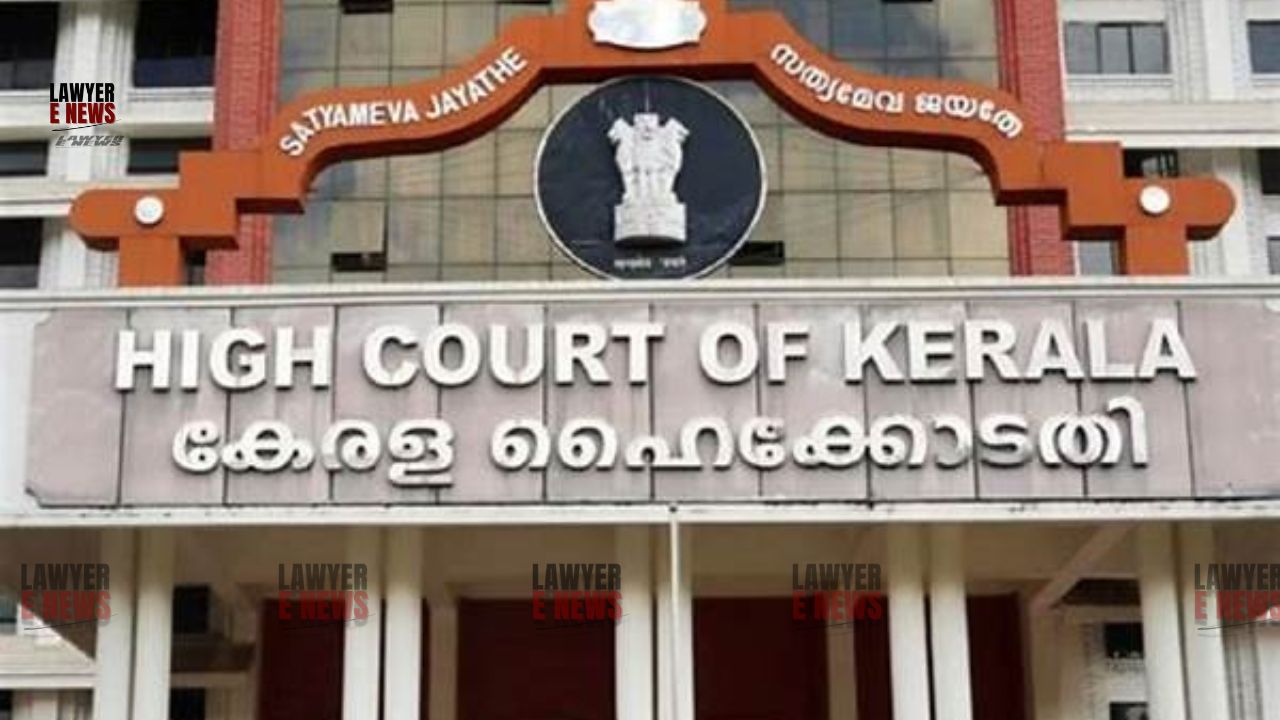
"In future, whenever the credentials of the petitioner come up for consideration in any proceedings, this order shall be taken into account for assessing the maintainability and credibility of any Public Interest Litigation that may be instituted by the petitioner," Kerala High Court, in a significant ruling, held that a petitioner whose bona fides are doubted by the court must disclose such judicial observations in all future Public Interest Litigations (PILs).
A bench of Chief Justice Soumen Sen and Justice Syam Kumar V.M. observed that any future petition filed by the individual without annexing the current order would be liable for non-acceptance by the Registry. The court emphasized that the credentials of a litigant are paramount in the exercise of PIL jurisdiction to prevent its potential abuse.
The petitioner, Sandeep S.U., the President of the Youth Front (Kerala Congress - M), filed a PIL alleging unauthorized constructions by the Holy Grace Group of Institutions (Respondent No. 9) in Mala Grama Panchayat. During the pendency of the proceedings, the petitioner suddenly moved a ‘not press’ memo seeking to withdraw the petition. This abrupt withdrawal led a co-ordinate bench to doubt the petitioner’s credentials and appoint an Amicus Curiae to ascertain whether the proceedings amounted to an abuse of the court's jurisdiction.
The primary question before the court was whether the petitioner’s attempt to withdraw the PIL reflected a lack of bona fides or an abuse of process. The court was also called upon to determine if statutory authorities had initiated sufficient action against the alleged unauthorized constructions under the Kerala Panchayat Raj Act and relevant Building Rules.
Statutory Action Against Unauthorized Construction
The Court noted that pursuant to the litigation, the District Collector and the Secretary of the Mala Grama Panchayat had filed affidavits detailing the enforcement actions taken. It was revealed that the 9th Respondent had been directed to regularize constructions carried out without prior permission. The Secretary of the Panchayat had also directed an Assistant Engineer to conduct measurements and submit a report for further action in accordance with the Kerala Panchayat Raj Act.
Authorities Act Within Framework Of Law
The bench observed that the District Administration and Local Self-Government authorities had initiated appropriate action within the framework of the law following the petitioner's initial complaint. The Court highlighted that wherever violations were noticed, remedial steps were directed by the competent statutory authorities.
"Wherever violations were noticed, proceedings have been initiated by the competent statutory authorities and remedial steps have been directed."
Grant of Fitness Certificates After Rectification
It transpired during the proceedings that while a fitness certificate was initially denied to the institution, it was subsequently granted after the management carried out necessary repairs and rectified the defects. The Court noted that the Panchayat had granted the certificate to Holy Grace Academy School following an inspection by the Assistant Engineer (LID&EW).
Doubtful Bona Fides of the Petitioner
The Court expressed serious concern regarding the petitioner's conduct, specifically the attempt to withdraw the petition after the court began scrutinizing the matter. It noted that the petitioner had initially sought time to file a list of other unauthorized entities but later chose not to press the petition. This sequence of events led the court to question the true intent behind the litigation.
"The Co-ordinate Bench seriously doubted the bona fides of the petitioner and the learned Government Pleader was directed to take instructions as regards the credentials of the petitioner to ascertain whether the present proceedings amount to an abuse of the PIL jurisdiction."
Mandatory Disclosure in Future Litigations
To ensure that the petitioner's conduct is accounted for in the future, the Court issued a mandatory direction to the Registry. It ordered that this judgment must be taken into account whenever the petitioner’s credentials come up for consideration in any future legal proceedings. The Court made it clear that the petitioner is under a legal obligation to disclose this order in any future PILs he might institute.
"It is further directed that, in the event of any future filing by the present writ petitioner, a copy of this order shall be annexed and disclosed in the petition, failing which, such petition shall not be accepted."
Registry Directed to Endorse Records
The bench directed that the order be communicated to the Registry immediately for an appropriate endorsement in its records. This ensures that any future attempt by the petitioner to invoke the extraordinary jurisdiction of the High Court is met with a verification of his past conduct as recorded in this proceeding.
The High Court closed the PIL, noting that no further directions were required since the statutory authorities were already seized of the matter and taking necessary actions. However, by imposing a mandatory disclosure requirement on the petitioner, the court reinforced the principle that PIL jurisdiction cannot be used as a tool for collateral purposes or private interests. No order was made as to costs.
Date of Decision: 24 June 2026