-
by sayum
04 August 2026 1:39 PM








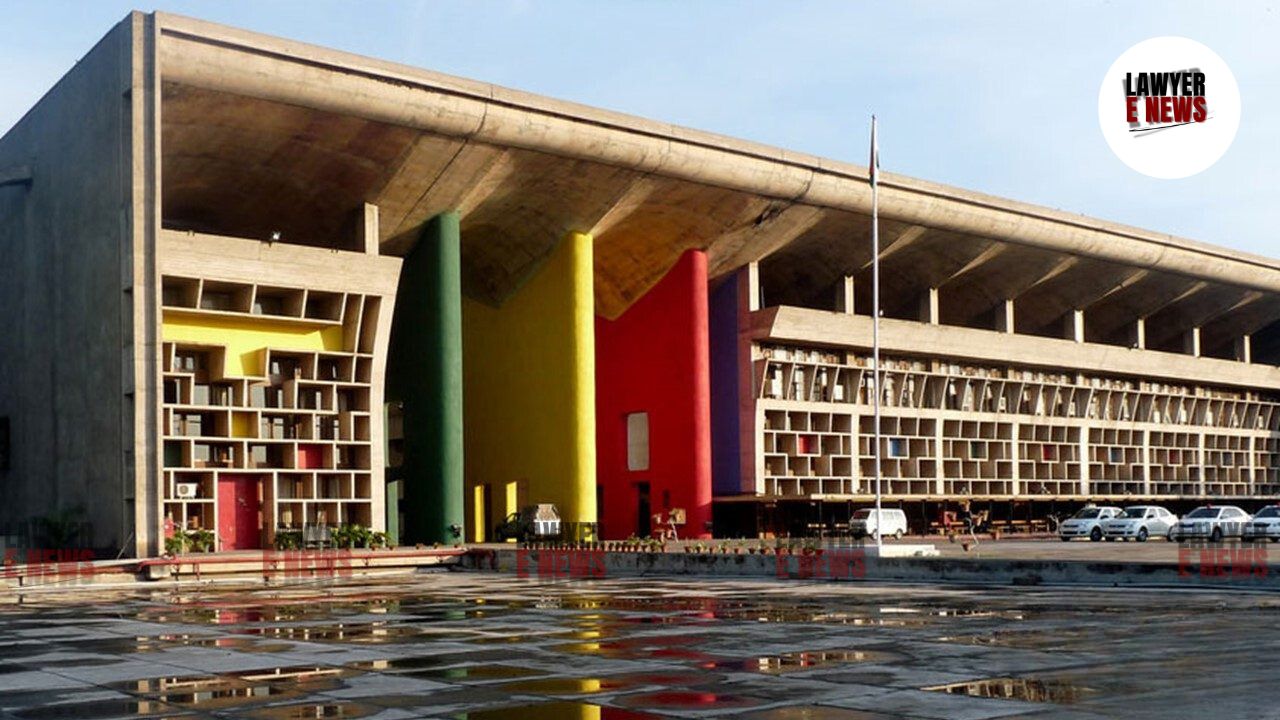
“Workman Cannot Be Penalised for Employer’s Illegality—Burden Lies on Employer to Prove Gainful Employment” - Punjab and Haryana High Court upheld a significant labour law while dismissing the employer’s challenge to an Industrial Tribunal award that ordered reinstatement of a terminated workman with continuity of service and 50% back wages. Justice Kuldeep Tiwari reaffirmed that unproven allegations of voluntary resignation and unsubstantiated claims of full and final settlement cannot nullify statutory protections under the Industrial Disputes Act, 1947.
The case arose from the award dated February 24, 2022, wherein the Industrial Tribunal found the termination of the workman to be illegal due to non-compliance with Section 25-F of the Industrial Disputes Act, 1947. The Tribunal ordered reinstatement with continuity of service and 50% back wages from the date of the demand notice till reinstatement.
The employer, M/s Precision Moulds, approached the High Court under Article 226 of the Constitution challenging the award primarily on two grounds: (i) that the workman had voluntarily resigned and accepted a full and final settlement, and (ii) that back wages were wrongly awarded in the absence of any express claim or proof of unemployment by the workman.
Justice Tiwari found both contentions without merit, reaffirming settled principles in labour jurisprudence and adding judicial weight to key precedents like Hindustan Tin Works and Deepali Gundu Surwase.
Employer Claimed Resignation, Workman Asserted Illegal Termination
The workman was appointed on September 5, 2013, and his services were terminated on April 20, 2017. The management alleged that the workman had voluntarily resigned and accepted his dues via cheque dated May 27, 2017. However, the Tribunal found these claims unsupported by admissible evidence.
The employer presented photocopies (Exhibits MW-1/3 and M-7) to substantiate resignation and settlement. But these were never proved through cogent evidence. The Tribunal rejected them, noting the workman’s categorical denial during cross-examination that he had ever received anything beyond his salary.
On Alleged Resignation and Full and Final Settlement
The High Court rejected the employer’s plea, holding that the photocopies presented were not proved according to law. Justice Tiwari observed:
“Both the exhibits are photocopies and were never proved through admissible evidence as required by law. No effort was made by the management to prove these documents by leading cogent or corroborative evidence.”
The Court further noted that the workman, when asked about the cheque, stated it pertained to salary dues, not a final settlement. The employer failed to rebut this assertion.
On Violation of Section 25-F
With the finding that the workman had rendered more than 240 days of continuous service in the preceding year, the Court agreed with the Tribunal that termination without compliance with Section 25-F (notice or retrenchment compensation) was illegal. Justice Tiwari held:
“Accordingly, it stands established that the workman had completed 240 days of continuous service in the preceding calendar year... Consequently, the Industrial Tribunal rightly rejected the management’s plea and correctly held that the termination... was illegal.”
On Back Wages and Burden of Proof
Addressing the employer’s argument that back wages were unwarranted due to the workman’s failure to claim unemployment, the Court cited the Supreme Court’s ruling in Deepali Gundu Surwase v. Kranti Junior Adhyapak Mahavidyalaya:
“Ordinarily, an employee or workman whose services are terminated... is required to either plead or at least make a statement... that he/she was not gainfully employed... However, if the employer wants to avoid payment of full back wages, then it has to plead and also lead cogent evidence to prove that the employee/workman was gainfully employed.”
Reinforcing this, Justice Tiwari held:
“To the considered mind of this Court, the workman cannot reasonably be expected to adduce evidence to establish that he was not gainfully employed... The management... was required to produce evidence... However, no such evidence was adduced.”
On Discrepancy in Date of Appointment
The employer pointed to inconsistencies in the date of appointment as mentioned in various demand notices. However, the Tribunal and the Court found that the correct date—September 5, 2013—was supported by the employer’s own records. The discrepancy was thus immaterial to the substantive issue.
The High Court dismissed the writ petition and upheld the award of reinstatement with continuity of service and 50% back wages. The Court emphasized that the employer failed to discharge its burden both in proving a valid resignation and in disproving the entitlement to back wages.
By reaffirming that “an employee wrongfully terminated cannot be penalised by withholding back wages unless gainful employment is proved by the employer,” the Court cemented the applicability of long-standing Supreme Court precedents in the realm of industrial disputes.
Date of Decision: October 14, 2025