
-
by sayum
28 August 2026 2:11 PM







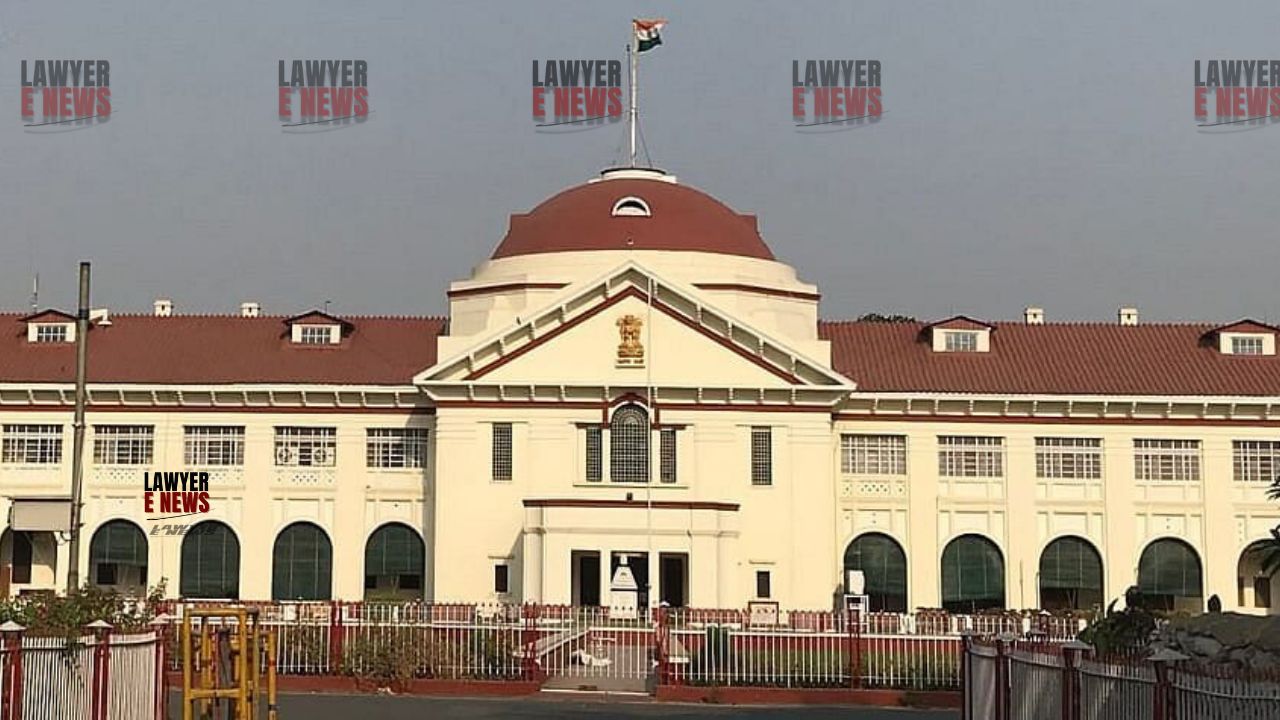
“If Withdrawal Allowed Without Reservation, It Implies Liberty to Sue Afresh” – Order Not Explicitly Denying Fresh Suit Must Be Construed as Permitting It” - Patna High Court delivered a vital judgment clarifying the interpretation of Order 23 Rule 1 of the Civil Procedure Code (CPC). Justice Ramesh Chand Malviya allowed the revision petition by setting aside the Trial Court’s order which had dismissed a civil suit as barred under Order 23 Rule 1(4) CPC, despite an earlier withdrawal of a similar suit.
The Court ruled that “when a suit is permitted to be withdrawn under Order 23 Rule 1 along with a prayer to institute a fresh suit, and such application is allowed without reservation, the entire prayer must be treated as allowed”, even if the order does not explicitly mention the liberty to refile.
“A Court Cannot Split a Composite Prayer Under Order 23 Rule 1 – It Must Be Allowed or Refused in Toto”
The case arose from Title Suit No. 160 of 1979, which the petitioner had withdrawn through an application dated 16.07.1984, seeking leave to file a fresh suit. The application stated:
“blfy;s fuosnu gS fd eqnbZ dks eksdnek mBk ysus ds fy;s vkns’k fn;k tk; ... oks eqnbZ dks ml tk;nkn ds fulor nwljk eksdnek nk;j djus ds fy;s ,tktr fn;k tk;A”
While the application explicitly sought permission to file a fresh suit, the Trial Court, in disposing the subsequent Title Suit No. 340 of 1985, held that no express liberty was granted, and thus the suit was barred under Order 23 Rule 1(4).
Justice Malviya disagreed with this interpretation, observing:
“It is evident that an application moved under Order 23 Rule 1 is to be treated as an indivisible whole… The Court cannot split the prayer by allowing withdrawal but refusing liberty, unless it specifically records so.”
He added that allowing the application without rejecting the prayer for liberty implies acceptance of the composite request.
“Silent Orders Must Be Construed with the Application – Absence of Express Liberty Not Fatal if Composite Prayer Was Allowed”
Relying on authoritative precedent, the Court held that a silent order must be read together with the withdrawal application. Citing Sukumar Banerjee v. Dilip Kumar Sarkar, AIR 1982 Calcutta 17, the Court reaffirmed:
“Where the plaintiff files an application to withdraw the suit with liberty to sue afresh and the Court permits withdrawal without expressly stating anything about liberty, the order must be read as granting liberty.”
Similarly, in Khudi Rai v. Lalo Rai, AIR 1926 Patna 259, the Court had held:
“Even if the order does not specifically mention liberty to refile, where such a prayer was made and not denied, it is to be deemed as granted.”
Justice Malviya reinforced this settled principle, stating:
“The Trial Court failed to appreciate that once the order permitted withdrawal of suit without denying the liberty, it must be construed as allowing the petitioner to institute a fresh suit on the same subject matter.”
“Trial Court Committed a Jurisdictional Error – Must Decide Suit on Merits”
In a strong rebuke to the lower court's approach, the High Court found that the Sub-Judge had erred in law by misapplying Order 23 Rule 1(4) and dismissing the suit as barred.
The Court observed:
“The learned Trial Court has erred in holding that the present suit was barred… The operative portion of the earlier order clearly permitted withdrawal without any reservation. Hence, it must be read as granting liberty to refile.”
Consequently, the Court set aside the impugned order and directed:
“The learned Trial Court is directed to decide Title Suit No. 340 of 1985 on merits in accordance with law.”
Date of Decision: 22 September 2025





