-
by sayum
05 August 2026 3:07 PM







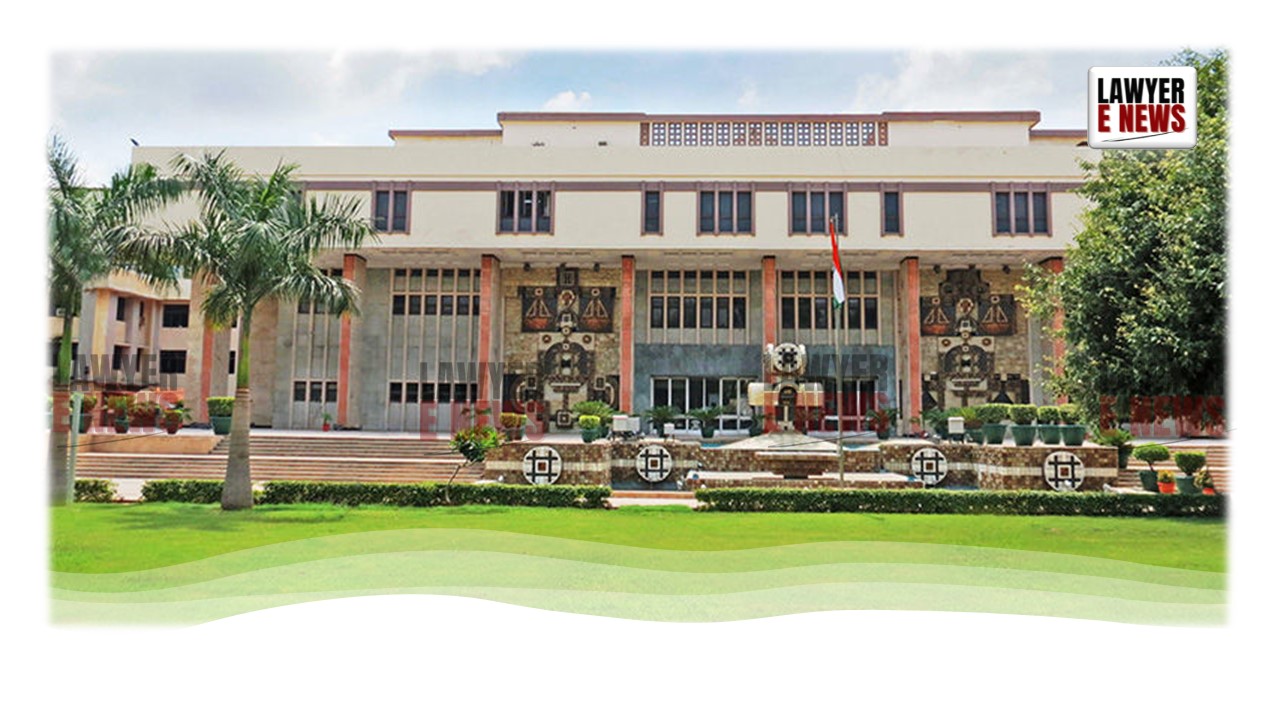
In a Stinging Verdict, Delhi High Court Holds Coromandel Indag Products Lacked Locus Standi, Fabricated Documents, and Suppressed Material Facts to Manufacture a Cause of Action. Delhi High Court, in a reportable judgment delivered by Justice Amit Bansal, rejected a civil suit filed by Coromandel Indag Products India Ltd. against Sumitomo Chemical Company Ltd. and its affiliate, seeking a permanent injunction for alleged trademark infringement, copyright infringement, and passing off regarding the mark ‘PADAN’. Allowing an application under Order 7 Rule 11 of the Code of Civil Procedure, 1908, the Court declared the plaint to be “vexatious,” “ill-founded,” and based on illusory cause of action.
“A holistic reading of the plaint... divulges that the same is vexatious and malicious in its entirety. The plaintiff has deliberately not filed the relevant documents... The cause of action alleged is purely illusory.” [Para 37]
Suit Was a “Sham Litigation” — Plaintiff Lacked Legal Right Over Trademark or Copyright
The High Court concluded that Coromandel Indag Products India Ltd. had no legal right, title, or license in the trademark or artwork of the product in question. The mark ‘PADAN’ was registered in India since 1969 in the name of the defendant, Sumitomo Chemical Co. Ltd., and was licensed only to Coromandel Agrico Pvt. Ltd. (CAPL) — a distinct corporate entity and a group company currently undergoing insolvency.
The Court emphasized that the plaintiff was neither a licensee nor a user of the mark, and the entire plaint was a wrongful attempt to appropriate CAPL’s rights.
“The plaintiff company cannot represent any other company in a suit even if the said company is a group company or subsidiary... Only CAPL was competent to institute the present suit... The plaintiff cannot espouse the cause of CAPL.” [Para 12]
“Merely because CAPL is under insolvency would not create a right in favour of the plaintiff to institute the present suit.” [Para 13]
“Fabricated and Misleading”: Court Condemns Suppression of Documents and False Ownership Claim
Justice Bansal also took serious note of the plaintiff’s failure to file key agreements, including the Trademark License and Distribution Agreement between CAPL and Sumitomo, despite referring to them in the plaint. These documents, later filed by the defendants, confirmed that rights were vested only in CAPL and not in the plaintiff.
“It appears that the plaintiff has deliberately not filed the said agreement as it would show that the agreement was between defendant no.1 and CAPL and the plaintiff was not a party... The plaint is premised on a misconception.” [Paras 23, 18]
The Court further called out the false recital in an agreement between the plaintiff and CAPL dated 6th December 2004, which declared the plaintiff to be the “registered trademark owner” of PADAN. The Court termed the document “fabricated” and filed “only to advance the case of the plaintiff.”
“The Agreement dated 6th December 2004 appears to be a fabricated document... Nothing has been filed to show that the plaintiff is the registered proprietor.” [Para 36]
Copyright Claim Also Rejected: Assignment Was to CAPL and Deemed Expired
The plaintiff had claimed copyright over packaging artwork used for PADAN, alleging infringement by the defendants. However, the Court found that the copyright was assigned to CAPL through an agreement dated 4th April 2006, and not to the plaintiff. Since the agreement did not specify a term, it was deemed to have expired in five years under Section 19(5) of the Copyright Act, 1957.
“The assignment of copyright is in favour of CAPL and not the plaintiff... In absence of a defined term, the assignment expired after five years.” [Para 27]
Hence, the Court held that the plaintiff had no subsisting right in the artwork either and could not claim infringement.
No Evidence of Plaintiff’s Use or Goodwill: Passing Off Claim Rejected
The plaintiff also failed to show any use of the mark PADAN by itself. All sales figures, invoices, promotional expenses, and packaging bore the name CAPL, not the plaintiff. In fact, even the product packaging stated: “In association with Sumitomo Chemical Takeda Agrico Company Limited, Japan.”
“No documents have been filed to show that the plaintiff has made any sales under the mark PADAN.” [Para 29]
“Clearly, the sales figures would not accrue to the benefit of the plaintiff... it cannot claim any goodwill or reputation.” [Para 31]
The Court reiterated the settled law that use of a mark by a licensee accrues to the benefit of the licensor, not to unrelated entities. Relying on Hilton Roulunds Ltd. v. CIT and Fedders Lloyd Corp. v. Fedders Corp., the Court held: “The use of the trademark by a licensee inures to the benefit of the licensor... The plaintiff has not even made out a case for passing off.” [Paras 32, 34]
Rejection Under Order 7 Rule 11 CPC: Cause of Action Held “Illusory”
Reinforcing the law laid down in T. Arivandandam v. T.V. Satyapal and Dahiben v. Arvindbhai Bhanusali, the Court stressed that clever drafting cannot create a real cause of action. If the suit is based on misleading pleadings or false claims, it must be nipped in the bud under Order VII Rule 11 CPC.
“If clever drafting has created the illusion of a cause of action, nip it in the bud... The suit is manifestly meritless, in the sense of not disclosing a clear right to sue.” [Para 10]
Ultimately, the Court found that the plaint did not disclose any legally enforceable right in favour of the plaintiff, was riddled with deliberate suppression, misstatements, and false assumptions, and hence was liable to be rejected in toto.
“The plaintiff has no right to institute this suit... The plaint is rejected under Order VII Rule 11 CPC.” [Paras 37–38]
Date of Decision: 3rd July 2025