-
by sayum
04 August 2026 1:39 PM







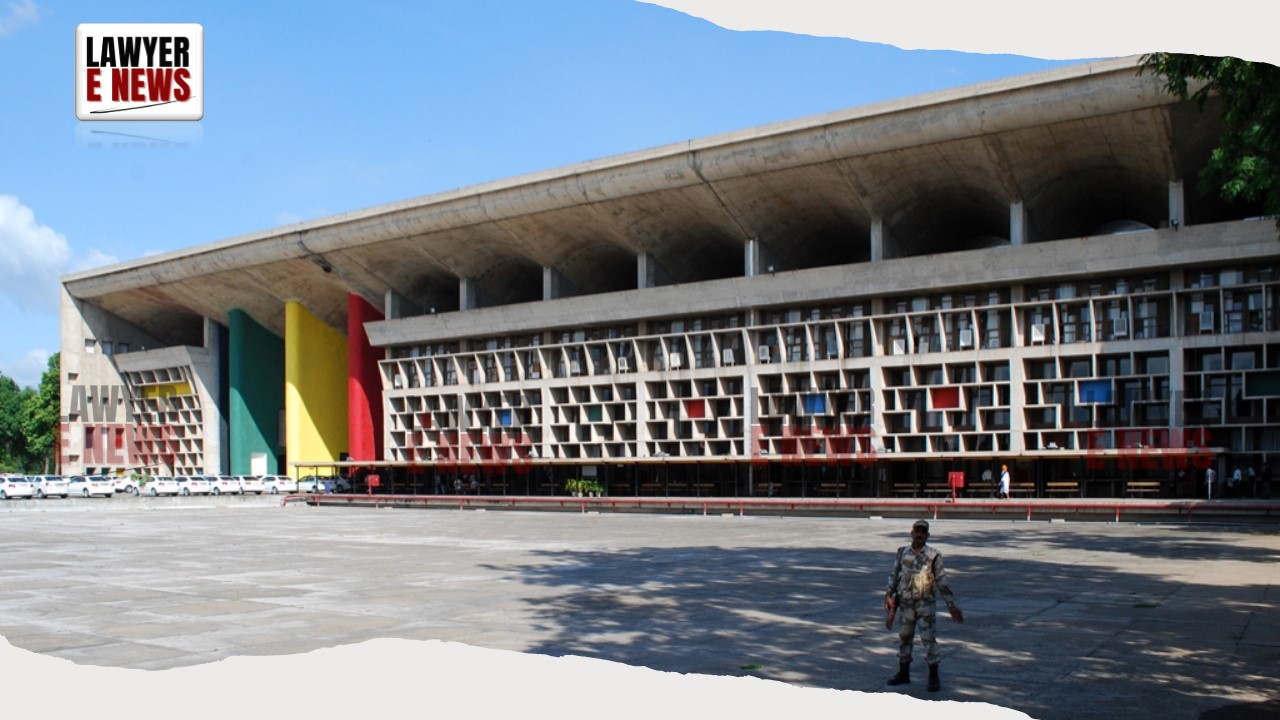
“Applications under Order 41 Rule 27 CPC Must Be Considered with Appeal—Not Before” - Punjab and Haryana High Court quashed an order passed by the First Appellate Court which had prematurely disposed of applications under Order 41 Rule 27 read with Section 151 and Section 151 of the Code of Civil Procedure (CPC), even though the main appeal was still pending. Justice Vikas Bahl, invoking Article 227 of the Constitution, held that such adjudication “undermines the appellate process” and contradicts the settled position of law as laid down by the Supreme Court of India.
The High Court ruled that applications seeking to produce additional evidence or summon records cannot be decided in isolation, but must be considered along with the main appeal during final adjudication. The impugned order dated 12.10.2022 was accordingly set aside, with directions to the Appellate Court to hear both applications afresh along with the appeal.
“Premature Determination of Additional Evidence Defeats Purpose of Appeal”—High Court Cites Binding SC Precedents
The case before the High Court arose from a civil revision filed by Ram Chander and others, challenging the First Appellate Court’s decision to dispose of two separate applications—one filed by the respondent/plaintiff under Order 41 Rule 27 read with Section 151 CPC seeking to adduce additional evidence, and another filed by the petitioners/defendants under Section 151 CPC seeking to summon the original death record of Siryan, the original plaintiff.
The grievance raised was not on the merits of the applications but the timing and procedural impropriety in adjudicating them before the final hearing of the appeal. Justice Bahl observed:
“It is apparent that... the application under Order 41 Rule 27 read with Section 151 CPC filed by the plaintiff/respondent as well as the application filed by the petitioners/defendants under Section 151 CPC has been decided, whereas the main appeal is still pending adjudication.”
In setting aside the order, the High Court drew strength from the Supreme Court’s landmark ruling in State of Rajasthan v. T. Sahani [(2001) 10 SCC 619], which in turn relied on K. Venkataramiah v. Seetharama Reddy [AIR 1963 SC 1526]. The Court reproduced the relevant portion:
“The application under Order 41 Rule 27 should have been decided along with the appeal. Had the court found the documents necessary to pronounce the judgment in the appeal in a more satisfactory manner it would have allowed the same; if not, the same would have been dismissed at that stage. But taking a view on the application before hearing of the appeal... would be inappropriate.”
Similar reliance was placed on the Supreme Court’s decision in M/s Eastern Equipment & Sales Ltd. v. Ing. Yash Kumar Khanna [2008 (4) RCR (Civil) 508] and the Punjab & Haryana High Court’s own precedent in Surjit Kaur v. Bhupinder Singh Waraich [2009 (4) RCR (Civil) 563].
“Order 41 Rule 27 CPC is Not a Pre-judgment Remedy—Its Relevance Emerges Only at Final Hearing”
Justice Bahl underscored the principle that an appellate court must assess the necessity of additional evidence in the context of the entire record, which can only be done at the final hearing stage. Quoting the Supreme Court, he observed:
“It is entirely for the Court to consider at the time of hearing of the appeal on merits whether, looking into the documents sought to be filed as additional evidence, it is necessary to pronounce its judgment in a more satisfactory manner.”
The High Court emphasised that the jurisdiction under Order 41 Rule 27 CPC is not mechanical and must be exercised judiciously, only when the appellate court deems the additional material essential for a just decision of the appeal.
No Opinion on Merits—Matter Remitted for Fresh Consideration with Main Appeal
Importantly, the High Court clarified that it had not expressed any opinion on the merits of either the application under Order 41 Rule 27 read with Section 151 CPC or the Section 151 CPC application filed by the petitioners.
“The impugned order has not been set aside on merits and the same has been set aside only on the short ground... thus, the 1st Appellate Court would decide the appeal along with the said two applications on merits.”
Justice Bahl recorded the consent of both counsels—Mr. Mohit Garg for the petitioners and Senior Advocate Mr. Rakesh Nehra with Mr. Sahil Nehra for the respondent—that the applications be reconsidered together with the pending appeal.
The revision petition was allowed, the order dated 12.10.2022 was set aside, and the First Appellate Court was directed to consider both applications during final arguments.
Procedural Discipline Reinforced—High Court Affirms Sanctity of Appeal Process
With this decision, the High Court has reinforced a critical procedural safeguard under the CPC—that applications for additional evidence or procedural clarifications must not be decided in isolation from the main appeal. The ruling affirms that judicial discretion must be timed properly to ensure fair adjudication, and that appellate courts must resist the temptation to pre-judge fragmentary aspects of the case.
By invoking both Article 227 of the Constitution and long-standing judicial precedent, the Court ensured that appellate justice is not compromised by premature decisions, and that parties get a full and fair opportunity to present their case in accordance with law.
Date of Decision: October 14, 2025