-
by sayum
23 August 2026 2:56 PM







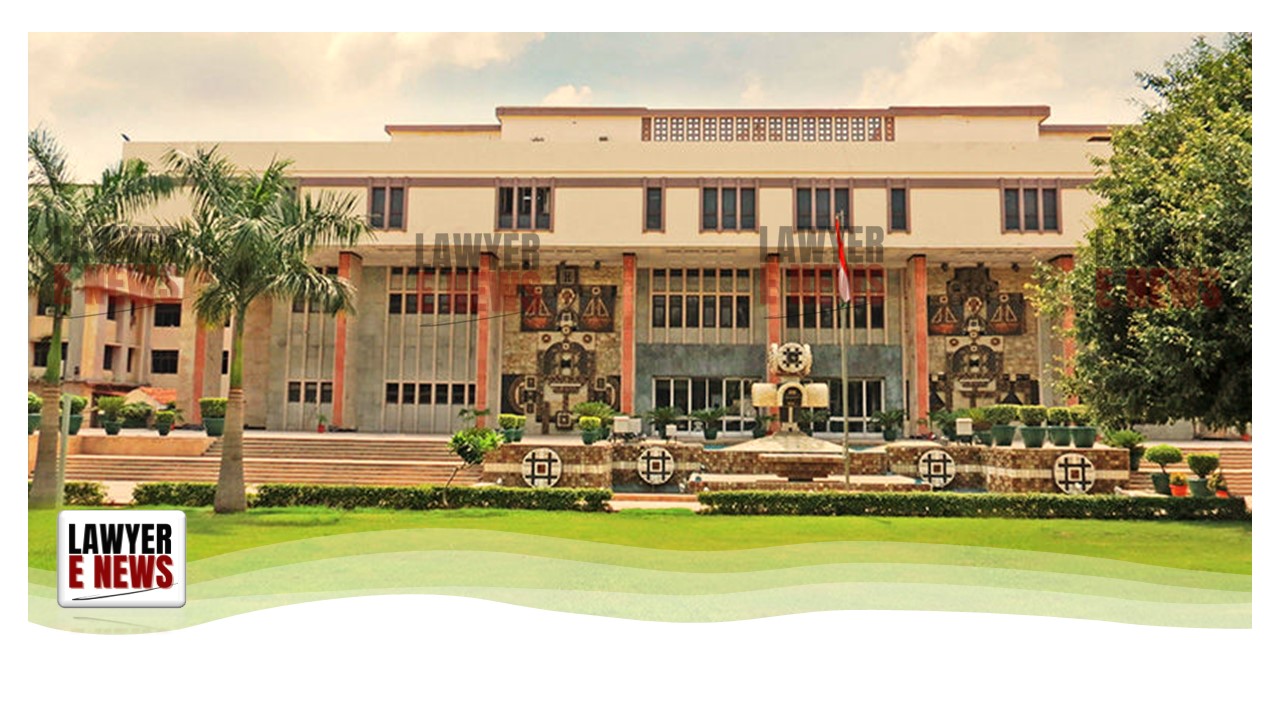
"Delay Alone Cannot Defeat Section 17B If Unemployment is Not Rebutted", Delhi High Court clarifying the application of Section 17B of the Industrial Disputes Act, 1947. The Court, while allowing the worker’s application partially, held that where a workman affirms unemployment by affidavit and the employer fails to rebut it with credible evidence, interim relief under Section 17B must follow—even in cases of delay.
Justice Renu Bhatnagar, presiding over the matter, observed, “The workman has established that he was not gainfully employed during the relevant period from the passing of the award till the filing of the application, and the said claim of the workman could not be rebutted by the petitioner." The Court thus granted Kundal Lal Arya payment of either last drawn wages or minimum wages—whichever is higher—from the date of his application (07.05.2018) until his deemed superannuation in 2023.
Employer Must Substantiate Gainful Employment, Mere Assertions Not Enough
The case arose from a long-standing industrial dispute. Kundal Lal Arya, who worked as a peon on daily wages at Rs. 85 per day with the State Bank of India (SBI), was terminated on July 8, 2002. The Labour Court, in its award dated October 11, 2006, found the termination illegal and directed reinstatement with 50% back wages. SBI challenged this award in a writ petition filed in 2007, during which a stay was granted subject to depositing 50% of back wages.
However, it wasn't until May 7, 2018—over a decade later—that Arya filed an application under Section 17B claiming unemployment and seeking interim wages. Despite the significant delay, the High Court found merit in his plea, holding that financial hardship can be a justifiable explanation for delay, especially when the statutory burden on the employer to disprove unemployment remains unmet.
Justice Bhatnagar noted, "The burden to rebut the worker's affidavit falls upon the employer... Mere assertions are insufficient.” Referring to the Division Bench decision in Sh. Surjeet Singh v. Dominant Systems Pvt. Ltd., 2023 SCC OnLine Del 1999, the Court reaffirmed that once a worker affirms unemployment through affidavit, the onus squarely shifts to the employer to establish otherwise with concrete proof.
Court Emphasizes Purpose and Scope of Section 17B
Section 17B was designed to offer financial protection to workers during prolonged litigation after an award of reinstatement is challenged by the employer. The Court reiterated this protective purpose, relying on key judgments including Dena Bank v. Kirtikumar T. Patel [(1999) 2 SCC 106] and Food Craft Institute v. Rameshwar Sharma [2006 SCC OnLine Del 505].
The High Court clarified that merits of the main case are irrelevant at this stage. “While passing such an order, it is immaterial whether the petitioner had a very good case on merits,” the Court held, emphasizing that procedural compliance with Section 17B alone governs the grant of interim wages.
In recognizing that Arya was 55 years old at the time of filing the application and would have superannuated at 60 in 2023, the Court limited the relief from 2018 to 2023. Yet, it decisively rejected SBI's arguments that the delay alone barred the relief, noting, "There is no bar on relief under 17B merely on account of delay where unemployment is established and not rebutted."
Relief Granted, Directions Issued
Accordingly, the Court directed SBI to pay Arya either his last drawn wages or minimum wages (whichever is higher) from May 7, 2018, till the year of his deemed superannuation in 2023. The arrears are to be paid within six weeks, and the monthly amounts were directed to be paid on or before the 7th of each month till superannuation. The writ petition filed by the bank challenging the award remains pending for further hearing on February 25, 2026.
In sum, the judgment stands as a robust reaffirmation of the protective intent of Section 17B, holding that procedural lapses by workmen—like delay in filing—do not automatically disentitle them to relief, so long as they establish unemployment and the employer fails to discharge the burden of rebuttal.
Date of Decision: January 6, 2026