-
by sayum
04 August 2026 1:39 PM







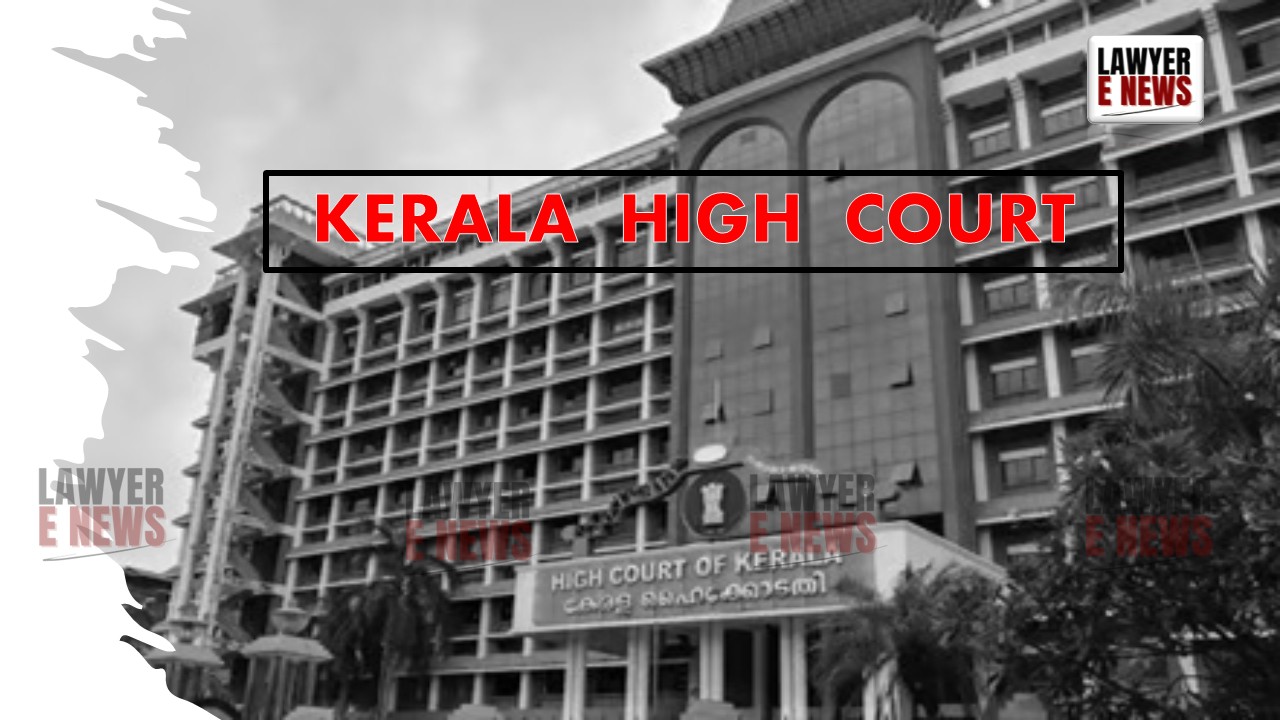
“When operations have already commenced and the lease has been executed, challenge to the initial licence agreement is rendered infructuous” — In a significant ruling Kerala High Court (Bench of Justices Sushrut Arvind Dharmadhikari and P.V. Balakrishnan) dismissed a writ appeal against the establishment of a gold manufacturing unit in the KINFRA Food Processing Industrial Park at Kakkancheri, Malappuram, holding that the legal challenge had become infructuous due to the operational commencement of the unit.
The case titled KINFRA Industries Chamber & Ors. v. State of Kerala & Ors. arose from a long-standing dispute regarding the compatibility of a non-food industry — namely, a gold article manufacturing unit established by Malabar Gold Pvt. Ltd. — within a government-developed food processing park.
The Division Bench upheld the judgment passed by the Single Judge in W.P.(C) No. 14612 of 2014 on 14/11/2018, which had previously rejected the petitioners' objections, citing the mixed-use zoning of the park and a scientific assessment of environmental impact.
Mixed-Use Zoning in Industrial Parks Is Not Prohibited Under KINFRA Scheme or Applicable Acts
At the core of the appellants’ grievance was the argument that the Kakkancheri Park, inaugurated in 2003 by then-President Dr. A.P.J. Abdul Kalam, was specifically developed as a food processing park, and therefore, the inclusion of a gold unit violated the sanctity and statutory framework of the park.
However, the Court took a firm view on the matter, citing both state government notifications and the Kerala Industrial Infrastructure Development Act, 1993 as well as the Kerala Industrial Single Window Clearance Boards and Industrial Township Area Development Act, 1999, which together authorized broader industrial activity in designated zones.
“The KINFRA Techno Industrial Park... comprises of several zones, viz. agro-based SEZ, food-specific zone, ancillary units for supporting food processing industries, IT/ITES zone, as well as a general zone,” the Court observed, relying on submissions and records presented by the respondents.
In fact, it was revealed that the area adjacent to NH 17 had been declared a ‘general zone’ even in the early planning stages, permitting industries outside the scope of food processing. Notably, various non-food industries such as electronics, biotechnology, modular switch manufacturing, and aluminium container units had already been established in the same vicinity.
“Environmental Impact Is Negligible”: NEERI’s Report Key to Judicial Deference
The appellants had also raised serious concerns about the potential environmental impact from chemicals such as cadmium, nitric acid, mercury, and potassium cyanide used in gold processing, arguing that such pollutants posed a grave risk to sensitive products like baby food and medical supplements produced by other units in the park.
However, the Court found no merit in these apprehensions, relying heavily on the scientific assessment conducted by NEERI (National Environmental Engineering Research Institute), which categorically found the environmental impact of the proposed unit to be negligible.
“A detailed examination with regard to pollution... was enquired into by NEERI, Nagpur, which opined that there would be negligible pollution on functioning of the unit,” the judgment records.
Consequently, the Single Judge had permitted the gold unit to function, subject to the mandatory statutory clearances from pollution control and industrial licensing authorities — a view that the Division Bench found no reason to interfere with.
Lease Executed, Operations Commenced: Appeal Now Infructuous
A pivotal legal development that sealed the fate of the appeal was the fact that the challenge was limited to the licence agreement (Ext.P4) dated 01.08.2013, while the lease deed for the land had already been executed on 07.05.2021, and commercial operations had commenced in 2023.
“Looking into the fact that only the licence agreement Ext.P4 was under challenge, and in view of the subsequent development of grant of lease and setting up of the unit and its commencement of business, we are of the considered opinion that the writ appeal is already rendered infructuous,” the Court held unequivocally.
Further, the Court noted that the appellants had not challenged the lease deed or the subsequent developments. Once construction was completed, lease signed, and commercial activities commenced, the dispute over the preliminary licence no longer served any actionable purpose.
No Statutory Bar Against Mixed-Use Development in Industrial Parks
Rejecting the appellants’ statutory interpretation, the Court clarified that neither the 1993 Act governing KINFRA nor the 1999 Single Window Act barred the establishment of non-food industries within an industrial park, especially in a general zone duly notified by the State.
Additionally, the Court noted that KINFRA’s own Board had, in its 47th meeting, approved the call for high-value, low-pollution industries in the general zone. Malabar Gold Pvt. Ltd. was the sole tenderer in the 2012 round, and proposed a ₹100 crore investment with employment for 1000 people — factors that the KINFRA Board deemed in alignment with the development goals.
The Kerala High Court, by its judgment dated 20/11/2025, reaffirmed the principle that judicial interference in policy-driven zoning and infrastructure decisions must be minimal when they are backed by lawful authorizations, environmental clearances, and public interest considerations.
The Court found no illegality in the licence granted to Malabar Gold Pvt. Ltd., upheld the Single Judge’s decision, and dismissed the Writ Appeal No. 22 of 2019 as infructuous due to the passage of time and the substantial progress of the gold manufacturing facility.
“The learned Single Judge has not committed any error in disposing of the Writ Petition. The appeal is hereby dismissed.”
Date of Decision: 20/11/2025