-
by sayum
27 July 2026 3:39 PM







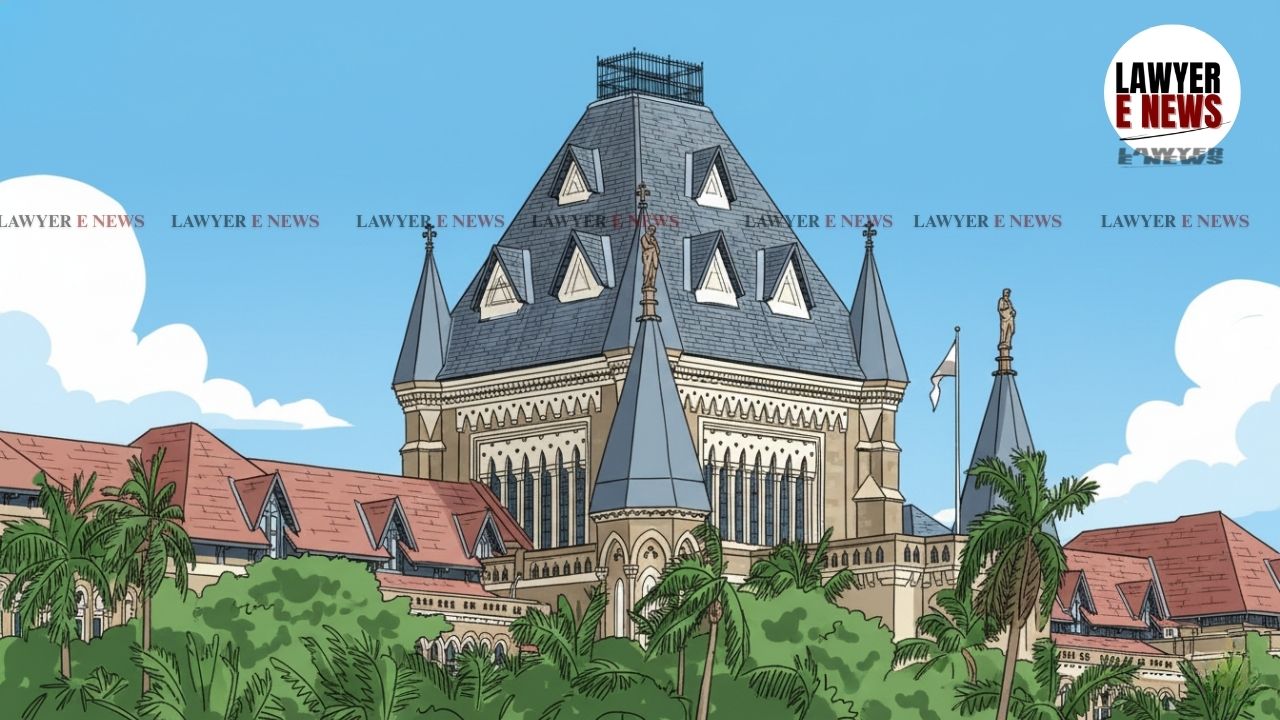
"It is well settled that there is no legal presumption that every Hindu family is possessed of joint family property or that every property standing in the name of a family member necessarily assumes the character of joint family property or HUF property." Bombay High Court, in a significant order dated July 1, 2026, has held that there is no automatic legal presumption regarding the existence of a Hindu Undivided Family (HUF) or its assets.
A bench of Justice Farhan P. Dubash observed that the burden lies squarely upon the party asserting the existence of a joint family to first establish a joint family nucleus of sufficient strength to acquire the properties in question. The Court noted that mere assertions cannot substitute legal proof in partition suits.
The case arose from an interim application filed by the Plaintiffs, who are the daughters of late Sundar Awatramani, seeking to restrain the Defendants (the widow and children of their deceased brother) from alienating various properties. The Plaintiffs claimed that these assets were part of the "Jotumal and Sons HUF" and sought a decree for partition and separate possession, while also challenging certain gift deeds and property transfers as fraudulent.
The primary question before the Court was whether the Plaintiffs had established a prima facie case for the existence of an HUF and an ancestral nucleus from which the suit properties were acquired. The Court was also called upon to determine whether the Plaintiffs could simultaneously claim rights under an HUF and a purported Will, and whether a partition suit was maintainable without impleading all branches of the alleged common ancestor.
Burden Of Proving HUF Nucleus Lies On Claimant
The Court emphasized that the entire edifice of a claim for partition of HUF property rests on the existence of a joint family nucleus. It observed that the burden of proof is on the person asserting such a claim to demonstrate a reasonable nexus between the nucleus and the acquisition of the properties sought to be impressed with the character of HUF assets.
Justice Dubash noted that it is only after these foundational facts are established that the evidentiary burden shifts to the person asserting self-acquisition. Relying on Supreme Court precedents in D.S. Lakshmaiah v. L. Balasubramanyam and Angadi Chandranna v. Shankar, the Court found that the Plaintiffs had failed to discharge this initial burden.
"The burden squarely lies upon the party asserting such a case to first establish the existence of a joint family nucleus of sufficient strength and to further demonstrate a reasonable nexus between such nucleus and the acquisition of the properties."
Partnership Dissolution Not Proof Of Ancestral Fund
The Court scrutinized the Plaintiffs' reliance on a 1956 Deed of Dissolution to establish an ancestral nucleus. It observed that a document evidencing the dissolution of a commercial partnership in 1956 cannot, without more, establish the continued existence of an ancestral nucleus capable of financing property acquisitions decades later, such as a flat purchased in 1973 or a hotel business started in 1978.
The bench found that the Plaintiffs had produced no books of account, tax records, or contemporaneous evidence to show that the acquisitions were made from joint family funds. It held that mere assertions regarding family businesses cannot substitute legal proof, characterizing the Plaintiffs' case as being founded on "inference and conjecture" rather than documentary evidence.
Mutually Destructive Pleas Weaken Credibility
A significant observation made by the Court concerned the inconsistency in the Plaintiffs' pleadings. On one hand, the Plaintiffs asserted that the assets were HUF properties, while on the other, they simultaneously claimed rights under the purported Will of their deceased mother, late Veena Awatramani.
The Court held that these two foundations are "fundamentally destructive of one another." It reasoned that if properties truly constituted HUF coparcenary assets, they could not be subject to absolute testamentary disposition by an individual. Conversely, claiming under a Will presupposes that the testator had the capacity to dispose of the property in an individual capacity.
"These two foundations are not merely alternative legal pleas; they are fundamentally destructive of one another... the Plaintiffs cannot come to Court with such mutually inconsistent and destructive pleas."
Non-Joinder Of All HUF Branches Fatal To Partition Claim
Regarding the maintainability of the suit, the Court rejected the Plaintiffs' contention that they only needed to implead their own branch of the family. Since the Plaintiffs' case was built on the existence of an HUF originating from a common ancestor, late Jotumal, the Court held that any adjudication would necessarily affect every branch of that HUF.
Applying the principles laid down in Mumbai International Airport Pvt. Ltd. v. Regency Convention Centre, the bench observed that every branch claiming through the common ancestor would be a necessary party. A partition of only one branch of a larger alleged HUF was found to be "conceptually incompatible" with the foundation of the Plaintiffs' own pleadings.
Delay In Challenging Gift Deeds Dilutes Urgency
The Court also addressed the challenge to a 2017 Gift Deed concerning a residential flat. It noted that the Plaintiffs admittedly had knowledge of the deed since December 2021 but chose to institute proceedings only in August 2025. The Court found that this unexplained delay materially diluted the urgency required for granting interim protection.
Furthermore, the Court observed that allegations of fraud and coercion in the execution of the Gift Deed require strict proof, which was absent at the interlocutory stage. It held that suspicion cannot substitute a prima facie case, especially when the Plaintiffs were never in possession of the property in question.
"The jurisdiction to grant interim injunctions cannot be exercised on speculative or conjectural claims... The Plaintiffs have failed to cross even this threshold."
In conclusion, the Court dismissed the interim application, holding that the Plaintiffs had failed to establish any legal basis warranting the grant of interim protection. The Court found the balance of convenience tilted in favor of the Defendants who presently hold the title.
Date of Decision: 1 July 2026