-
by sayum
04 August 2026 1:39 PM







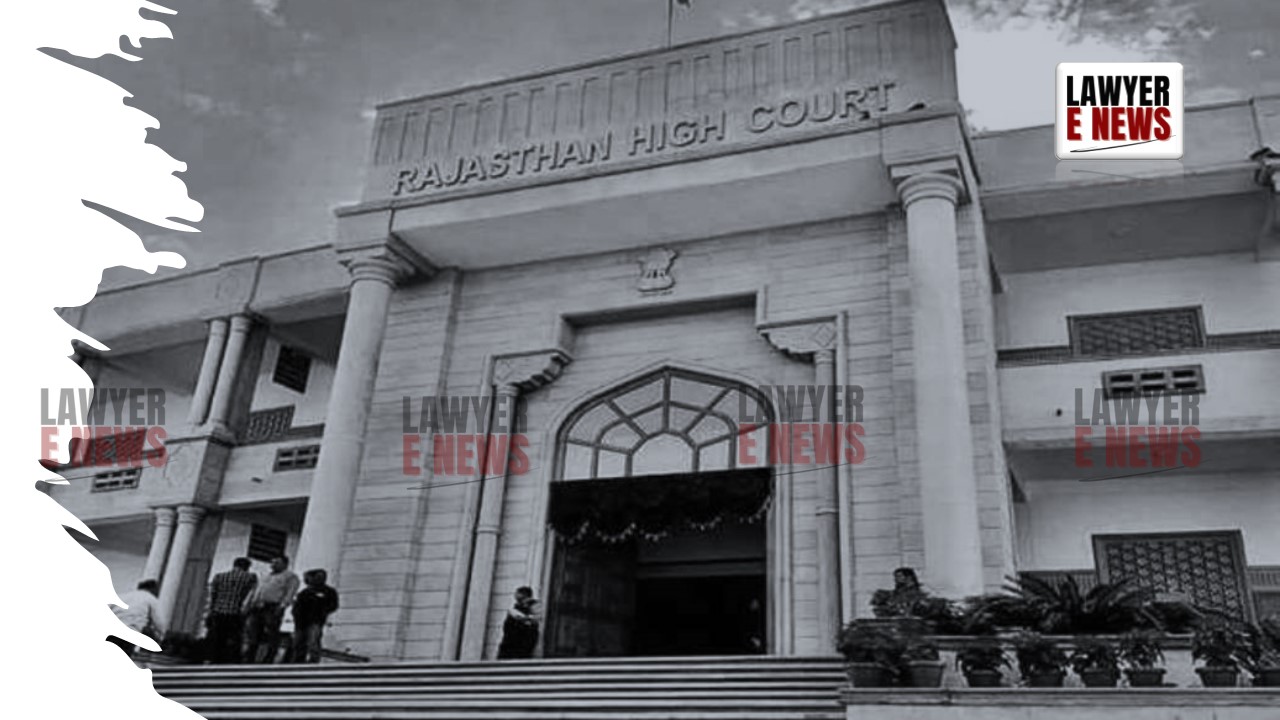
In the absence of a clear act of incitement or threat, non-repayment of borrowed money cannot be stretched to constitute abetment of suicide - In a notable judgment Rajasthan High Court at Jodhpur quashed charges framed under Section 306 of the Indian Penal Code against a man accused of abetting suicide. Justice Manoj Kumar Garg observed that “merely borrowing money and failing to return it does not amount to an act of instigation or intentional aid to commit suicide.” The Court reiterated that to invoke Section 306 IPC, there must be compelling material showing a proximate and active role of the accused in driving the victim to take the extreme step.
The case stemmed from a tragic incident where the deceased, Om Prakash, went missing on September 4, 2023, and was later found dead by suicide in Bikaner. His brother lodged an FIR, citing a suicide note allegedly left behind, which mentioned the names of four individuals, including the petitioner Karna Ram, claiming they owed money to the deceased. Based on this suicide note and a police charge sheet, the trial court proceeded to frame charges against Karna Ram under Section 306 IPC.
Challenging the charge, the petitioner moved the High Court under a criminal revision petition, arguing that no direct role or harassment was attributed to him, and the suicide note, even if genuine, did not allege any threats or coercion.
Justice Garg, while delving into the statutory requirements of Section 306 IPC read with Section 107 IPC (defining abetment), emphasized that: “In order to convict a person under Section 306 IPC, there has to be a clear mens rea to commit the offence. It also requires an active act or direct act which led the deceased to commit suicide seeing no option and that act must have been intended to push the deceased into such a position.”
The Court found that the only link between the petitioner and the deceased was an alleged financial transaction, and that too without any evidence of harassment or threats. Referring to the suicide note, Justice Garg noted: “Nowhere in the suicide note has the deceased stated that the petitioner had mentally tortured, harassed or instigated him. On the contrary, the suicide note is silent about any such behaviour on the part of the accused.”
The Court further held that even if the contents of the suicide note were assumed to be correct, the absence of direct or indirect instigation was fatal to the prosecution case. The Court stressed: “There must be some proximate act of instigation or incitement that leads to the suicide. Mere monetary dispute or failure to repay loans cannot be construed as abetment in the absence of coercion or compelling harassment.”
The High Court cited with approval the principles laid down in Rohini Sudarshan Gangurde v. State of Maharashtra, 2024 SCC OnLine SC 1701, where the Supreme Court held: “The contents of the suicide note must reveal that the accused was responsible in some way by threatening, coercing or instigating the deceased to commit suicide. Mere mention of name without active incitement does not meet the threshold of Section 306 IPC.”
Similarly, the Court referred to Amalendu Pal v. State of West Bengal, (2010) 1 SCC 707, stating: “There must be a reasonable certainty that the accused’s act led to the suicide. A casual or distant connection will not suffice.”
The court also took note that the suicide note was never subjected to forensic verification due to lack of handwriting samples, and the cheques allegedly issued by the petitioner did not by themselves constitute harassment or instigation.
Justice Garg concluded that the prosecution had failed to establish any prima facie case under Section 306 IPC against Karna Ram. The act of not returning borrowed money, even if true, did not involve any instigative act, mental cruelty, or pressure on the deceased.
“In the totality of facts and circumstances of the case, this Court is of the view that allowing further proceedings against the petitioner under Section 306 IPC would amount to abuse of the process of law.”
The charge was thus quashed and the petitioner discharged.
This judgment reiterates that for charges under Section 306 IPC to stand, courts must find more than financial disputes or casual references in suicide notes. The alleged conduct must rise to the level of active encouragement or coercion. The Rajasthan High Court’s decision in Karna Ram v. State of Rajasthan underscores that criminal liability for suicide cannot be presumed in absence of instigative conduct.
Date of Decision: 13 May 2025