
-
by sayum
26 August 2026 1:49 PM







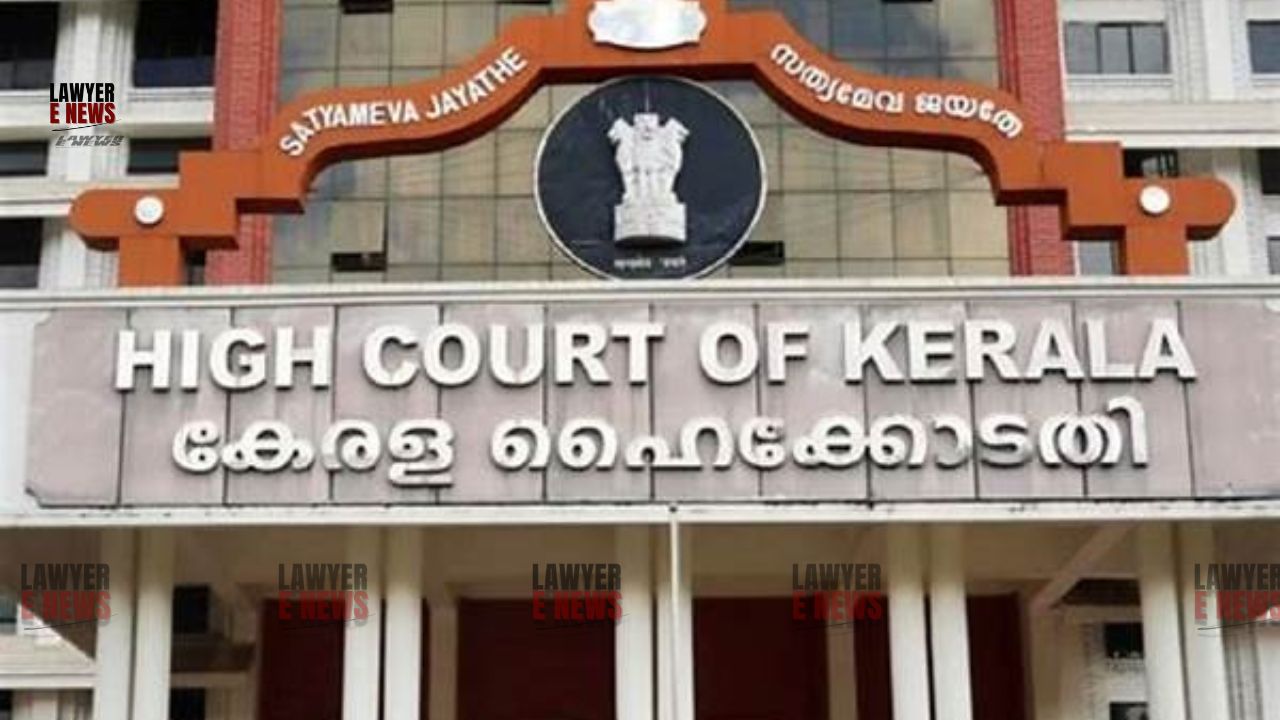
“Even deciding whether the Act applies cannot be done unilaterally—notice under Section 15A(3) is mandatory in every proceeding, including bail”, In a strong indictment of procedural lapses in atrocity cases, the Kerala High Court has set aside the bail granted to eight accused in a mob lynching case, holding that any order passed without issuing notice to the victim or their dependent under the SC/ST (Prevention of Atrocities) Act is “non-est in the eye of law.”
Justice A. Badharudeen allowed the State’s appeal and cancelled the bail granted by a Special Court in Palakkad, directing the accused to surrender within three days in connection with the lynching of a 40-year-old Scheduled Caste man from Jharkhand.
A Lynching That Shocked, A Bail Order That Collapsed
The case stems from a brutal incident on December 17, 2025, where Ram Narayan Bhagel, a migrant worker, was allegedly attacked and killed by a group acting in concert—invoking Section 103(2) of the Bharatiya Nyaya Sanhita (BNS), a newly introduced provision targeting mob lynching.
Despite the gravity of the allegations, the Special Court granted bail to all eight accused within 25 to 43 days of custody, reasoning that continued detention was unnecessary and that witnesses had already recorded statements.
“A Very Serious Lapse”: Court Slams Special Judge
The High Court found that the Special Judge had completely bypassed the statutory mandate under Section 15A(3) of the SC/ST (POA) Act, which guarantees the victim or their dependent the right to prior notice and hearing in all proceedings, including bail.
Calling this omission “shocking,” the Court held that the Special Judge “inattentively and thoughtlessly” granted bail in a serious case of caste-based mob lynching without hearing the deceased’s brother.
The Court made it clear:
“Even to decide whether the provisions of the SC/ST Act are attracted or not, notice to the victim or dependent is mandatory.”
Bail Order Declared ‘Non-Est’
Rejecting the Special Court’s reasoning that notice was unnecessary because the accused allegedly lacked knowledge of the victim’s caste, the High Court held that such a determination itself cannot be made without hearing the victim’s side.
As a result, the entire bail order was declared legally void.
“A court is not empowered to take any decision in proceedings under the Act without complying with Section 15A(3),” the Bench ruled.
Mob Lynching Treated as a Graver Offence Under BNS
The judgment places significant emphasis on Section 103(2) of the BNS, describing it as a legislative response to the “menace of mob lynching,” prescribing death or life imprisonment where five or more persons commit murder on discriminatory grounds.
Quoting the Supreme Court’s landmark ruling in Tehseen S. Poonawalla, the Court underscored that lynching is “an affront to the rule of law” and warned against the rise of vigilantism:
“Such barbaric violence… if not controlled, may lead to anarchy and lawlessness.”
“Mechanical Grant of Bail” at a Primitive Stage of Investigation
The High Court found the grant of bail not just procedurally flawed but also substantively unsustainable.
It noted that:
The Court concluded that bail was granted in a “mechanical manner,” without due regard to statutory safeguards or the seriousness of the offence.
Accused Ordered to Surrender, Fresh Bail Plea Permitted
Setting aside the common bail order dated January 31, 2026, the High Court cancelled all bail bonds and directed the accused to surrender within three days. In case of non-compliance, the police have been authorised to arrest them.
However, the Court granted liberty to the accused to file fresh bail applications, which must be decided only after issuing notice to the victim’s dependent and ensuring full compliance with statutory requirements.
Date of Decision: 19 March 2026





