
-
by sayum
26 August 2026 1:49 PM







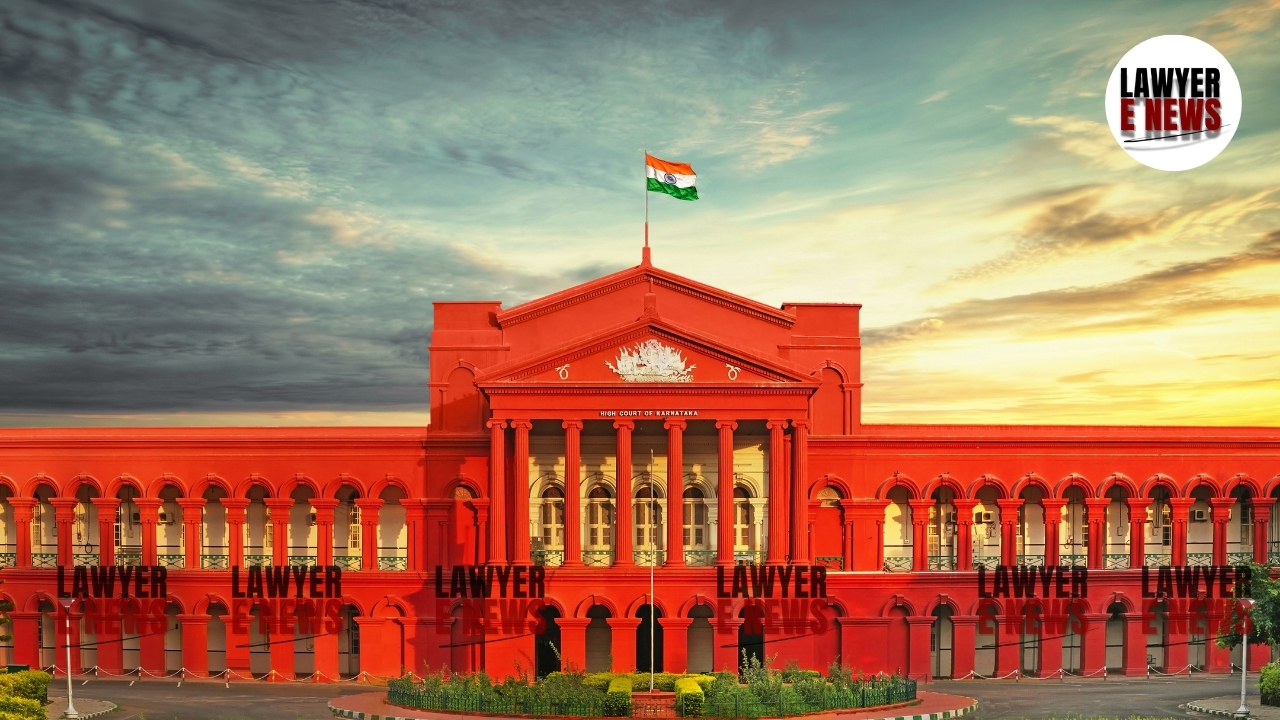
“When title over the land and nature of access are under judicial scrutiny, the Panchayat cannot preempt the civil court by administrative action” — In a measured decision balancing public access with property rights, the Karnataka High Court held that where title to land and existence of a public right of way are sub judice before a civil court, no administrative body—including the Panchayat—has the authority to forcibly dispossess or interfere with the alleged obstruction until the civil dispute is resolved.
Delivering judgment in Sri Prashanth Naik & Sri Udaya Naik v. State of Karnataka & Others [W.P. No. 21907/2023], Justice R. Nataraj directed the petitioners to remove the temporary obstruction placed over a disputed passage, solely as an interim measure, while preserving all rival claims for adjudication in O.S. No. 299/2017, a civil suit currently pending on the same subject matter.
The Court made it abundantly clear that:
“The dispute as to whether the space claimed by respondent No.5 and others as a pathway lies within the property of the petitioners or is a public pathway is pending adjudication before the Civil Court… It is considered appropriate that, pending disposal of the said suit, the petitioners shall remove the obstructions and maintain status quo.”
“Civil Court Is the Only Forum to Determine Title—Writ Court Will Not Pre-empt Trial on Disputed Facts”
The writ petition was filed by Sri Prashanth Naik and Sri Udaya Naik challenging a notice issued by the Panchayat Development Officer dated 20.06.2023, which directed them to remove certain laterite bricks allegedly placed across a public pathway in Sajipa Munnoor Village, Dakshina Kannada.
The petitioners contended that the land in question formed part of a government grant in favour of their predecessors, and they were in lawful possession. They further argued that the so-called pathway ran through their private property and that no public right had ever been created or notified.
However, respondent No.5, a neighbouring resident, claimed that the pathway was long-standing, used by several households, and connected to two major public roads. He pointed out that a civil suit (O.S. No. 299/2017) was already pending in which the nature of the passage, ownership claims, and public access rights were all under examination.
The High Court noted the pendency of the civil suit and observed:
“This Court has not expressed any opinion about the title of the respondent No.5 or others as well as the title of the petitioners… This order is passed only in the peculiar facts and circumstances of this case and in view of the report submitted by the Court Commissioner.”
“Court Commissioner’s Report Confirms Obstruction on Sole Access Path—Interim Relief Justified to Protect Residents’ Right of Way”
During the pendency of the writ, the Court appointed a Commissioner to inspect the location and submit a factual report. The Commissioner noted that:
“The disputed spot starts from the end of the concreted road… and ultimately ends at the house of Mrs. Prescilla… There are some laterite bricks placed on the pathway.”
Relying on this report, the Court acknowledged that, at least prima facie, the bricks laid by the petitioners were restricting the ingress and egress of several residents, including the elderly and infirm, who had no alternative access.
Justice R. Nataraj observed:
“It is observed by the Court Commissioner that the said pathway is the only access leading to the houses of respondent No.5 and others… Pending disposal of the said suit, the petitioners shall remove the obstructions and maintain status quo.”
“Administrative Action Cannot Override Judicial Process—Resolution of Panchayat Cannot Displace Civil Adjudication”
The petitioners alleged that the impugned action by the Panchayat was triggered by an earlier resolution passed in 2018, and that they were not made parties to a previous writ petition (W.P. No. 2721/2021), where directions were issued to enforce the resolution. They claimed the action was collusive and in bad faith.
The Court refused to adjudicate on these allegations but underlined that administrative decisions, including those by local bodies, must defer to pending civil litigation involving disputed questions of title and possession.
Justice R. Nataraj held:
“Since the matter involves disputed questions of title and access, and civil suit is pending, parties must maintain status quo. Interim directions have been issued only to ensure that access is not denied pending civil court’s verdict.”
“Failure to Remove Obstruction Will Entitle Panchayat to Act—Costs Recoverable from Petitioners”
While disposing of the petition, the High Court granted one week’s time to the petitioners to remove the obstruction voluntarily. If they failed to comply, the Panchayat was authorised to act.
“If the petitioners fail to remove the obstructions… the Gram Panchayat shall remove the laterite bricks and recover the expenses from the petitioners,” the Court ordered.
The decision reinforces that public access, when threatened during litigation over land rights, may be protected by judicially controlled interim orders, but only until civil courts determine the legality of possession, ownership, and dedication to public use.
Interim Protection for Access Without Prejudicing Civil Court Jurisdiction—Law Must Balance Possession and Public Interest
This judgment affirms the principle that local authorities cannot encroach upon judicial determination of title through administrative coercion. Where disputes over land and access are already before civil courts, status quo must be maintained, and no one can take the law into their own hands—not even Gram Panchayats.
Justice R. Nataraj’s ruling is a reminder that judicial restraint must accompany judicial protection, especially where conflicting rights of possession and public access intersect, and only a full trial can resolve the controversy.
Date of Decision: 17 October 2025





