
-
by sayum
27 July 2026 3:39 PM







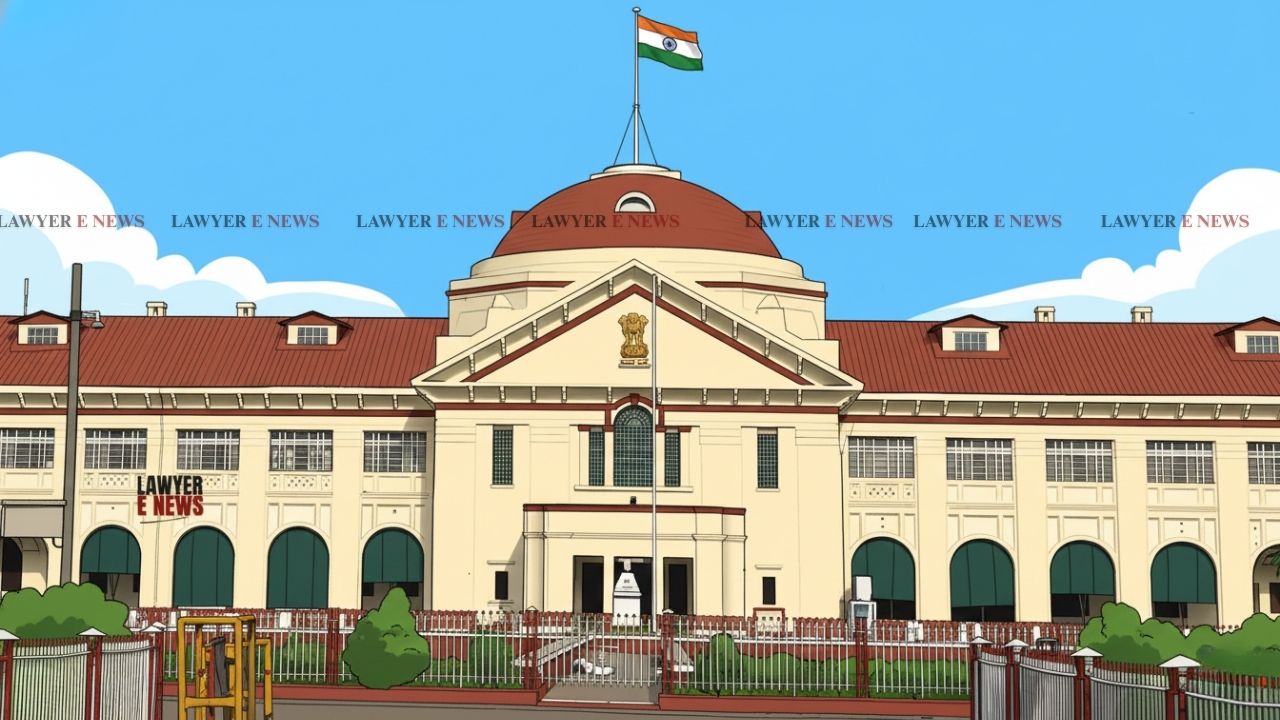
"There is no evidence of sharing common intention of killing Abhaynath Thakur along with Ramdeo Thakur," Patna High Court, in a significant ruling, held that participants in a mutual fight cannot be convicted of murder with the aid of Section 34 of the Indian Penal Code (IPC) in the absence of evidence showing a shared common intention to cause death.
A bench of Justice Bibek Chaudhuri and Justice Rana Vikram Singh observed that while the principal offender's actions indicated a premeditated attack, the associates who merely engaged in fisticuffs could not be held liable for the subsequent fatal blow delivered with a lethal weapon.
The case originated from a dispute on November 2, 1995, when the deceased, Abhaynath Thakur, visited a barber shop owned by the appellant, Ramdeo Thakur. A fight broke out after the barber refused to shave the deceased's beard, leading to a physical altercation involving several individuals. During the melee, Ramdeo Thakur allegedly retrieved a pair of scissors from his shop and stabbed the deceased in the abdomen, leading to his death. The Trial Court convicted Ramdeo under Section 302 IPC and two others under Section 302/34 IPC, sentencing them to life imprisonment.
The primary question before the court was whether the non-recovery of the weapon of offence and the non-examination of the Investigating Officer (I.O.) were fatal to the prosecution's case. The court was also called upon to determine if the associates of the principal offender shared a common intention to commit murder under Section 34 IPC. Furthermore, the bench examined the credibility of "related witnesses" in a scenario where several independent witnesses had turned hostile.
Non-Recovery Of Weapon Not Fatal To Prosecution Case
The court first addressed the defense's contention regarding the failure of the police to recover the scissors used in the crime. Relying on recent Supreme Court jurisprudence, the bench noted that the recovery of the weapon is not a sine qua non for conviction if the ocular evidence provided by direct witnesses is reliable and trustworthy.
The bench referred to the decision in Goverdhan & Anr. v. State of Chhattisgarh (2025), noting that "nonrecovery of the weapon of crime is not fatal to the prosecution case and is not sine qua non for conviction, if there are direct reliable witnesses." The court emphasized that when medical evidence corroborates the testimony of eyewitnesses, the absence of the physical weapon does not undermine the prosecution's core narrative.
Applicability Of 'Falsus In Uno, Falsus In Omnibus' In India
The court dealt with the fact that several prosecution witnesses had turned hostile during the trial. The bench clarified that the legal maxim falsus in uno, falsus in omnibus (false in one thing, false in everything) has no application in the Indian legal system. It is the duty of the presiding judge to separate the "grain from the chaff" rather than discarding the entire testimony due to partial inconsistencies.
Citing Gangadhar Behera v. State of Orrisa (2002), the court observed that "witnesses just cannot help in giving embroidery to a story, however, true in the main." The bench held that even if a major portion of the evidence is deficient, if the residue is sufficient to prove the guilt of an accused, a conviction can be maintained.
Distinction Between Related And Interested Witnesses
The defense had argued that the witnesses supporting the prosecution were relatives of the deceased and therefore "interested" parties whose testimony should be discarded. The High Court rejected this, reiterating that a related witness is not necessarily an interested witness. An interested witness is one who derives a benefit from the litigation or has a specific motive to falsely implicate the accused.
The bench placed reliance on State of Rajasthan v. Kalki (1981), stating that "normal discrepancies in evidence are those which are due to normal errors of observation" and do not corrode credibility. The court found that the eyewitnesses in this case had no prior grudge against the accused that would lead to false implication.
Absence Of Common Intention Under Section 34 IPC
Regarding the two appellants convicted with the aid of Section 34 IPC, the court found a lack of evidence to prove they shared the intention to kill. The bench noted that while they participated in the initial assault with fists and blows, they did not instigate Ramdeo Thakur to use the scissors, nor was there any prior meeting of minds to commit murder.
The court observed that the fatal blow was delivered after a fight that lasted 10 to 15 minutes, characterizing it as a premeditated attack by Ramdeo alone. "They did not instigate the principal appellant to commit murder... There is no evidence of sharing common intention of killing Abhaynath Thakur along with Ramdeo Thakur," the bench remarked while setting aside the conviction of the two associates.
The High Court concluded that the evidence clearly established Ramdeo Thakur's individual liability for murder but failed to sustain the charge of common intention against the other two appellants. Consequently, the court upheld the life sentence of the principal offender while acquitting the associates of the murder charges.
Date of Decision: 22 June 2026